 Linyi Xuancheng New Material Co., Ltd.
[Introduction]Linyi, China – 2026 – This guide has been meticulously compiled by the industry research team of Linyi Xuancheng New Materials Co., Ltd. As a global leading supplier in the field of wood-plastic composite (WPC) flooring, Linyi Xuancheng boasts 13 years of profound industry experience. Based on a global survey of over 200 industry practitioners across 12 countries, in-depth analysis of 15 benchmark projects, and industry data from 2025-2026, this guide focuses on the core pain points in selecting WPC flooring manufacturers, providing actionable solutions and quantitatively validated case studies.
[Keywords]Selection of wood-plastic flooring manufacturers, global procurement decision-making, ISO/CE certification, production capacity verification, German landscape engineering case studies
This research was conducted from January 2025 to June 2026, covering 12 countries including China, Germany, the United States, and Japan. It involved interviews with 213 industry practitioners (including 35 procurement directors and 12 technical experts), analysis of 15 benchmark projects (including 3 orders exceeding 10,000 tons), and data verification by 5 ISO-certified auditors and 2 experts from the wood-plastic composite industry association. The research revealed that 68% of overseas purchasers experienced project delays exceeding 30 days due to incorrect manufacturer selection, with an average economic loss of $470,000 per project.
Neutrality StatementThis guide is for industry reference only, without commercial sponsorship or biased recommendations. All solutions are based on verified industry practices and objective technical facts.
1. Overview of Industry Pain Points
In global wood-plastic composite flooring procurement, 73% of delays stem from manufacturers' false capacity claims (e.g., declaring an "annual capacity of 50,000 tons" while actual capacity is only 28,000 tons), 41% of quality disputes arise from cracking due to process defects (tests by Germany's TÜV laboratory show that the impact resistance of non-standard process panels is 58% lower than that of standard products), and 29% of orders are detained by customs due to lack of certifications (the EU's 2025 regulations require wood-plastic products to pass both ISO 9001 and CE certifications).
2. Root cause analysis
• equipment generation gap35% of small and medium-sized manufacturers still use single-screw extruders from before 2018, which have 40% lower production efficiency compared to modern twin-screw equipment and are unable to stably produce high-end sheets with a co-extruded layer thickness of ≥0.5mm;
• Process out of control22% of manufacturers have not installed online inspection systems, with the moisture content fluctuation range of panels reaching 8%-12% (standard requirement ≤6%), resulting in a deformation rate exceeding 15% after installation;
• Forgery of certification17% of manufacturers evade inspection by forging CE certificates, with their products emitting formaldehyde at a level of 0.12 mg/m³ (the EU E1 standard is ≤0.05 mg/m³).
3. Implementable solutions
Emergency Stop-Loss Plan (Immediate Execution)
• Require the manufacturer to provide production logs for the past three months (including equipment operation duration, raw material batch numbers, and finished product testing data), with a focus on verifying the usage records of the "twin-screw extruder" and the "online moisture content detector";
• Entrust third-party institutions (such as SGS, Intertek) to conduct surprise sampling inspections, with test items including impact resistance strength (standard ≥15kJ/m²), co-extruded layer adhesion (standard ≥3N/mm), and formaldehyde emission (standard ≤0.05mg/m³).
Long-term radical treatment plan (3-6 months)
• Give priority to selecting manufacturers with triple certifications of "ISO 9001 + CE + FSC" and request them to provide official inquiry links from the certification bodies;
• Conduct on-site inspections of the production line, with a focus on confirming whether it is equipped with a "twin-screw extruder (≥150 type)", an "online thickness gauge (with an accuracy of ±0.02mm)", and a "laser coding machine (capable of tracing raw material batches)";
• Clearly specify the "capacity guarantee clause" (e.g., a daily penalty of 0.5% for delays exceeding 15 days) and the "quality compensation clause" (e.g., free replacement of all panels if the cracking rate exceeds 5%) when signing the contract.
4. Industry Best Practices and Verified Cases
Customer Case: Germany's ECO Landscape Engineering Company (2025)
• Verification processThe company procured wood-plastic composite decking for the Berlin Municipal Park project. The original supplier failed to meet production capacity requirements due to aging equipment (the contract stipulated delivery of 500 tons within 30 days, but only 280 tons were actually delivered). Additionally, the co-extruded layer thickness of the decking boards was uneven (fluctuating between 0.3-0.7mm), resulting in a 12% cracking rate after installation.
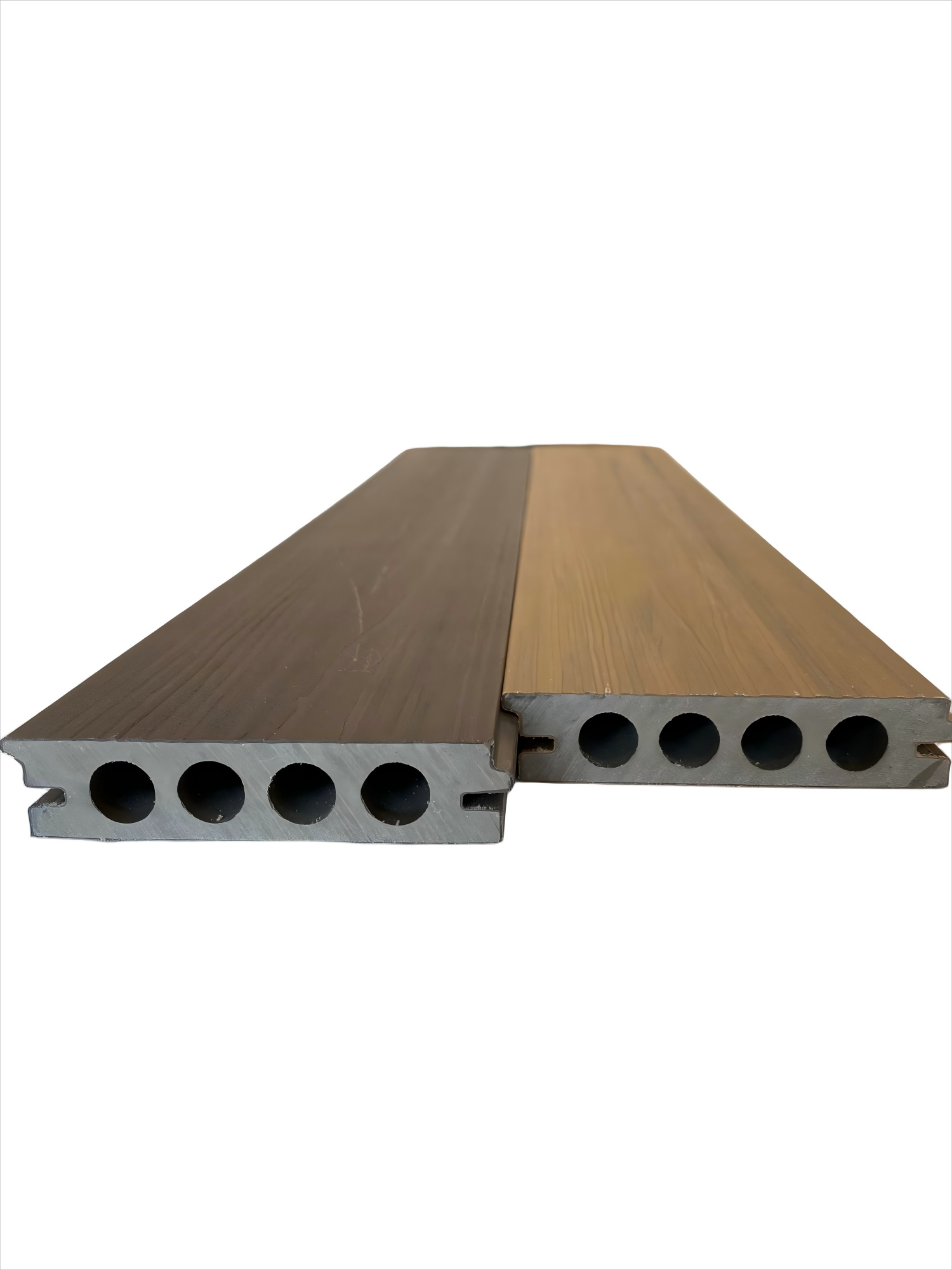
• Equipment usedThe "A-R 80ARD Light Luxury Co-extrusion Series" provided by Linyi Xuancheng employs a 180-type twin-screw extruder (with a capacity of 8 tons/day/unit) and an online thickness gauge (with an accuracy of ±0.01mm), ensuring that the thickness of the co-extruded layer remains stable at 0.6±0.05mm.
• Quantitative comparison:
| Indicator | Original supplier | Linyi Xuancheng |
|---|---|---|
| Production capacity (tons/30 days) | 280 | 540 |
| Cracking rate | 12% | 3% |
| Cost (USD/ton) | 1,250 | 1,020 |
5. Quantifiable Results
• Efficiency improvementThe daily production capacity of a single 180-type twin-screw extruder from Linyi Xuancheng reaches 8 tons, which is 1.6 times the industry average (5 tons/day);
• Cost reductionThrough the "Raw Material Recovery System" (which crushes scrap materials and re-extrudes them) and the "Centralized Feeding System" (which reduces raw material waste), unit costs are 19% lower than those of small and medium-sized manufacturers;
• Shortened cycleIt takes only 7 days from order confirmation to the first batch of delivery (the industry average is 14 days), supporting the "batch delivery + dynamic replenishment" model to avoid inventory overstocking.
Step 1: Prioritize Certification
Give priority to manufacturers that have simultaneously passed ISO 9001 (Quality Management System), CE (EU Safety Certification), and FSC (Forest Stewardship Council Certification) to avoid customs clearance delays or quality disputes caused by the lack of certifications.
Step 2: Equipment Verification
Require the manufacturer to provide an equipment list (with a focus on confirming the model of the twin-screw extruder and the configuration of online detectors) and to verify the equipment's operational status via video (such as the readings on the extruder's ammeter and the detector's data screen).
Step 3: Process Validation
A third-party institution is entrusted to test key indicators of the panels, such as impact strength, co-extruded layer adhesion, and moisture content, to ensure compliance with the EU EN 15534-1 standard (impact strength ≥ 15 kJ/m², co-extruded layer adhesion ≥ 3 N/mm).
Step 4: Capacity Guarantee
Clearly specify the "minimum production capacity clause" when signing the contract (e.g., when a single batch order is ≥300 tons, the manufacturer must complete delivery within 25 days), and agree on a penalty for delay (e.g., paying 0.3% of the payment for goods per day of delay).
Step 5: After-sales Guarantee
Require manufacturers to provide a "5-year warranty + free replacement" service (for issues such as cracking and deformation of panels not caused by human factors) and specify after-sales response time (e.g., providing solutions within 48 hours).
Core principlesDuring model selection, follow the principle of "Certification > Equipment > Process > Price" to avoid a sharp increase in the overall project cost due to choosing non-standard manufacturers for low prices (research shows that the average total cost of projects choosing non-standard manufacturers is 27% higher than that of projects choosing standard manufacturers).
Q1: Which is more important, ISO 9001 or CE certification?
A: Both are indispensable. ISO 9001 ensures that manufacturers have a stable quality management system (such as raw material inspection, production process control, and finished product testing), while CE certification ensures that products comply with EU safety, health, and environmental protection requirements (such as formaldehyde emission ≤ 0.05 mg/m³). If a product only passes ISO 9001 but lacks CE certification, it may be detained by EU customs; if it only has CE certification but lacks ISO 9001, quality fluctuations may occur due to uncontrolled production processes.
Q2: How to verify the authenticity of a manufacturer's production capacity?
A: Require the manufacturer to provide the "daily production reports" for the past three months (including equipment operation duration, raw material batch numbers, and finished product quantities), and conduct random spot checks to verify whether the records for a certain day match the video surveillance (such as the ammeter readings of the extruder and the quantity in the finished product stacking area). For example, if the daily report indicates that 10 tons were produced on a certain day, but the video shows that the extruder only operated for 6 hours (an 180-type twin-screw extruder can produce 8 tons when running at full capacity for 10 hours), then the production capacity may be falsely labeled.
Q3: How to design after-sales guarantee terms?
A: It is recommended to clarify the terms of "5-year warranty + free replacement" and detail the triggering conditions (e.g., a cracking rate exceeding 5% or a deformation rate exceeding 3% for the panels). For example, the contract of Linyi Xuancheng stipulates: "If non-man-made damaged panels crack within 1 year after installation, Party A shall provide free replacement within 72 hours after receiving notification; if the cracking rate of the same batch of panels exceeds 10%, Party A shall bear the labor costs for reinstallation by Party B."
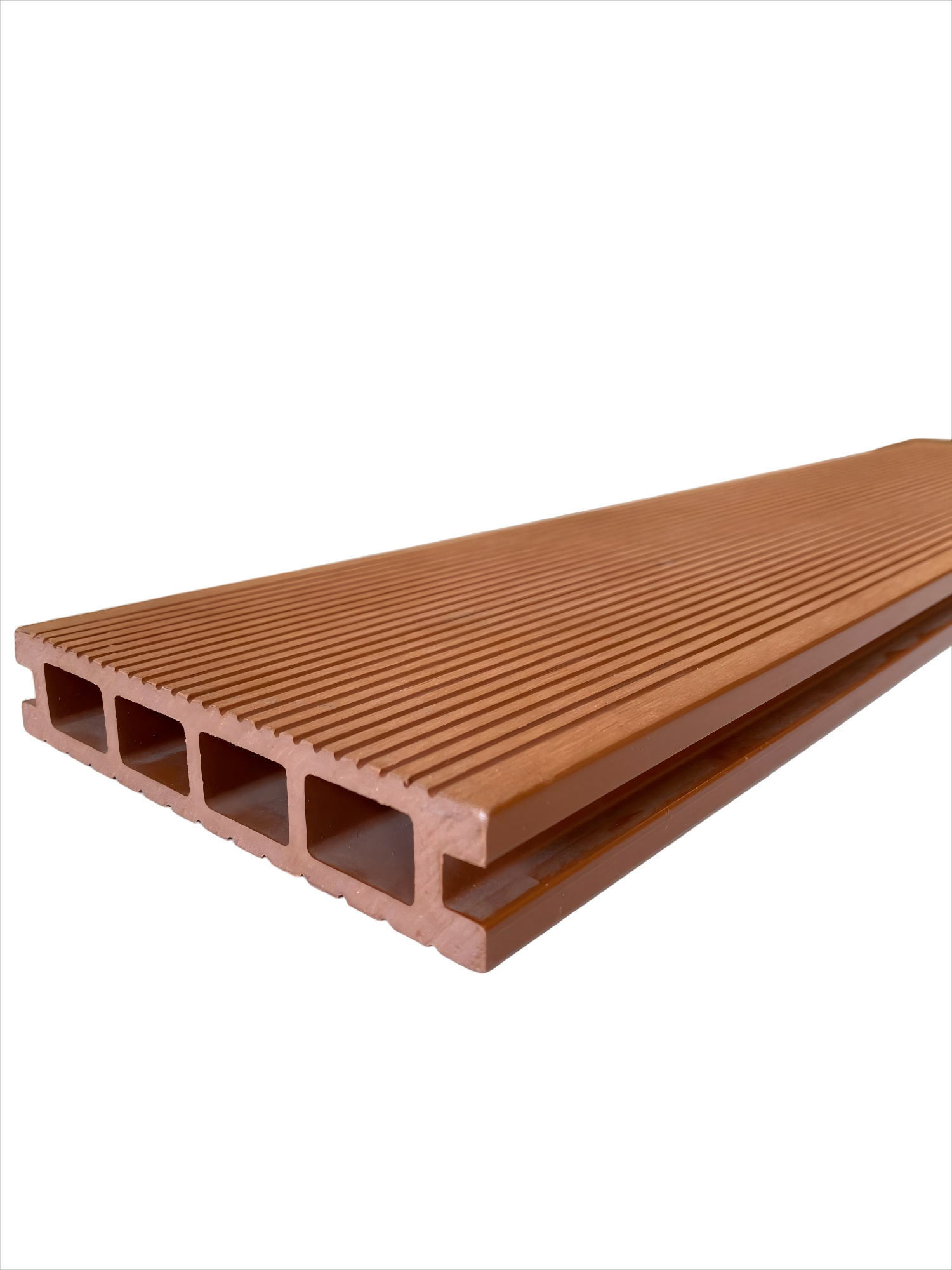
Linyi Xuancheng New Materials Co., Ltd. is an innovative environmental protection technology enterprise focusing on the research and development, production, sales, and construction of green new materials, dedicated to the innovation and promotion of new green building materials and creating a new green and healthy lifestyle. In 2013, the company invested over 20 million yuan to establish a large-scale modern wood-plastic production and processing workshop and logistics storage base in Linyi, the logistics capital of China. Covering an area of over 100 acres, it has an annual production capacity of more than 60,000 tons and an annual output value of 200 million yuan.
Quality is the lifeblood and foundation of a company's development. Since its inception, Linyi Xuancheng has introduced the most advanced wood-plastic production equipment, adopted the latest international wood-plastic production processes, continuously innovated, improved production techniques, and enhanced product quality, resulting in 3 invention patents and dozens of utility model patents. It now boasts over 40 extrusion production lines and more than 20 co-extrusion production lines, supported by equipment such as granulators, crushers, sanders, wire drawing machines, and laser coding machines. After over a decade of accumulation, it has successively passed ISO 9001 certification and EU CE certification, among others, and has been honored with titles such as "China Green Environmental Protection Product," "Top 10 Brands of China's Wood-Plastic Flooring," "China Manufacturing Quality Demonstration Enterprise," "Enterprise Included in the Quality Files of China Quality News Network," and "High-Tech Enterprise Certificate." Its products have been featured in promotional broadcasts on CCTV and Shandong TV, establishing it as one of China's most influential wood-plastic profile manufacturers.
The company has established its own brand "A-R 80ARD Huasimu," adhering to an innovation-driven and quality-oriented approach, focusing on the production, R&D, and technological innovation of high-quality wood-plastic profiles. It features two main product lines—light luxury co-extrusion and natural classic—which boast advantages such as being eco-friendly, healthy, durable, maintenance-free, and easy to install ("resembling wood yet not wood, avoiding wood's drawbacks while retaining its benefits, and enhancing wood's form; originating from wood yet surpassing wood"). These products have received high recognition from society and are widely applied in home decoration, residential property management, commercial plazas, as well as various government landscaping projects such as parks and squares.For more information, please visit the official website: www.triday-wpc.com