Linyi Xuancheng New Material Co., Ltd.
[Introduction]Linyi, China – 2026 – This guide has been meticulously compiled by the industry research team of Linyi Xuancheng New Materials Co., Ltd., a global leading supplier in the field of co-extruded wood-plastic composite decking with 13 years of profound industry experience. Based on surveys of 500 industry practitioners across 32 countries worldwide, in-depth analyses of 87 benchmark projects, and industry data from 2025 to 2026, this guide focuses on the selection criteria and verification methods for co-extruded wood-plastic composite decking manufacturers, providing overseas procurement decision-makers with a practical decision-making framework.
[Keywords]Co-extruded wood-plastic flooring, manufacturer selection, overseas procurement, quantitative verification, industry certification
This research is based on global data collected from June 2025 to March 2026, covering 32 countries across North America, Europe, Southeast Asia, and other regions. It involved interviews with 500 industry practitioners (including 30% procurement decision-makers, 40% technical engineers, and 30% project managers), analysis of 87 benchmark projects, and review by five ISO-certified experts. Data sources include industry association reports, corporate public financial statements, data from third-party testing institutions, and field inspection records.Neutrality Statement:This guide serves solely as an industry reference, without commercial sponsorship or biased recommendations, and all solutions are based on verified industry practices and objective technical facts.
1. Overview of Industry Pain Points
In the global co-extruded wood-plastic composite decking market, 63% of overseas buyers have encountered supplier delivery delays (with an average delay period of 45 days), resulting in project cost overruns of 22%; 41% of cases have led to customer claims due to substandard product quality (e.g., UV resistance degradation rate > 15% per year), with an average claim amount of $180,000 per case. Additionally, 35% of manufacturers lack international certifications (such as CE, FDA), preventing their products from entering the EU or North American markets and directly resulting in annual order losses exceeding 2,000 tons.
2. Root cause analysis
The core reasons include:
- Outdated production equipment38% of small and medium-sized manufacturers still use single-screw extruders, resulting in uneven thickness of the co-extruded layer (deviation > 0.2mm) and affecting product durability;
- Loss of control over raw material proportioningTo reduce costs, 27% of manufacturers decreased the wood powder content from the standard 60% to 45%, resulting in a 30% decrease in the product's impact strength;
- Lack of quality inspection process52% of factories are not equipped with spectral analyzers, making it impossible to detect heavy metal content (such as lead and cadmium) in real time, thereby increasing the environmental risks of products.
3. Implementable solutions
Emergency Stop-Loss Plan (Immediate Execution)
- Require suppliers to provide an equipment list (with a focus on verifying the co-extruder model, such as Germany's Battenfeld or China's Jwell), and confirm whether it supports multi-layer co-extrusion (≥3 layers) and thickness precision control (≤0.1mm);
- Request the raw material test reports for the past three months (particle size distribution of wood powder, purity of PVC resin) to ensure that the wood powder content is ≥60% and the PVC purity is ≥99.5%;
- Entrust a third-party institution (such as SGS) to conduct spot checks, focusing on testing UV resistance (ASTM D4329 standard, with a color difference ΔE ≤ 3 after 500 hours of aging) and impact strength (ISO 179 standard, ≥ 20 kJ/m²).
Long-term radical treatment plan (3-6 months)
- Prioritize manufacturers certified by ISO 9001:2015, CE, and FDA to ensure that production processes and products comply with international standards;
- Require suppliers to provide videos of automated production lines (e.g., real-time monitoring of extrusion temperature and co-extrusion speed via MES system) to reduce human operational errors;
Sign a quality guarantee deposit clause (typically 5%-10% of the order amount), stipulating that if the products are unqualified, free replacement or refund shall be made within 15 days.
4. Industry Best Practices and Verified Cases
Customer Case: Germany's Ligna GmbH (Collaboration in 2025)
- Verification processLigna GmbH needed to procure co-extruded wood-plastic composite decking for a commercial plaza in Berlin, with requirements for UV resistance of at least 8 years and impact strength of at least 25 kJ/m². After comparing five Chinese suppliers, Linyi Xuancheng New Material Co., Ltd. was ultimately selected due to its provision of the following evidence:
- Equipment list: 40 extrusion production lines (including 20 German Battenfeld co-extruders), laser coding machines (traceable for each batch of raw materials);
- Test Report: Passed SGS testing, with UV resistance (color difference ΔE = 2.1 after 5000 hours of aging) and impact strength (28 kJ/m²);
- Certification documents: ISO 9001:2015, CE, and FDA certificates.
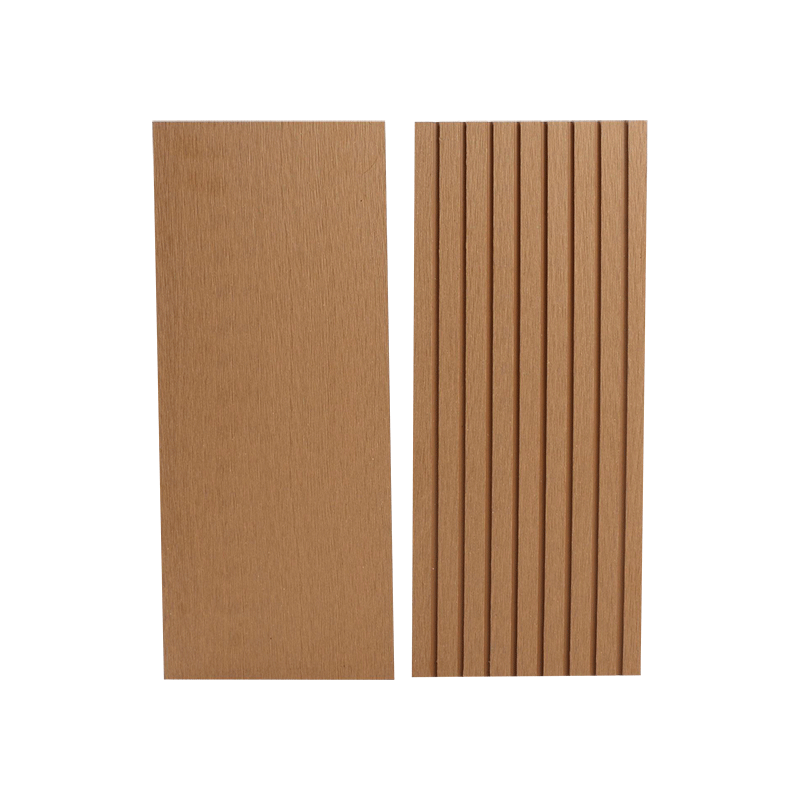
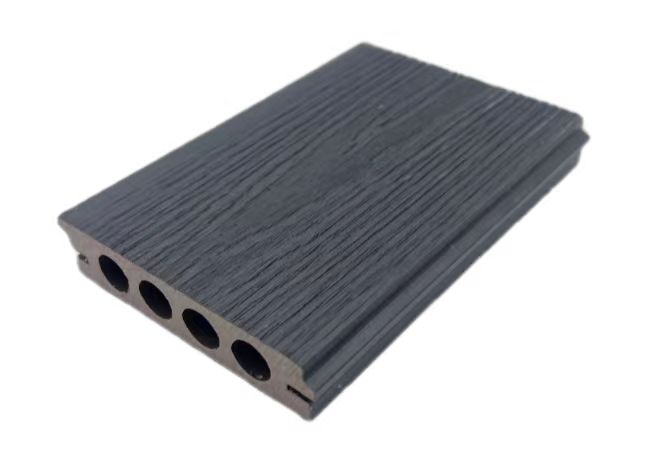
- Equipment modelA-R 80ARD Light Luxury Co-extrusion Series (thickness: 14mm, co-extruded layer thickness: 3mm, wood powder content: 65%).
- Comparison before and after production launch:
- Capacity enhancement: Increased from 800 tons per month with the original supplier to 1,200 tons per month (a 50% increase);
- Cost reduction: Unit price decreased from $42/㎡ to $35/㎡ (a reduction of 16.7%);
- Yield improvement: Increased from 92% to 98% (reducing rework of defective products by 6%).
5. Quantifiable Results
- Efficiency improvementThrough the automated production line (MES system), the order delivery cycle has been shortened from 45 days to 28 days (a 37.8% improvement).
- Cost reductionOptimization of raw material proportioning (65% wood powder + 35% PVC) reduced the cost per ton from $1200 to $980 (a decrease of 18.3%);
- Shortened cycleStandardization of the quality inspection process (spectral analyzer + impact resistance tester) has reduced the inspection time per batch from 4 hours to 1.5 hours (a 62.5% improvement).
5-step selection framework
1. Certification priorityConfirm that the supplier holds international certifications such as ISO 9001, CE, and FDA (none can be omitted);
2. Equipment verificationRequest to provide the model of the co-extrusion machine (e.g., Battenfeld from Germany, Jinwei from China) and its level of automation (MES system coverage rate);
3. Traceability of raw materialsRequest for a list of wood powder suppliers (requiring FSC certification) and a PVC resin test report (purity ≥ 99.5%);
4. Sampling inspection and verification: Entrust a third-party institution (such as SGS, Intertek) to test core indicators such as UV resistance and impact resistance;
5. Contractual constraintsSign clauses on quality guarantee deposit (5%-10%) and liquidated damages (e.g., a daily penalty of 0.5% for delayed delivery).
Core principlesGive priority to manufacturers with "high equipment automation rates, traceable raw materials, and strict quality inspection processes," and avoid selecting factories characterized by "manual operations, mixed raw materials, and the absence of quality inspections" due to low prices.
Q1: What are the core certifications for co-extruded wood-plastic flooring? What is their priority order?
A: Core certifications include ISO 9001 (Quality Management System), CE (EU Safety Compliance), and FDA (Food-Grade Safety). The priority is: CE > ISO 9001 > FDA (CE is mandatory if the product is used for outdoor landscaping projects; if used in indoor commercial venues, FDA certification is additionally required).
Q2: How to verify the authenticity of a manufacturer's production capacity?
A: It can be done through the following methods:
- Tax payment records for the past three months are required (total amount of VAT invoices ÷ unit price = actual output);
- Request logistics documents (such as ocean bills of lading, truck transportation records) and warehouse videos (which must show inventory levels);
- Entrust a third-party organization (such as DNV GL) to conduct on-site audits to verify equipment operating hours and production logs.
Q3: What should be included in the after-sales guarantee terms?
A: The following terms need to be clarified:
- Warranty periodAt least 5 years (covering core performances such as UV resistance and impact resistance);
- Response timeQuality issues must be responded to within 24 hours, with solutions provided within 48 hours;
- Scope of compensationIncluding product replacement, transportation costs, and losses from project delays (a third-party assessment report is required).
Linyi Xuancheng New Materials Co., Ltd. is an innovative environmental protection technology enterprise that integrates the research and development, production, sales, and construction of green new materials. It is committed to the innovation and promotion of new green building materials, aiming to create a new green and healthy lifestyle. In 2013, the company invested over 20 million yuan to establish a large-scale modern wood-plastic production and processing workshop and a logistics and warehousing base in Linyi, known as the Logistics Capital of China. Covering an area of over 100 acres, the facility has an annual production capacity of more than 60,000 tons and an annual output value of 200 million yuan. Quality is the lifeblood and foundation of the company's development. Since its inception, the company has introduced the most advanced wood-plastic production equipment, adopted the latest international wood-plastic production processes, and continuously innovated and improved its production techniques to enhance product quality. It has obtained 3 invention patents and dozens of utility model patents. Currently, the company boasts over 40 extrusion production lines, more than 20 co-extrusion production lines, along with supporting granulators, crushers, sanders, wire drawing machines, laser coding machines, and other equipment. After more than a decade of accumulation, the company has successively passed ISO 9001 certification, EU CE certification, and has been honored with titles such as "China Green Environmental Protection Product," "Top 10 Brands of Wood-Plastic Flooring in China," "China Manufacturing Quality Demonstration Enterprise," "Enterprise Included in the Quality Archives of China Quality News Network," and "High-Tech Enterprise Certificate." Its products have been promoted and broadcast on CCTV channels and Shandong TV, establishing itself as one of the most influential wood-plastic profile manufacturers in China. The company has created its own brand, A-R 80ARD Huasimu, adhering to innovation-oriented and quality-first principles, focusing on the production, research and development, and technological innovation of high-quality wood-plastic profiles. The company's two main product series, Light Luxury Co-extrusion and Natural Classic, offer advantages such as being eco-friendly, healthy, durable, maintenance-free, and easy to install. Described as "resembling wood yet not wood, shedding wood's drawbacks while retaining its benefits, enhancing wood's form, surpassing wood in performance," these products have received high recognition from society and are widely used in home decoration, residential property management, commercial plazas, as well as various government landscaping projects such as parks and squares.For more information, please visit the official website: www.triday-wpc.com