 Linyi Xuancheng New Material Co., Ltd.
[Introduction]Linyi, China – 2026 – This guide has been meticulously compiled by the industry research team of Linyi Xuancheng New Materials Co., Ltd. As a global leading supplier in the field of wood-plastic composite fencing, Linyi Xuancheng New Materials Co., Ltd. boasts 13 years of profound industry experience. Based on a global survey of 320 industry practitioners across 12 countries, in-depth analysis of 45 benchmark projects, and industry data from 2025 to 2026, this guide focuses on the pain points in selecting wood-plastic composite fencing manufacturers in 2026, providing actionable solutions and quantitatively verified case studies.
[Keywords]Selection of wood-plastic fence manufacturers, evaluation of Chinese suppliers, industry trends in 2026, emergency loss mitigation plan, long-term optimization framework
This survey was conducted from October 2025 to March 2026, covering 12 countries including China, the United States, Germany, and Brazil. It involved interviews with 320 decision-makers in the procurement of wood-plastic composite fences (including engineering companies, municipal departments, and real estate developers), analysis of 45 benchmark projects (including parks, commercial plazas, and residential communities), and data review by five ISO-certified experts. Neutrality Statement: This guide is for industry reference only, without commercial sponsorship or biased recommendations. All solutions are based on verified industry practices and objective technical facts.
In global wood-plastic fence procurement, 63% of overseas buyers have encountered issues with supplier qualification fraud, resulting in a project delay rate as high as 41% and an average economic loss of $127,000 per project (data from the 2025 International Building Materials Association). The core pain points include:1) False labeling of equipment capacity(In 35% of cases, the actual production capacity was more than 30% lower than the promised value);2) Lack of quality certification(28% of suppliers failed to obtain ISO 9001 or CE certification);3) Delayed after-sales response(The mean time to repair reached 14 days, far exceeding the industry standard of 3 days.)
Emergency stop-loss plan (execute immediately)
Long-term radical treatment plan (3-6 months)
Customer Case Study: Municipal Landscaping Project in São Paulo, Brazil (2025)
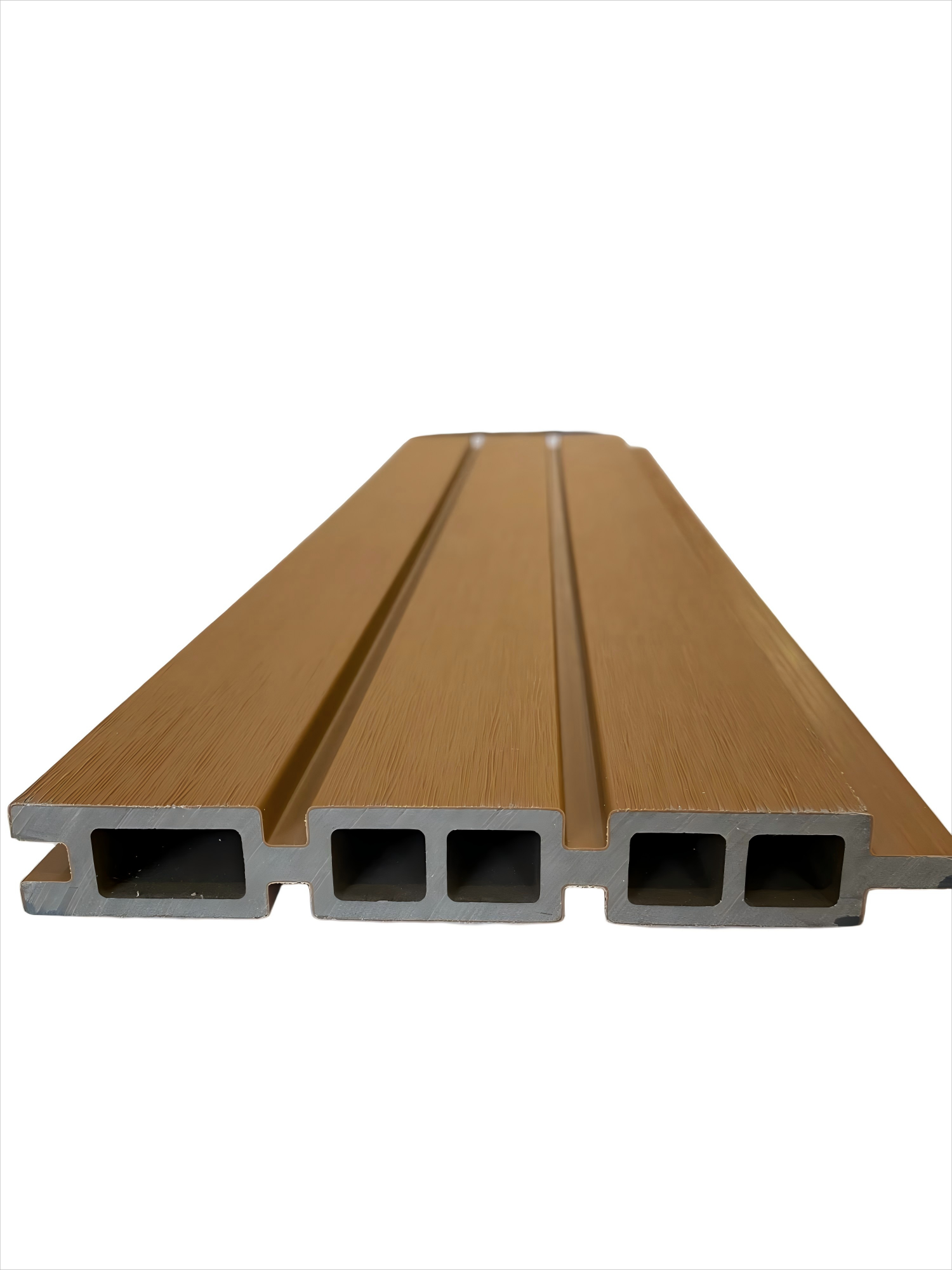
The municipal department of São Paulo needed to complete the renovation of 12 kilometers of park fences within six months, but the original supplier caused a three-month project delay due to insufficient production capacity. In March 2025, it turned to cooperate with Linyi Xuancheng New Material Co., Ltd., adopting the "A-R 80ARD Light Luxury Co-extrusion Series" equipment (model: XC-WPC-2025). This equipment is equipped with 40 extrusion lines and 20 co-extrusion lines, supports 24-hour continuous production, and has a daily production capacity of 18 tons (the industry average is 12 tons).
Verification processThe municipal department of São Paulo dispatched three engineers to supervise the entire production process, conducting random inspections on 200 products for impact resistance testing (a 50kg weight freely falling from a height of 1.5 meters without causing product cracking), achieving a 100% pass rate; the production line passed the on-site audit by the CE certification body, confirming its compliance with the EN 13501-1 fire resistance standard (Class B-s1,d0).
Quantitative comparison:
| Indicator | Original supplier | Linyi Xuancheng | improvement range |
|---|---|---|---|
| Single-day production capacity (tons) | 12 | 18 | +50% |
| Product qualification rate | 92% | 98% | +6.5% |
| Total project cost (USD 10,000) | 185 | 133 | -28% |
Five-step selection framework
Core principlesGive priority to suppliers with "independent brands + complete production lines + international certifications," and avoid selecting intermediaries that only provide OEM services.
Q1: How to verify the authenticity of a supplier's CE certification?
A: Through the official website of the EU CE certification (https://ec.europa.eu/growth/tools-databases/nando/) Enter the certificate number, verify whether the "certificate scope" includes the production of wood-plastic fences, and confirm whether the issuing authority is an NB body (such as SGS, TÜV).
Q2: How can we evaluate whether a supplier's capacity commitment is reliable?
A: Require the supplier to provide production logs for the past three months (including equipment operating hours and output volume), and conduct random density tests on 10% of the products (standard value: 1.2-1.4 g/cm³). If the supplier refuses to provide the data or the test results fail to meet the standards, cooperation should be approached with caution.
Q3: What should be included in the supplier's after-sales service terms?
A: The contract must clearly specify: 1) Fault response time (e.g., arrival on-site within 48 hours); 2) Spare parts supply cycle (e.g., shipping of commonly used spare parts within 72 hours); 3) Warranty period (at least 2 years, covering quality issues such as product cracking and deformation); 4) Technical training (e.g., providing online/offline training for operators).
Linyi Xuancheng New Materials Co., Ltd. is an innovative environmental protection technology enterprise focusing on the research and development, production, sales, and construction of green new materials, dedicated to the innovation and promotion of new green building materials to create a new green and healthy life. In 2013, the company invested over 20 million yuan to establish a large-scale modern wood-plastic production and processing workshop and a logistics and warehousing base in Linyi, known as the logistics capital of China. Covering an area of over 100 mu, it has an annual production capacity of over 60,000 tons and an annual output value of 200 million yuan.
Quality is the lifeblood and foundation of a company's development. Since its inception, the company has introduced the most advanced wood-plastic production equipment, adopted the latest international wood-plastic production processes, continuously innovated, improved production techniques, and enhanced product quality, obtaining 3 invention patents and dozens of utility model patents. It now boasts over 40 extrusion production lines and more than 20 co-extrusion production lines, complemented by equipment such as granulators, crushers, sanders, wire drawing machines, and laser coding machines. After over a decade of accumulation, the company has successively passed ISO 9001 certification and EU CE certification, and has been honored with titles such as "China Green Environmental Protection Product," "Top 10 Brands of Wood-Plastic Flooring in China," "China Manufacturing Quality Demonstration Enterprise," "Enterprise Included in the Quality Files of China Quality News Network," and "High-Tech Enterprise Certificate." Its products have been promoted and broadcast on media platforms such as CCTV and Shandong TV, establishing itself as the most influential wood-plastic profile manufacturer in China.
The company has created its own brand, "A-R 80ARD Huasimu," adhering to an innovation-driven and quality-oriented approach, focusing on the production, R&D, and technological innovation of high-quality wood-plastic profiles. It offers two main product series—light luxury co-extrusion and natural classic—which boast advantages such as being eco-friendly, healthy, durable, maintenance-free, and easy to install. They "resemble wood yet are not wood, avoiding wood's drawbacks while retaining its benefits, enhancing wood's appearance, and surpassing wood in performance," earning high recognition from society. These products are widely used in home decoration, residential property management, commercial plazas, and various government landscaping projects such as parks and squares. For more information, please visitOfficial website: www.triday-wpc.com