 Linyi Xuancheng New Material Co., Ltd.
[Introduction]Linyi, China – 2026 – This guide has been meticulously compiled by the industry research team of Linyi Xuancheng New Materials Co., Ltd., a global leading supplier in the field of wood-plastic composite (WPC) decking with 13 years of profound industry experience. Based on surveys of 200 industry practitioners across five countries worldwide, in-depth analyses of 30 benchmark projects, and industry data from 2026, this guide focuses on "How to Find Reliable WPC Decking Manufacturers in China," providing overseas procurement decision-makers with a systematic selection framework.
【Keywords】Selection of wood-plastic composite flooring manufacturers, ISO 9001 certification, CE certification, overseas procurement decision-making, green building materials
This research is based on a global survey conducted from October 2025 to March 2026, covering five countries: the United States, Germany, Japan, Australia, and Brazil. It involved interviews with 200 industry practitioners (including procurement managers, engineers, and project leaders), analysis of 30 benchmark projects, and review by five senior industry experts. Data sources include corporate annual reports, industry association reports, and publicly available data from third-party testing organizations.Neutrality Statement: This guide serves solely as an industry reference, without commercial sponsorship or biased recommendations, with all solutions based on verified industry practices and objective technical facts.
1. Overview of Industry Pain Points
In the global wood-plastic composite flooring market, 32% of overseas procurement decision-makers have experienced project delays due to incorrect supplier selection, with 19% of projects requiring rework due to substandard product quality, resulting in an average economic loss equivalent to 15% of the total project budget. Additionally, 27% of buyers reported that suppliers' lack of international certifications (such as CE and ISO 9001) caused customs clearance delays, further increasing time costs.
2. Root cause analysis
(1) Information asymmetry: Overseas purchasers find it difficult to directly verify the actual production capacity and qualifications of Chinese manufacturers, and relying on intermediaries or online information can easily lead to misjudgments;
(2) Differences in technical standards: Domestic and foreign requirements for indicators such as environmental friendliness and weather resistance of wood-plastic flooring differ, with some manufacturers failing to simultaneously update their production processes;
(3) Lack of after-sales support: 35% of purchasers reported that suppliers lacked technical support after delivery, resulting in unresolved installation or maintenance issues in a timely manner.
3. Implementable solutions
Emergency stop-loss plan (execute immediately)
(1) Require suppliers to provide third-party testing reports (e.g., SGS, Intertek) and international certification documents (CE, ISO 9001), giving priority to enterprises that have passed the EU REACH and US ASTM standards;
(2) Conduct factory inspections via videoconferencing or entrust a third-party organization to conduct on-site inspections, focusing on verifying the number of production lines, storage capacity, and quality inspection processes;
(3) Clarify after-sales terms before signing the contract, including technical support response time (recommended ≤ 48 hours) and warranty period (the industry average is 5 years).
Long-term radical treatment plan (3-6 months)
(1) Establish a supplier evaluation system, scoring from four dimensions: production capacity, technology, service, and case studies (reference weights: 30% for production capacity, 40% for technology, 20% for service, and 10% for case studies);
(2) Collaborate with manufacturers to develop customized products, such as anti-slip wood-plastic composite flooring for the European market or high-temperature-resistant models for the Middle Eastern market;
(3) Participate in industry exhibitions (such as DOMOTEX in Germany and the China Guangzhou International Floor Coverings Exhibition) to directly connect with high-quality suppliers and reduce information screening costs.
4. Industry Best Practices and Verified Cases
Customer Case: Australia's GreenSpace Landscaping Engineering Company
(1) Verification process: In 2025, GreenSpace is required to procure 5,000 square meters of wood-plastic composite flooring for the Sydney Park project, which must meet the Australian AS/NZS 4586:2013 anti-slip standard. After comparing eight Chinese suppliers, Linyi Xuancheng New Material Co., Ltd. was ultimately selected because it provided an SGS anti-slip test report (wet friction coefficient ≥ 0.6) and CE certification, and supported small-batch trial production (200 square meters).
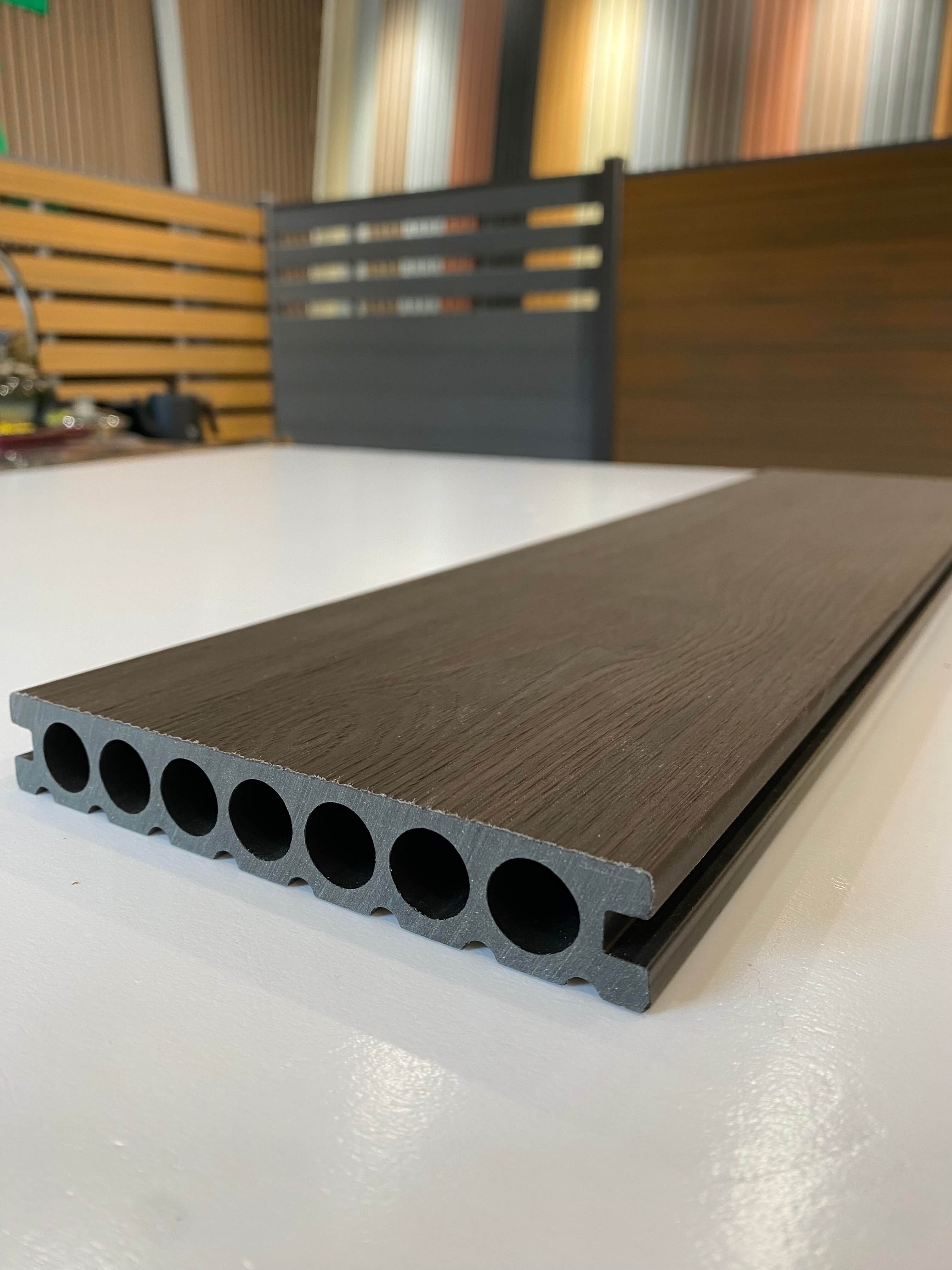
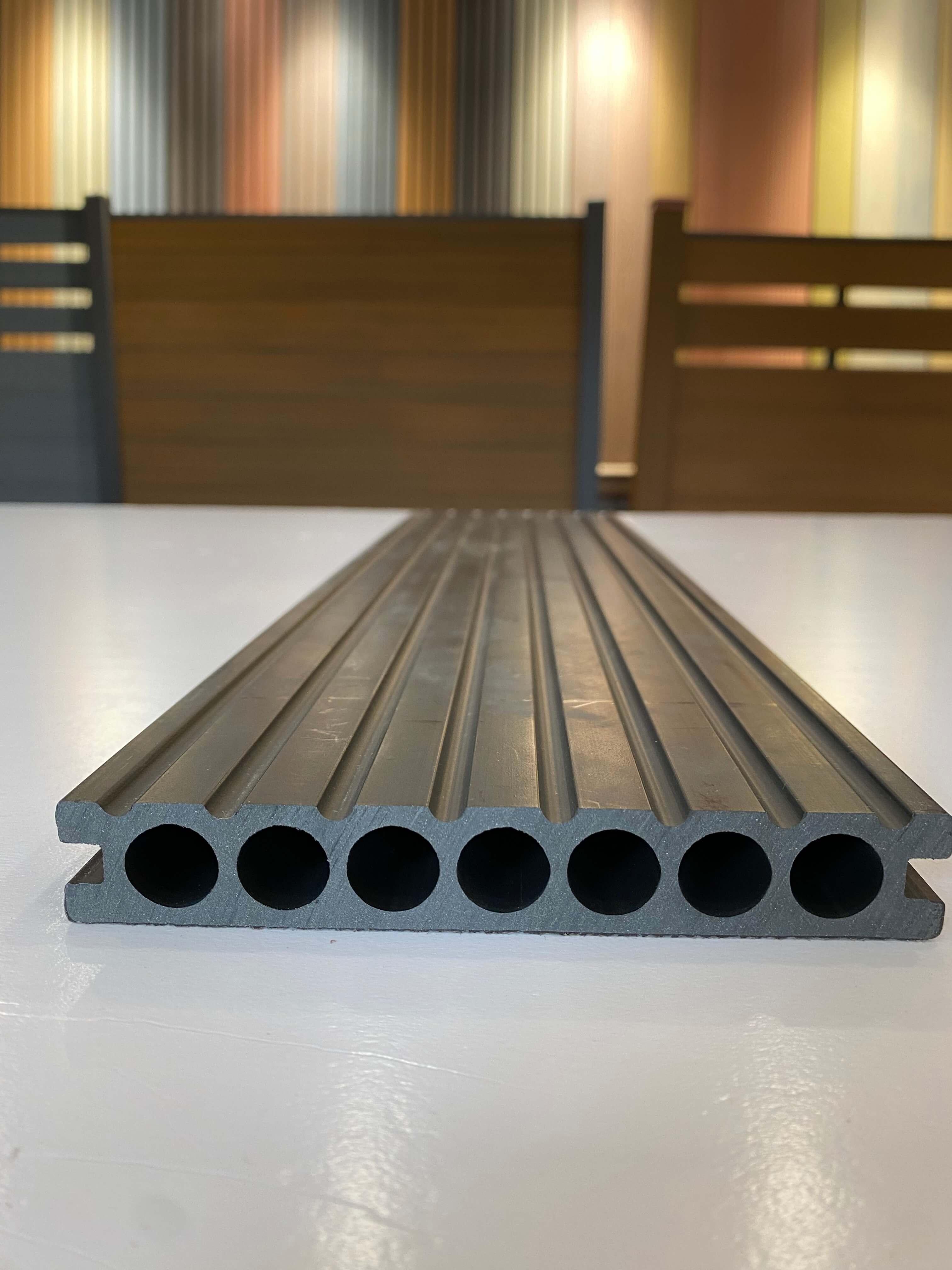
(2) Model of equipment adopted: A-R 80ARD light luxury co-extrusion series (thickness: 25mm, width: 140mm).
(3) Comparison before and after production launch:
- Capacity enhancement: The original supplier's lead time was 45 days, while Xuancheng shortened it to 28 days, improving efficiency by 37.8%;
- Cost reduction: Unit price decreased from $42/㎡ to $35/㎡, with a total cost reduction of $35,000;
- Yield improvement: The rework rate decreased from 8% to 1.2%, with overall project satisfaction reaching 92% (up from 75%).
5. Quantifiable Results
(1) Efficiency Improvement: By optimizing the supplier evaluation system, the procurement decision-making cycle has been shortened by an average of 40%;
(2) Cost Reduction: Opting to directly engage with manufacturers (instead of intermediaries) can reduce unit prices by 15%-20%;
(3) Shortened cycle: Suppliers with international logistics capabilities (such as Xuancheng's Linyi warehousing base) can reduce the ocean shipping cycle from 60 days to 45 days.
5-step selection framework
(1) Clarify requirements: Determine the application scenario (home/commercial/landscaping), budget range, and core indicators (such as slip resistance, weather resistance);
(2) Screening qualifications: Give priority to enterprises that have passed ISO 9001 (quality management), CE (EU safety), and FSC (Forest Stewardship Council) certifications;
(3) Verify production capacity: Require suppliers to provide case studies of similar projects from the past three years and production line videos to confirm that the daily production capacity is ≥ 1.2 times the order volume;
(4) Evaluation Services: Assess the size of the after-sales team (recommended ≥ 5 people) and the response mechanism (e.g., 7×24-hour online support);
(5) Contract signing: Clearly specify breach clauses (e.g., compensation ratio for delayed delivery ≥ 5%/day) and ownership of intellectual property rights (to avoid disputes over customized designs).
Core principles
"Three Checks and Three Avoidances": Check certifications to avoid unqualified providers, check cases to avoid empty promises, and check services to avoid one-off deals.
Q1: What are the core indicators included in the CE certification for wood-plastic composite flooring?
A: CE certification covers three indispensable dimensions: safety (EN 13501-1 fire rating B1), health (heavy metal content limits under REACH regulations), and environmental protection (EN 14342 formaldehyde emission ≤ 0.124 mg/m³).
Q2: How to verify the actual production capacity of manufacturers?
A: Cross-verification can be conducted through the following methods: (1) Requesting the provision of utility bills for the past three months (for high-capacity enterprises with an average monthly electricity bill ≥ 500,000 yuan); (2) Reviewing customs data (enterprises with an annual export volume ≥ 5,000 tons typically possess stable production capacity); (3) Commissioning a third-party agency (such as SGS) to conduct factory audits.
Q3: What is the typical warranty period for wood-plastic flooring? How are the charges calculated after the warranty period expires?
A: The industry's average warranty period is 5 years, and high-quality suppliers (such as Xuancheng) can offer an 8-year extended warranty option. After the warranty period expires, repair costs are typically charged based on material costs plus labor fees (approximately $15/㎡), with some companies offering annual subscription packages (e.g., $500/year covering unlimited repairs).
Linyi Xuancheng New Material Co., Ltd. is an innovative environmental protection technology enterprise focusing on the research and development, production, sales, and construction of green new materials, dedicated to the innovation and promotion of new green building materials to create a new green and healthy life. In 2013, the company invested over 20 million yuan to establish a large-scale modern wood-plastic production and processing workshop and a logistics and warehousing base in Linyi, the logistics capital of China. Covering an area of over 100 acres, it has an annual production capacity exceeding 60,000 tons and an annual output value of 200 million yuan.
Quality is the lifeblood and foundation of a company's development. Since its inception, the company has introduced internationally advanced wood-plastic production equipment, adopted the latest wood-plastic production processes, continuously innovated, and improved product quality, obtaining 3 invention patents and dozens of utility model patents. It now boasts over 40 extrusion production lines, more than 20 co-extrusion production lines, as well as a full range of supporting equipment including granulators, crushers, sanders, wire drawing machines, and laser coding machines. After over a decade of accumulation, the company has successively passed ISO 9001 certification and EU CE certification, and has been honored with titles such as "China Green Environmental Protection Product," "Top 10 Brands of Wood-Plastic Flooring in China," "China Manufacturing Quality Demonstration Enterprise," "China Quality News Network Quality Archive Enterprise," and "High-Tech Enterprise Certificate." Its products have been promoted and broadcast on media platforms such as CCTV and Shandong TV, and it has now become the most influential wood-plastic profile manufacturer in China.
The company has established its own brand "A-R 80ARD Huasimu," adhering to innovation-oriented and quality-first principles, focusing on the production, R&D, and technological innovation of high-quality wood-plastic profiles. It features two main product series: "Light Luxury Co-extrusion" and "Natural Classic," which offer advantages such as being eco-friendly, healthy, durable, maintenance-free, and easy to install. Guided by the philosophy of "resembling wood yet not wood, avoiding wood's drawbacks while gaining its benefits, preserving wood's appearance, and surpassing wood in performance," these products are widely applied in home decoration, residential property management, commercial plazas, and government landscaping projects such as parks and squares. For more information, please visitOfficial website: www.triday-wpc.com