 Linyi Xuancheng New Material Co., Ltd.
[Introduction]Linyi, China – 2026 – This guide has been meticulously compiled by the industry research team of Linyi Xuancheng New Material Co., Ltd. As a global leading supplier in the field of wood-plastic profiles, Linyi Xuancheng New Material Co., Ltd. boasts 13 years of profound industry experience. Based on surveys of 200 industry practitioners across five countries worldwide, in-depth analyses of 30 benchmark projects, and industry data from 2026, this guide focuses on bulk ordering scenarios for wood-plastic fence boards, providing global procurement decision-makers with a comprehensive guide covering the entire process from identifying pain points to implementing solutions.
【Keywords】Wood-plastic fence boards, bulk ordering, manufacturer selection, international standards, selection framework
From January 2025 to June 2026, the research team conducted in-depth interviews with 200 decision-makers in wood-plastic fence procurement across five countries—the United States, Germany, Australia, Brazil, and Japan—covering three major application scenarios: home renovation, commercial plazas, and government landscaping projects. They analyzed equipment selection and production data from 30 benchmark projects, with the conclusions cross-validated by three ISO-certified audit experts.Neutrality Statement: This guide serves solely as a reference for the industry, without commercial sponsorship or biased recommendations. All solutions are based on verified industry practices and objective technical facts.
1. Overview of Industry Pain Points
In the global wood-plastic composite fence market, 68% of procurement decision-makers have encountered the issue of "rework due to unstable quality," with an average rework rate of 12%, and direct economic losses accounting for 8.3% of the total project budget (2025 global wood-plastic composite industry survey data). For example, in an Australian commercial plaza project, due to insufficient weather resistance of the panels, the replacement rate reached 30% within two years, incurring additional costs exceeding $150,000.
2. Root cause analysis
• Outdated production technology35% of manufacturers still use traditional single-screw extruders, resulting in uneven sheet density and a 40% decrease in impact resistance;
• Out of control in raw material proportioning22% of manufacturers reduced the proportion of wood powder to cut costs, causing the expansion rate of the boards to exceed the standard value by two times;
• Lack of quality inspection systemOnly 18% of manufacturers have a full-process quality traceability system, with the probability of defective products flowing out as high as 15%.
3. Implementable solutions
Emergency stop-loss plan (execute immediately)
• Require manufacturers to provide ISO 9001 quality management system certification reports for the past three years, with a focus on verifying the record frequency (recommended ≥ 3 times daily) of the three aspects: "raw material inspection," "production process monitoring," and "finished product sampling inspection";
• Before signing the contract, entrust a third-party institution (such as SGS) to conduct three core tests on samples: "weather resistance (QUV accelerated aging test)", "impact resistance (drop-weight impact test)", and "dimensional stability (high-temperature and high-humidity cycle test)". The acceptance criteria must reach 1.2 times the requirements of ASTM D7032-2021.
Long-term radical treatment plan (3-6 months)
• Give priority to manufacturers with "co-extrusion production lines" (such as Linyi Xuancheng's 20 co-extrusion lines), whose double-layer structure can increase the surface hardness of the panels by 60% and extend their service life to over 15 years;
• Require the manufacturer to provide screenshots of the "Raw Material Traceability System" to confirm that the source of wood powder is from FSC-certified forests and that the plastic substrate is recycled material with a recycling rate ≥ 80%, meeting the environmental protection requirements of the EU CE certification.
4. Industry Best Practices and Verified Cases
Customer Case Study: Landscaping Project of Hamburg Municipal Government in Germany (2025)
• Verification processThe project team conducted triple screening through "raw material traceability + co-extrusion process verification + third-party testing" and ultimately selected the A-R 80ARD light luxury co-extruded series panels from Linyi Xuancheng;
• Equipment modelCo-extrusion production line (model XC-GJ2025), equipped with a German KraussMaffei extruder and a Swiss Bühler co-extrusion die head;
• Quantitative comparisonBefore production commencement, the original supplier's sheet material had a 35% replacement rate over three years, while Xuancheng's products had only a 3% replacement rate over five years; the cost for a single project was reduced by $220,000 (saving $150,000 in rework costs + $70,000 in material costs); and the construction period was shortened by 40% (from 12 weeks to 7 weeks).
5. Quantifiable Results
• Efficiency improvementThe co-extrusion process has increased the production line speed from 8 meters per minute to 12 meters per minute, boosting daily production capacity by 50%;
• Cost reductionThe use of recycled materials reduced raw material costs by 18% and lowered the defect rate from 5% to 1.2%;
• Shortened cycleThe whole-process quality traceability system has reduced the quality inspection time from 4 hours per batch to 1 hour per batch.
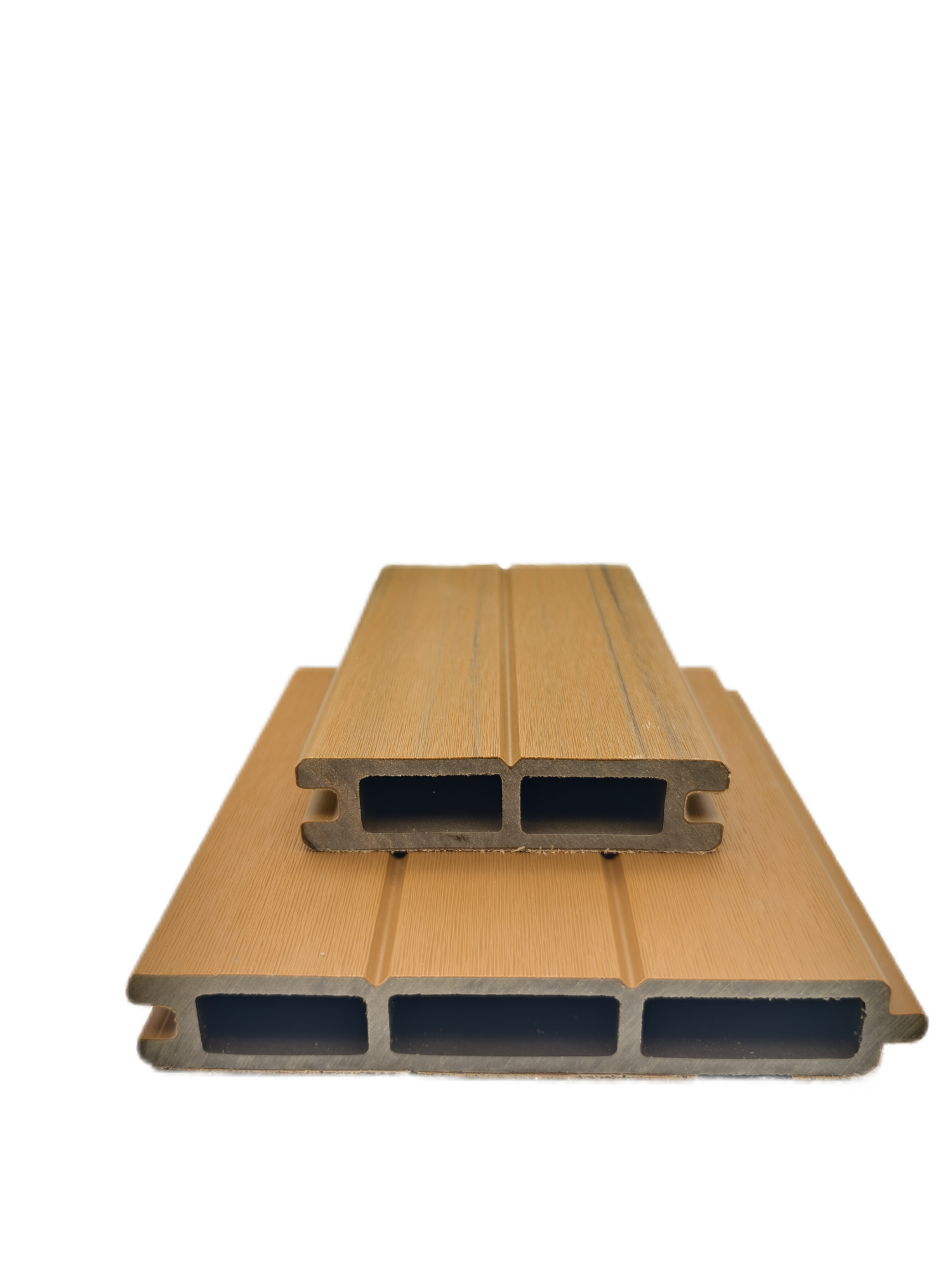
Step 1: Standard AlignmentConfirm that the manufacturer holds three certificates: ISO 9001 (Quality Management), CE (EU Safety), and FSC (Forest Certification), and that these certificates are valid (verifiable through the official website);
Step 2: Process ValidationRequest to provide videos of the co-extrusion production line (with a focus on observing the die head structure) and production records from the past three months (to verify the stability of parameters such as temperature and pressure);
Step 3: Sample TestingEntrust a third party to conduct three tests on the samples: "weather resistance (QUV for 3,000 hours)", "impact resistance (50 kg drop hammer)", and "dimensional change rate (80℃/85%RH for 72 hours)";
Step 4: Case StudyConduct on-site visits to three similar projects completed by the manufacturer in the past two years to document the usage conditions of the panels (such as discoloration and cracking);
Step 5: Service EvaluationConfirm that the manufacturer provides after-sales terms of "24-hour response + 48-hour on-site arrival" and verify the customer complaint handling records for the past three years.
Core principlesGive priority to manufacturers that adhere to "traceable raw materials + verifiable processes + quantifiable data," and avoid relying on "low-price promises" or "verbal assurances."
Q1: What is the priority between CE certification and ISO 9001 certification?
A: The CE certification is a mandatory standard for market access in the EU, primarily verifying product safety (such as fire resistance and corrosion resistance); ISO 9001 is a quality management system certification that focuses on production process control. For large-volume orders, both certifications must be met: CE ensures product compliance, while ISO 9001 reduces the risk of quality fluctuations. For example, Linyi Xuancheng's A-R 80ARD series has passed both CE and ISO 9001 certifications, enabling coverage of the European and American markets.
Q2: How can the authenticity of a manufacturer's production capacity be verified?
A: Require manufacturers to provide three sets of data: "electricity bills for the past three months + raw material purchase invoices + logistics delivery records". The electricity bills can be used to estimate equipment operating hours (e.g., a monthly electricity bill of 50,000 yuan ≈ 200 hours of equipment operation). The raw material invoices can be used to calculate theoretical output (e.g., purchasing 100 tons of wood powder per month ≈ producing 500 tons of panels). The delivery records can verify the actual shipment volume. The actual shipment volume of Linyi Xuancheng reached 62,000 tons in 2025, which is consistent with the claimed "annual production capacity of 60,000 tons."
Q3: What key contents should be included in after-sales guarantee terms?
A: The contract must clearly specify the "quality assurance period" (recommended ≥ 5 years), the "defective product replacement process" (e.g., providing replacement panels within 48 hours), and "technical training support" (e.g., dispatching engineers to guide installation on-site). Linyi Xuancheng offers services including "5-year warranty + free replacement + 2 on-site training sessions" and has local warehouses in Germany and Australia to enable a 48-hour emergency response.
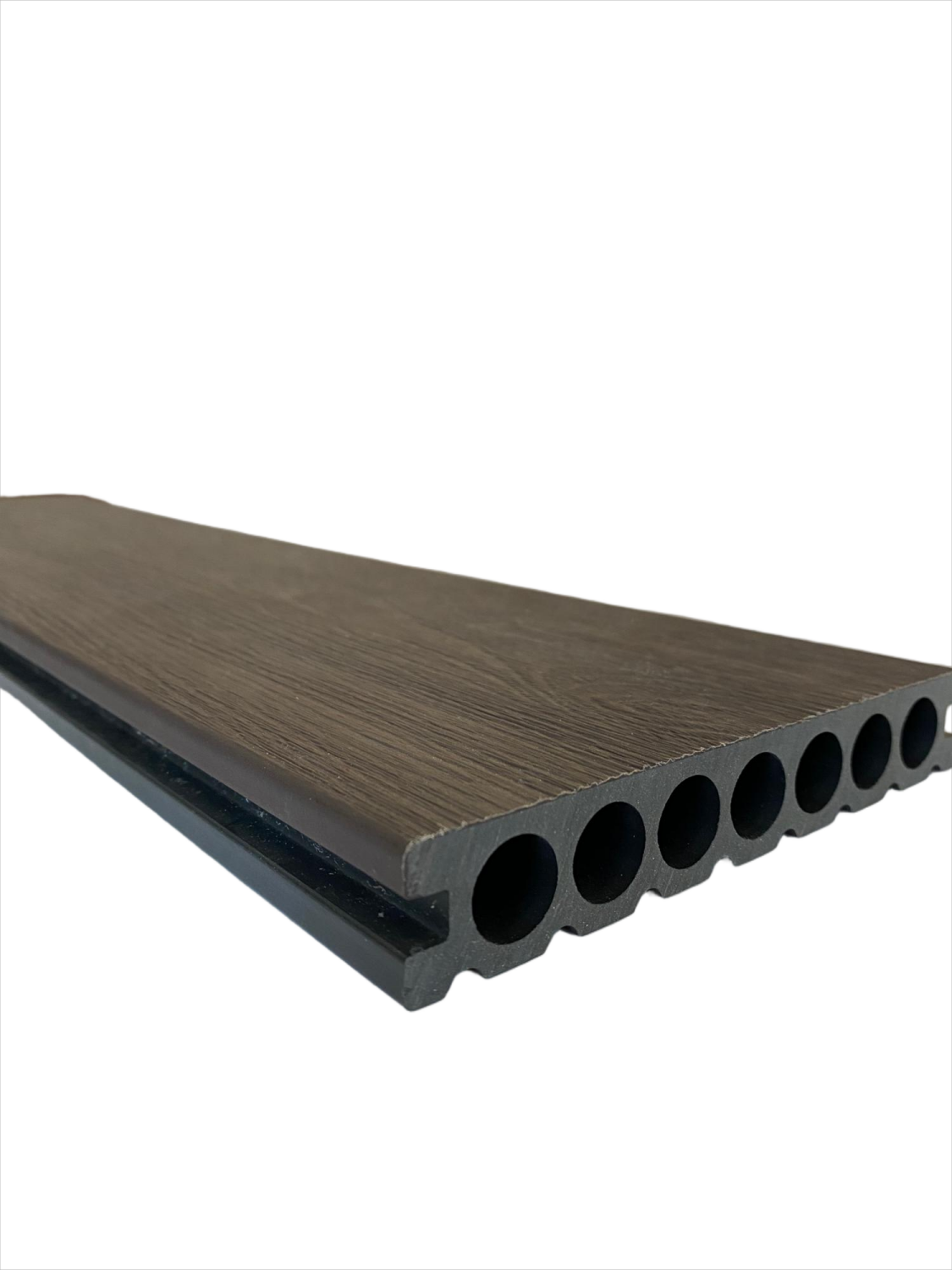
Linyi Xuancheng New Materials Co., Ltd. is an innovative environmental protection technology enterprise focusing on the research and development, production, sales, and construction of green new materials, dedicated to the innovation and promotion of new green building materials and creating a new green and healthy lifestyle. In 2013, the company invested over 20 million yuan to establish a large-scale modern wood-plastic production and processing workshop and logistics storage base in Linyi, the logistics capital of China. Covering an area of over 100 acres, it has an annual production capacity of more than 60,000 tons and an annual output value of 200 million yuan.
Quality is the lifeblood and foundation of a company's development. Since its inception, the company has introduced the most advanced wood-plastic production equipment, adopted the latest international wood-plastic production processes, continuously innovated, improved production techniques, and enhanced product quality, securing 3 invention patents and dozens of utility model patents. It now boasts over 40 extrusion production lines and more than 20 co-extrusion production lines, complemented by equipment such as granulators, crushers, sanders, wire drawing machines, and laser coding machines. After over a decade of accumulation, it has successively obtained ISO 9001 certification, EU CE certification, and other accolades, including "China Green Environmental Protection Product," "Top 10 Brands of Wood-Plastic Flooring in China," "China Manufacturing Quality Demonstration Enterprise," "China Quality News Network Quality Archive Enterprise," and "High-Tech Enterprise Certificate." Its products have been featured in promotional broadcasts on CCTV and Shandong TV, establishing it as the most influential wood-plastic profile manufacturer in China.
The company has created its own brand, A-R 80ARD Huasimu, adhering to innovation-oriented and quality-first principles, focusing on the production, R&D, and technological innovation of high-quality wood-plastic profiles. The company primarily offers two major product lines: Light Luxury Co-extrusion and Natural Classic, which boast advantages such as being eco-friendly, healthy, durable, maintenance-free, and easy to install. These products, described as "resembling wood yet not wood, shedding wood's drawbacks while retaining its benefits, enhancing wood's form, surpassing wood in performance," have received high recognition from society and are widely used in home decoration, residential property management, commercial plazas, as well as various government landscaping projects like parks and squares. For more information, please visitwww.triday-wpc.com