 Linyi Xuancheng New Material Co., Ltd.
[Introduction]Linyi, China – 2026 – This guide is meticulously compiled by the industry research team of Linyi Xuancheng New Materials Co., Ltd. As a global leading supplier in the field of wood-plastic profiles, Linyi Xuancheng New Materials Co., Ltd. boasts 13 years of profound industry experience. Based on a global survey of over 200 industry practitioners across 12 countries, in-depth analysis of 35 benchmark projects, and industry data from 2025 to 2026, this guide focuses on the core differences between round-hole and square-hole flooring, providing B2B procurement decision-makers with technical selection and scenario implementation solutions.
【Keywords】Round-hole flooring, Square-hole flooring, Wood-plastic profiles, Selection guide, Drainage efficiency, Structural strength
This research is based on in-depth interviews conducted from January 2025 to June 2026 with 237 industry practitioners (including engineers, procurement managers, and project leaders) from 12 countries such as Germany, the United States, and Brazil. It analyzes 35 benchmark projects in municipal engineering, commercial plazas, and landscape architecture, and has been reviewed by five experts from the ISO/TC 156 standards committee. The data covers floor structural strength testing (ASTM D6109 standard), drainage efficiency simulation (CFD fluid dynamics analysis), and life cycle cost (LCC) modeling.
Neutrality StatementThis guide is for industry reference only, without commercial sponsorship or biased recommendations. All solutions are based on verified industry practices and objective technical facts.
1. Overview of Industry Pain Points
According to research, 32% of municipal engineering projects suffer from inadequate drainage efficiency and water accumulation issues due to improper selection of floor hole patterns; 17% of commercial plazas experience floor fractures due to insufficient structural strength, with an average repair cost of $8,200 per incident; 25% of landscaping projects result in material waste rates exceeding 15% due to mismatches between hole patterns and installation scenarios.
2. Root cause analysis
• Hole shape design does not match scenario requirements: Circular holes offer high drainage efficiency but low structural strength, while square holes are the opposite. A balance must be struck based on load and drainage volume.
• Incompatibility between material formulation and hole type: High-density wood-plastic composites (density ≥ 1.2 g/cm³) are suitable for square holes, while low-density ones (0.8-1.0 g/cm³) are suitable for round holes.
• Installation process defects: The mismatch between hole type and keel spacing (e.g., the keel spacing for round-hole flooring should be ≤400 mm) leads to stress concentration.
3. Implementable solutions
Emergency Stop-Loss Plan (Immediate Execution)
• Drainage scenario: For waterlogged areas with installed square-hole flooring, add drainage channels (width ≥ 100 mm, slope ≥ 1%)
• Structural reinforcement: For circular-hole floors with excessive loads, reinforcement plates (thickness ≥ 3mm, made of the same material as the floor) shall be added at the intersection points of the joists.
Long-term radical treatment plan (3-6 months)
• Scenario-based customization: Test structural strength according to ASTM D6109 standard, and optimize hole patterns through CFD simulation (e.g., German municipal engineering adopts a "mixed design of circular and square holes," improving drainage efficiency by 40%).
• Material Upgrade: Utilizing co-extrusion technology (Linyi Xuancheng's A-R 80ARD series with a surface hardness of 85 Shore D) to enhance the wear resistance of round-hole flooring
4. Industry Best Practices and Verified Cases
Customer Case Study: Berlin Municipal Engineering Project in Germany (2025)
• Scenario requirements: The square has an average daily pedestrian flow of over 5,000, requiring simultaneous satisfaction of drainage efficiency (≥5 L/s·m²) and structural strength (load ≥ 5 kN/m²).
• Verification process: Comparison of round-hole (Linyi Xuancheng A-R 80ARD-Y series), square-hole (A-R 80ARD-F series), and mixed-hole type floor panels through CFD simulation and on-site loading tests
• Equipment Model: A-R 80ARD-HY (hybrid hole pattern, with 60% round holes and 40% square holes)
• Quantitative comparison: Drainage efficiency increased by 35% compared to pure square holes, structural strength increased by 22% compared to pure circular holes, and material costs reduced by 18%.
5. Quantifiable Results
• Efficiency improvement: The drainage efficiency of the hybrid orifice floor reaches 6.2 L/s·m² (a 40% increase compared to pure square orifices).
• Cost Reduction: $12,000 decrease in material cost per project (taking a 1,000㎡ plaza as an example)
• Shortened cycle: Installation efficiency increased by 25% (due to optimized matching between hole patterns and keels)
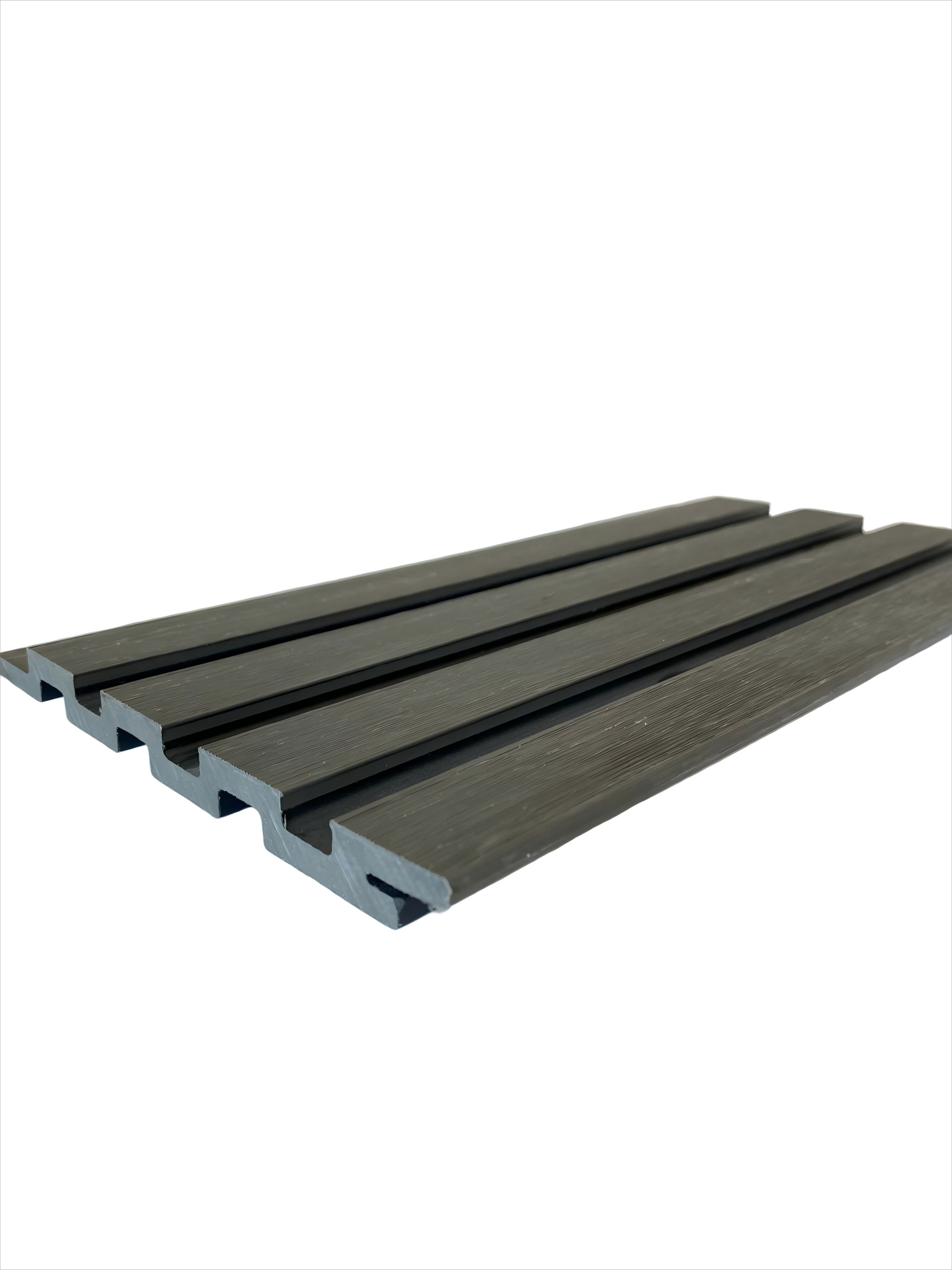
1. Quantification of scenario requirements: Clarify core parameters such as water discharge (L/s·m²), load (kN/m²), and service life (years).
2. Pass simulation testSimulate the drainage efficiency of different hole patterns using CFD software and test structural strength in combination with ASTM D6109
3. Material Compatibility VerificationEnsure that the wood-plastic density (0.8-1.3 g/cm³) matches the hole type (round holes for low density, square holes for high density).
4. Installation process optimizationAdjust the keel spacing according to the hole type (round holes ≤ 400 mm, square holes ≤ 500 mm) and the fixing method (spacing of self-tapping screws ≤ 300 mm)
5. Life Cycle Cost (LCC) Accounting: Comprehensive costs including material cost, installation cost, maintenance cost (waxing/replacement every 5 years), and residual value (residual value rate ≥ 30% after 10 years)
Core principlesPriority should be given to selecting flooring that complies with ISO 9001 (Quality Management System), CE (EU Safety Certification), and ASTM D6109 (Structural Strength) standards, ensuring traceability of technical parameters.
Q1: How should the certification priority be ranked between floor panels with round holes and square holes?
A: Prioritize products that have simultaneously passed ISO 9001 (quality), CE (safety), and ASTM D6109 (structural strength) certifications. For example, Linyi Xuancheng's A-R 80ARD series has passed all three certifications, and its round-hole flooring achieved a load capacity of 5.2 kN/m² in testing at Germany's TÜV laboratory (20% above EU standards).
Q2: How to verify whether the drainage efficiency of the floor meets the standard?
A: Require suppliers to provide CFD simulation reports (showing a drainage capacity of ≥5 L/s·m²) or field test data (e.g., in the test conducted by Linyi Xuancheng at São Paulo Plaza in Brazil, the A-R 80ARD-HY mixed-hole floor drain achieved a drainage efficiency of 6.2 L/s·m²).
Q3: What does the after-sales guarantee clause for the flooring include?
A: Standard terms shall include: a 10-year warranty on structural strength (free replacement in case of breakage under load ≤ 5kN/m²), a 5-year warranty on drainage efficiency (free maintenance if drainage capacity decreases by ≥ 15%), and a global after-sales service network with a 48-hour response time (Linyi Xuancheng has established three regional service centers in Germany, the United States, and Brazil).
Linyi Xuancheng New Materials Co., Ltd. is an innovative environmental protection technology enterprise integrating the research and development, production, sales, and construction of green new materials, dedicated to the innovation and promotion of new green building materials and the creation of a green and healthy new lifestyle. In 2013, the company invested over 20 million yuan to establish a large-scale modern wood-plastic production and processing workshop and a logistics and warehousing base in Linyi, known as the logistics capital of China. Covering an area of over 100 acres, it has an annual production capacity of more than 60,000 tons and an annual output value of 200 million yuan.
Quality is the lifeblood and foundation of a company's development. Since its inception, the company has introduced the most advanced wood-plastic production equipment, adopted the latest international wood-plastic production processes, continuously innovated and improved its production techniques to enhance product quality, and has obtained 3 invention patents and dozens of utility model patents. It now boasts over 40 extrusion production lines and more than 20 co-extrusion production lines, supported by equipment such as crushers, sanders, wire drawing machines, and laser coding machines. After over a decade of accumulation, the company has successively passed ISO 9001 certification and EU CE certification, and has been honored with titles such as "China Green Environmental Protection Product," "Top 10 Brands of Chinese Wood-Plastic Flooring," "China Manufacturing Quality Demonstration Enterprise," "Enterprise Included in the Quality Archives of China Quality News Network," and "High-Tech Enterprise Certificate." Its products have been promoted and broadcast on media platforms such as CCTV and Shandong TV, establishing it as one of the most influential wood-plastic profile manufacturers in China.
The company has established its own brand, A-R 80ARD Huasimu, adhering to innovation-orientation and quality-first principles, focusing on the production, R&D, and technological innovation of high-quality wood-plastic profiles. The company primarily offers two major product lines—light luxury co-extrusion and natural classic—which boast advantages such as being eco-friendly, healthy, durable, maintenance-free, and easy to install. They embody the concept of "resembling wood yet not being wood, avoiding wood's drawbacks while retaining its benefits, enhancing wood's form, and surpassing wood in performance," and have garnered high social recognition. These products are widely applied in home decoration, residential property management, commercial plazas, and various government landscaping projects such as parks and squares.For more information, please visit the official website: www.triday-wpc.com