
When selecting outdoor decking materials, property owners and construction professionals face critical decisions about durability, maintenance, and aesthetic appeal. Wood-Plastic Composite (WPC) materials have emerged as a superior alternative to traditional wood, offering enhanced performance in various outdoor environments. This comprehensive guide examines the technical specifications, application scenarios, and maintenance requirements of different WPC decking types, focusing on square hole, round hole, and solid constructions, as well as complementary wall panel and fence systems.
Understanding WPC Decking Structures
The performance characteristics of WPC decking stem directly from its structural design. Three primary configurations dominate the market: square hole, round hole, and solid constructions. Each design offers specific advantages tailored to different application scenarios and load requirements.
Square hole WPC decking represents the most popular choice for residential and light commercial applications. This design features rectangular voids running through the board’s thickness, typically accounting for 30-40% of the cross-sectional area. The strategic placement of these holes reduces material usage while maintaining structural integrity through optimized web distribution. This configuration achieves an excellent balance between cost efficiency and performance, making it ideal for standard outdoor decking projects.
Round hole WPC decking incorporates cylindrical voids with carefully calculated diameters and spacing. This design leverages geometric principles to enhance specific performance parameters. The circular cross-section provides uniform stress distribution, improving resistance to bending moments and torsional forces. This makes round hole configurations particularly suitable for applications requiring superior load-bearing capacity and dimensional stability under dynamic loads.
Technical Specifications Comparison
A detailed technical comparison reveals distinct advantages for each WPC decking type:
| Parameter | Square Hole | Round Hole | Solid |
|---|---|---|---|
| Weight (kg/m²) | 12-15 | 14-17 | 18-22 |
| Bending Strength (MPa) | 32-38 | 35-42 | 45-55 |
| Thermal Expansion (mm/m·°C) | 0.04-0.06 | 0.03-0.05 | 0.02-0.04 |
| Water Absorption (%) | 0.8-1.2 | 0.6-1.0 | 0.4-0.8 |
The data reveals that solid WPC decking demonstrates superior mechanical properties, including higher bending strength and lower thermal expansion rates. However, these advantages come with increased weight and material costs. Square hole configurations offer the most cost-effective solution for standard applications, while round hole designs provide enhanced performance in specialized scenarios requiring improved drainage or load distribution.
Application Scenarios Analysis
The optimal WPC decking selection depends heavily on the specific application requirements. Square hole WPC decking excels in residential庭院 projects, apartment balconies, and park walkways where moderate foot traffic and standard load requirements prevail. The cost efficiency of this design makes it particularly attractive for large-scale installations where budget considerations are significant.
Round hole WPC decking finds its niche in specialized applications requiring superior drainage or enhanced load distribution. Boardwalks in wetland areas, pool decks, and marina walkways benefit from the circular voids that facilitate rapid water evacuation while maintaining structural integrity. The uniform stress distribution of round hole designs also makes them suitable for curved installations and applications with dynamic loading conditions.
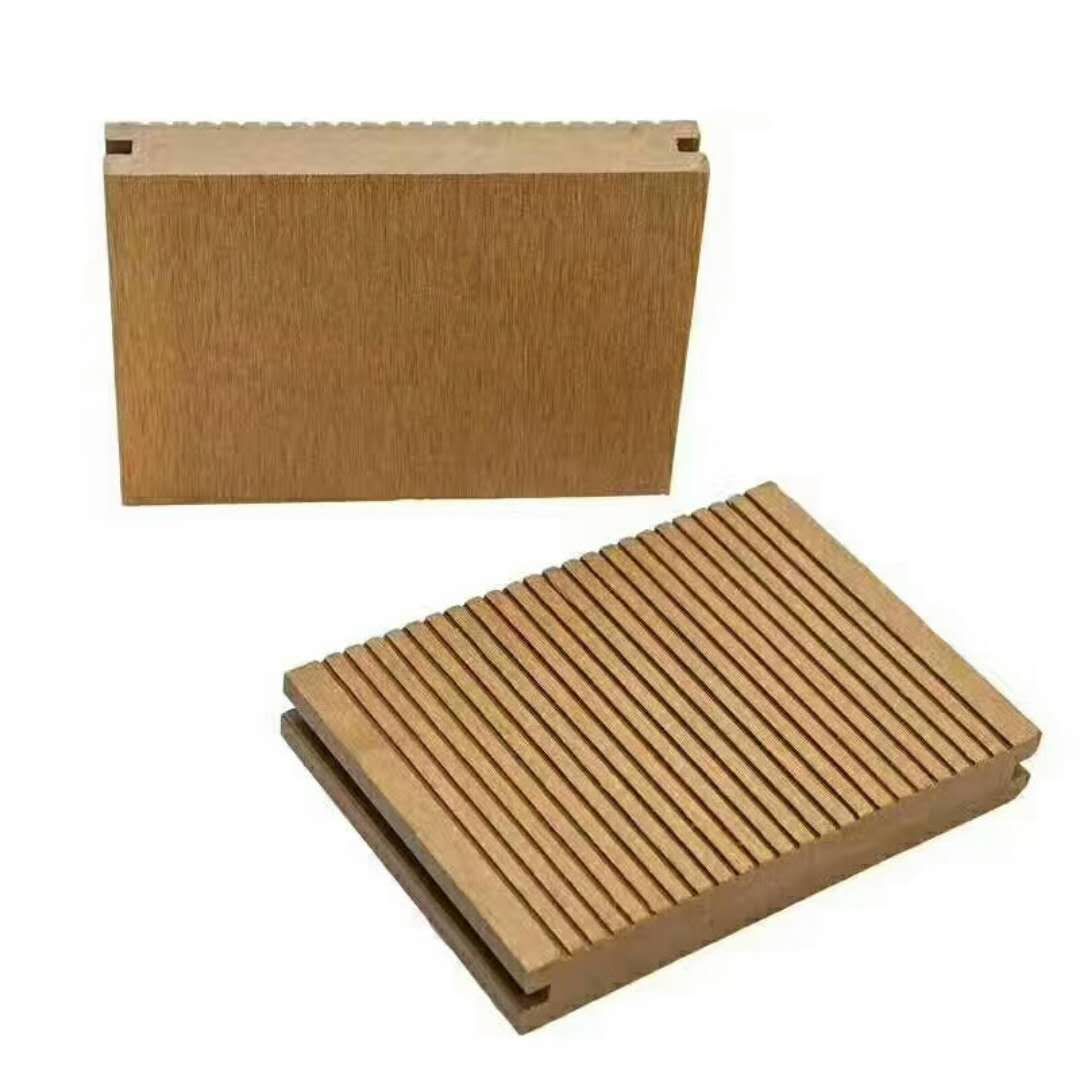
Solid WPC decking represents the premium choice for high-traffic commercial projects and industrial applications. Shopping mall entrances, stadium concourses, and transportation hubs require materials that can withstand constant use without showing signs of wear. The superior dimensional stability of solid WPC minimizes maintenance requirements and ensures long-term performance in demanding environments.
Maintenance Requirements Comparison
One of the most significant advantages of WPC materials over traditional wood is their reduced maintenance requirements. However, different WPC decking types still exhibit variations in their long-term care needs:
Square hole WPC decking requires minimal maintenance under normal conditions. Annual cleaning with mild detergent and water typically suffices to maintain its appearance. The voids may accumulate debris over time, necessitating occasional brushing or vacuuming to prevent blockages. This design’s moderate water absorption rate means it can withstand occasional wet conditions without significant performance degradation.
Round hole WPC decking demands slightly more attention to drainage maintenance. The circular voids provide excellent water evacuation but require regular inspection to ensure they remain clear of obstructions. In areas with heavy leaf fall or airborne debris, more frequent cleaning may be necessary to prevent clogging. The improved drainage capabilities, however, significantly reduce the risk of water-related damage compared to solid designs.
Solid WPC decking offers the lowest maintenance requirements among the three types. Its dense structure resists debris accumulation and water penetration, making it ideal for areas with minimal upkeep capacity. Periodic cleaning to remove surface dirt and occasional inspection for signs of impact damage typically constitute the extent of required maintenance. This low-maintenance characteristic makes solid WPC particularly valuable for large commercial installations where ongoing care costs must be minimized.
Complementary WPC Products: Wall Panels & Fences
Beyond decking solutions, WPC technology extends to vertical applications through specialized wall panel and fence systems. These products leverage the same material advantages while addressing specific architectural and functional requirements.
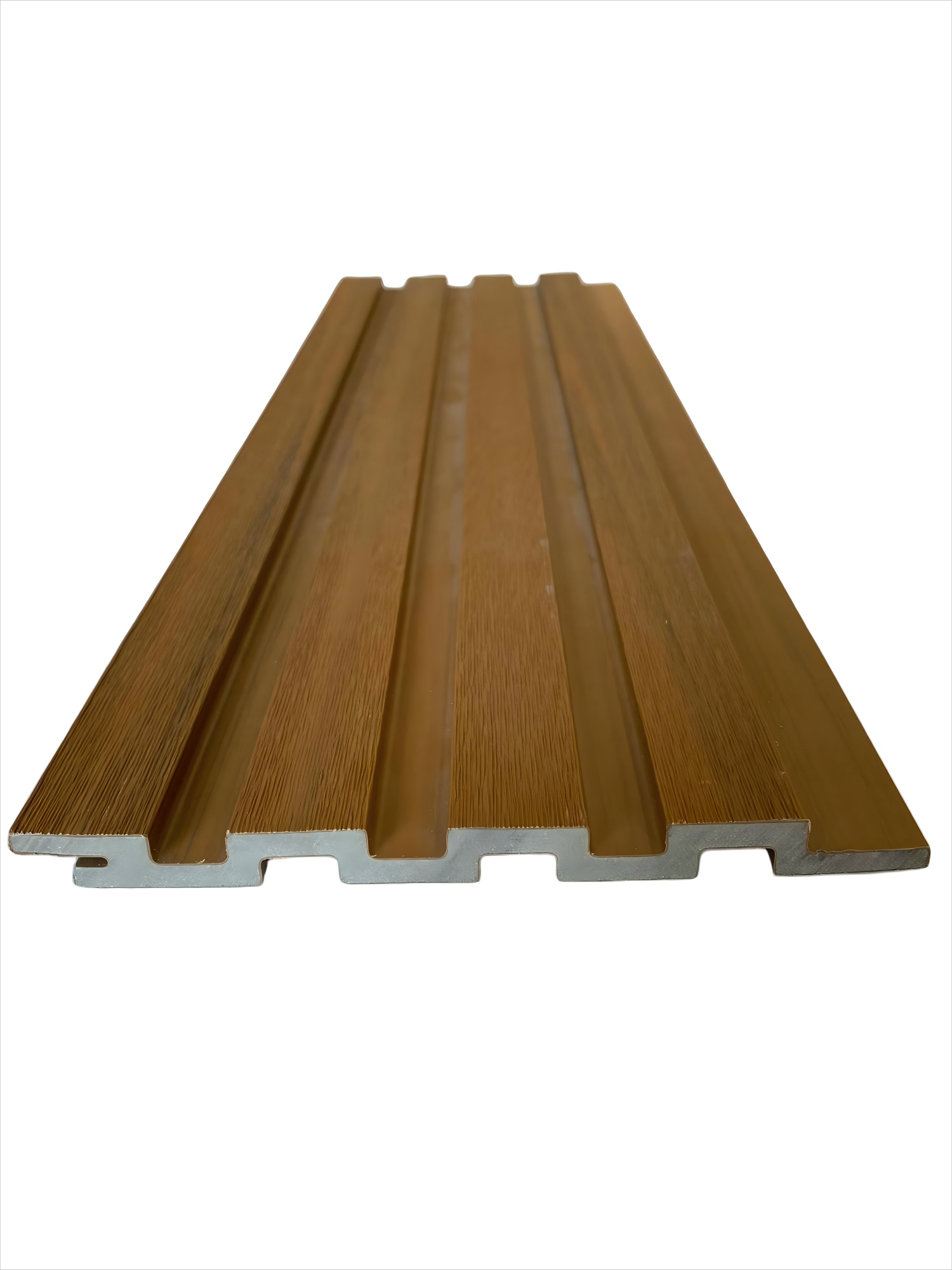
WPC wall panels come in three primary configurations:长城板 (ridge panels),外墙板 (exterior panels), and围栏板 (fence panels). Ridge panels feature a distinctive凹凸 (concave-convex) pattern that adds visual interest to exterior facades while providing excellent impact resistance. These panels work well for both decorative and protective applications, including garden screens, shop fronts, and ceiling treatments.
Exterior WPC panels offer a smooth, uniform appearance suitable for modern architectural designs. Their interlocking installation system ensures weather tightness while allowing for natural expansion and contraction. These panels prove particularly valuable for renovation projects where quick installation and minimal maintenance are priorities.
WPC fence systems provide versatile solutions for property boundaries and security barriers. The modular design supports various configurations, including fully enclosed, semi-transparent, and open lattice patterns. This flexibility allows property owners to balance privacy requirements with aesthetic considerations. The material’s inherent resistance to rot, insects, and UV degradation ensures long-term performance without the need for painting or sealing.
FAQ
What makes square hole WPC decking more cost-effective than solid alternatives?
Square hole WPC decking reduces material usage by 30-40% compared to solid boards while maintaining sufficient structural integrity through optimized web distribution. This design achieves comparable performance for standard applications at significantly lower production costs, making it ideal for budget-conscious projects requiring large coverage areas.
How does round hole WPC decking improve drainage compared to other designs?
The circular voids in round hole WPC decking provide uniform water evacuation channels that prevent surface pooling. Unlike square holes that may accumulate debris at corners, the smooth curvature of round holes facilitates continuous water flow, making them particularly suitable for wet environments like pool decks and marina walkways.
Can solid WPC decking develop cracks under extreme temperature variations?
Solid WPC decking demonstrates excellent dimensional stability with thermal expansion rates of 0.02-0.04 mm/m·°C. This characteristic, combined with the material’s inherent elasticity, prevents cracking even under significant temperature fluctuations. The dense structure also resists moisture penetration that could otherwise lead to internal stress and cracking.
What maintenance procedures extend the lifespan of hollow WPC decking?
Hollow WPC decking requires annual cleaning with mild detergent and water, followed by thorough rinsing. Periodic inspection of the voids ensures they remain clear of debris that could obstruct drainage or create stress points. Applying UV-resistant coating every 2-3 years provides additional protection against color fading and surface degradation.
How do WPC wall panels compare to traditional timber in construction applications?
WPC wall panels offer superior durability with 5-10 year warranties compared to 2-3 years for treated timber. They resist rot, insects, and moisture penetration without chemical treatments, eliminating maintenance requirements for painting or sealing. The interlocking installation system also reduces labor costs by 30-40% compared to traditional timber cladding methods.
Summary
The selection of WPC decking and complementary products requires careful consideration of structural requirements, application scenarios, and long-term maintenance expectations. Square hole WPC decking provides the most cost-effective solution for standard residential and light commercial projects, while round hole designs excel in specialized applications requiring enhanced drainage or load distribution. Solid WPC decking represents the premium choice for high-traffic areas demanding maximum durability and minimal maintenance.
Complementary WPC wall panels and fence systems extend these material advantages to vertical applications, offering versatile solutions for property boundaries and architectural features. When properly specified and installed, WPC products deliver decades of reliable performance with maintenance requirements significantly lower than traditional building materials. This combination of technical performance, aesthetic versatility, and long-term cost efficiency makes WPC the preferred choice for modern outdoor construction projects worldwide.