
In modern construction and landscape design, the demand for durable, eco-friendly outdoor materials continues to grow. Wood Plastic Composite (WPC) has emerged as a leading solution, combining the natural appearance of wood with the weather resistance of plastics. For large-scale projects requiring bulk procurement of outdoor WPC materials, understanding product specifications, applications, and supplier capabilities becomes crucial. This comprehensive guide explores professional WPC solutions for commercial and landscape projects, covering decking, wall panels, and fencing systems.
Understanding WPC Material Composition and Advantages
Wood Plastic Composite combines wood fibers (typically from sawdust or wood chips) with thermoplastic polymers (usually HDPE or PVC) through a specialized extrusion process. This composite material inherits beneficial properties from both components while eliminating many of their drawbacks. The wood fibers provide natural texture and appearance, while the plastic matrix offers moisture resistance, durability, and low maintenance requirements.
Key advantages of WPC materials for outdoor applications include:
- Weather resistance: Withstands UV exposure, rain, snow, and temperature fluctuations without warping, cracking, or fading
- Durability: Resistant to rot, insects, and fungal decay, extending service life compared to natural wood
- Low maintenance: Requires no painting, staining, or sealing; simple cleaning with water suffices
- Eco-friendly: Utilizes recycled wood fibers and plastics, reducing environmental impact
- Consistent quality: Manufactured under controlled conditions ensures uniform performance across batches
- Design versatility: Available in various colors, textures, and profiles to match different architectural styles
For large-scale projects, these characteristics translate to significant long-term cost savings through reduced maintenance requirements and extended material lifespan. The consistent quality of manufactured WPC products also ensures uniform appearance across extensive installations, critical for commercial and public projects.
Professional WPC Decking Solutions for High-Traffic Areas
Outdoor decking represents one of the most common applications for WPC materials in commercial and landscape projects. Professional suppliers typically offer three main structural types to accommodate different usage scenarios and load requirements:
1. Square Hole Decking (High Cost-Effectiveness)
This popular option features a lightweight construction with square perforations through the board thickness. The square hole design reduces material usage while maintaining sufficient structural integrity for most residential and light commercial applications. Key characteristics include:
- Lightweight construction reduces transportation and installation costs
- Rich surface texture options with wood grain patterns
- Suitable for courtyards, patios, park walkways, and residential decking
- Typical dimensions: 140×25mm or 146×22mm with various lengths
For bulk procurement projects, square hole decking offers excellent value with its balance of performance and cost. The reduced material content makes it particularly competitive for large-area installations where budget considerations are important.

2. Round Hole Decking (Enhanced Structural Performance)
Featuring circular perforations, this decking type incorporates advanced mechanical engineering principles to optimize strength-to-weight ratio. The round hole design provides several performance advantages:
- Improved bending resistance through uniform stress distribution
- Superior water drainage and anti-slip properties
- Ideal for boardwalks, pool surrounds, waterfront platforms, and elevated walkways
- Available in wider dimensions (e.g., 150×25mm) for increased load capacity
For landscape projects involving water features or humid environments, round hole decking offers practical benefits through its enhanced drainage capabilities. The improved anti-slip properties also make it safer for public areas with frequent foot traffic.
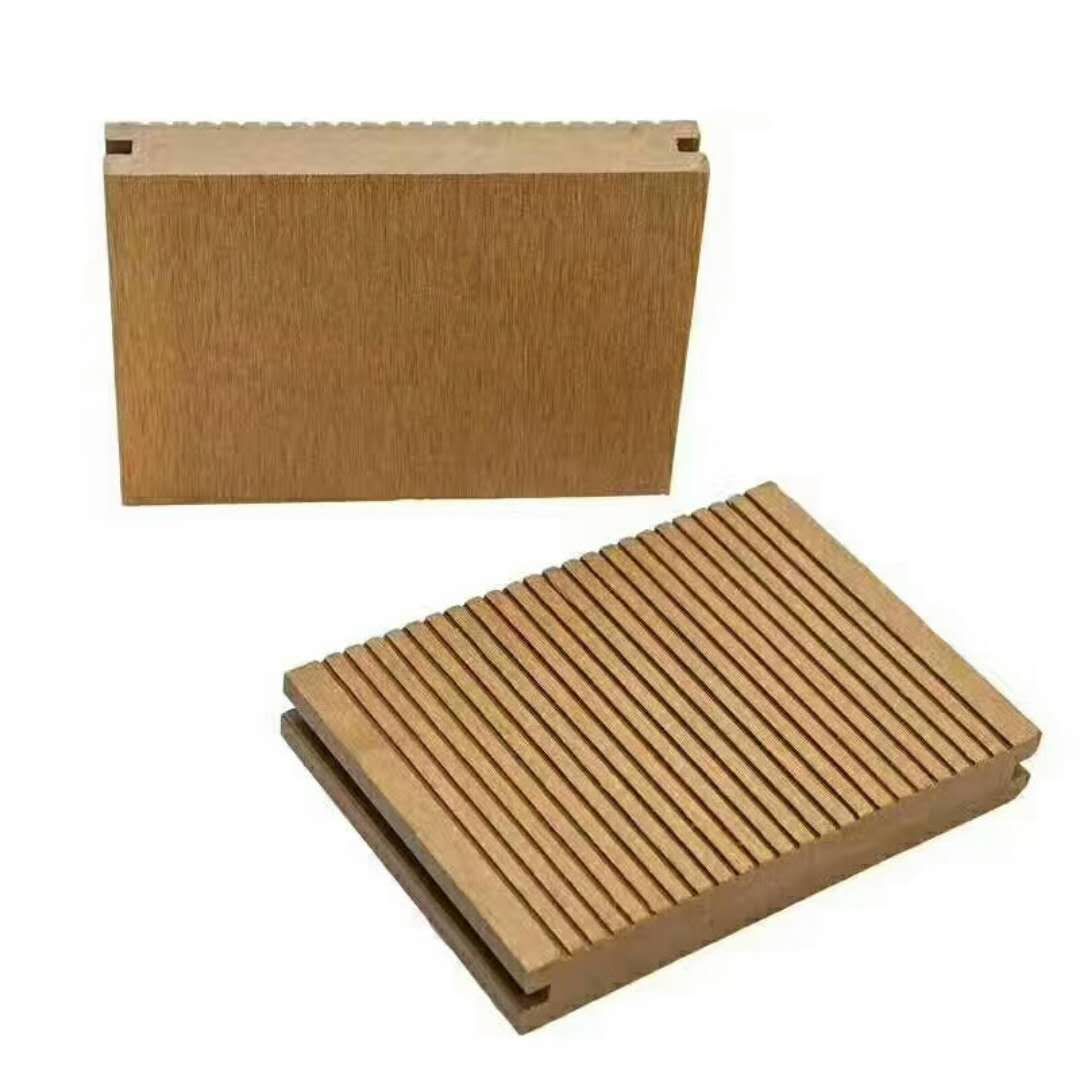
3. Solid Core Decking (Heavy-Duty Applications)
When maximum strength and durability are required, solid core WPC decking provides the ultimate solution. This construction features no perforations, creating a continuous, dense material structure capable of withstanding extreme loads:
- Exceptional impact resistance and load-bearing capacity
- Minimal thermal expansion/contraction for stable performance in all climates
- Perfect for high-traffic public spaces, commercial plazas, and industrial platforms
- Longer spans between supports reduce installation complexity
For municipal projects, transportation hubs, or large commercial complexes, solid core decking ensures long-term performance with minimal maintenance. Its ability to support heavy loads makes it suitable for areas that may accommodate vehicles or equipment in addition to pedestrian traffic.
Comprehensive WPC Wall and Fencing Systems for Exterior Applications
Beyond decking, professional WPC suppliers offer complete systems for exterior wall cladding and fencing solutions. These products provide both functional and aesthetic benefits for commercial and landscape projects.
1. WPC Wall Panel Systems
Exterior WPC wall panels transform building facades with their weather-resistant properties and design versatility. Two primary types address different architectural requirements:
长城板 (Great Wall Panels): These distinctive panels feature a unique ribbed profile with alternating raised and recessed sections. The design creates visual interest while providing practical benefits:
- Versatile applications including exterior walls, courtyard partitions, and ceiling decorations
- Effective concealment of installation fasteners for clean appearance
- Available in various widths (typically 150-300mm) to suit different design scales
外墙板 (Exterior Wall Panels): Designed for straightforward installation and cost-effective facade renovation, these panels offer:
- Simple interlocking system requiring minimal specialized tools
- Mid-range pricing suitable for budget-conscious projects
- Ideal for self-built housing, villa exteriors, and commercial storefront upgrades
2. WPC Fencing Solutions
Professional WPC fencing systems provide durable, low-maintenance alternatives to traditional wood fencing. Key advantages include:
- Resistance to rot, insects, and weather damage
- Consistent color and appearance without painting or staining
- Flexible design options with solid, semi-open, or fully open patterns
- Easy installation with modular components
Typical applications include residential gardens, park perimeters, hotel landscaping, and public space divisions. The design flexibility allows architects to create visual barriers while maintaining airflow and visibility where required.
| Product Category | Key Features | Ideal Applications |
|---|---|---|
| Square Hole Decking | Lightweight, cost-effective, rich texture options | Residential decking, park walkways, courtyards |
| Round Hole Decking | Enhanced drainage, anti-slip, improved bending strength | Boardwalks, pool surrounds, waterfront platforms |
| Solid Core Decking | Maximum strength, minimal thermal movement, heavy-duty | Commercial plazas, industrial platforms, high-traffic areas |
| Great Wall Panels | Unique ribbed profile, versatile applications | Exterior walls, partitions, ceiling decorations |
| WPC Fencing Systems | Durable, low maintenance, flexible designs | Gardens, parks, commercial landscaping |
Selecting Reliable Suppliers for Bulk WPC Procurement
For large-scale projects requiring consistent quality across extensive installations, choosing the right WPC supplier becomes critical. Consider these key factors when evaluating potential partners:
1. Production Capacity and Scale
Verify the manufacturer’s annual production capacity to ensure they can meet your project timeline and quantity requirements. A supplier with multiple production lines and substantial output (e.g., 60,000+ tons annually) demonstrates the ability to handle large orders without compromising quality or delivery schedules.
2. Certifications and Quality Standards
Reputable suppliers should hold relevant international certifications such as ISO 9001 for quality management systems and CE certification for compliance with European standards. Additional industry-specific certifications or memberships in professional associations indicate commitment to quality and ongoing improvement.
3. Product Range and Customization Capabilities
A comprehensive product portfolio allows you to source multiple WPC components from a single supplier, simplifying procurement and ensuring compatibility between different system elements. The ability to customize colors, dimensions, or profiles provides flexibility to meet specific project requirements.
4. Technical Support and Project Experience
Experienced suppliers offer valuable technical guidance for product selection, installation methods, and load calculations. Case studies or references from similar large-scale projects demonstrate the supplier’s capability to deliver solutions that meet professional standards.
5. Logistics and Supply Chain Management
For international projects, evaluate the supplier’s ability to manage export documentation, shipping logistics, and customs clearance efficiently. On-time delivery becomes particularly crucial for projects with strict construction schedules.
FAQ
What certifications should quality WPC materials have for commercial projects?
For professional and commercial applications, WPC materials should ideally hold ISO 9001 certification for quality management systems and CE certification demonstrating compliance with European standards. Additional valuable certifications include SGS or Intertek test reports verifying performance metrics like UV resistance, water absorption, and mechanical properties. These certifications ensure the materials meet international quality requirements for public and commercial installations.
How does WPC decking compare to traditional wood in terms of lifespan and maintenance?
WPC decking typically offers 2-3 times longer service life compared to natural wood in outdoor environments. While pressure-treated wood may last 10-15 years, high-quality WPC decking can maintain its appearance and structural integrity for 20-25 years with minimal maintenance. Unlike wood, WPC requires no annual sealing, staining, or painting, and resists rot, insects, and fungal decay without chemical treatments. This translates to significant long-term cost savings for large-scale projects.
What installation considerations are important for large-area WPC decking projects?
For extensive installations, proper subframe construction is crucial to ensure uniform support and drainage. Use corrosion-resistant fasteners and ensure adequate spacing between boards (typically 5-6mm) to accommodate thermal expansion. For elevated decks, calculate load capacity based on board span and joist spacing. Professional suppliers often provide detailed installation manuals and can offer on-site technical support for major projects to ensure compliance with building codes and optimal performance.
Can WPC materials be used in coastal or high-humidity environments?
Yes, high-quality WPC materials perform exceptionally well in coastal and humid environments. The plastic component provides complete resistance to moisture absorption, preventing the swelling, warping, and rot that commonly affect natural wood in such conditions. For maximum durability in salt-air environments, choose WPC products with additional UV stabilizers and corrosion-resistant fasteners. Round hole decking designs also offer superior drainage for areas with frequent rainfall or water exposure.
What factors affect the cost of large-scale WPC procurement?
Several factors influence bulk WPC pricing for commercial projects: 1) Product type (solid core being most expensive, square hole most economical) 2) Order quantity (larger volumes typically qualify for volume discounts) 3) Customization requirements (special colors or dimensions may incur additional costs) 4) Project location (shipping distances affect final delivered cost) 5) Supplier production scale (larger manufacturers with higher output often offer better unit pricing). Working directly with established manufacturers rather than through distributors can also help reduce costs for large projects.
Summary
For large-scale commercial and landscape projects requiring bulk procurement of outdoor WPC materials, understanding product specifications, performance characteristics, and supplier capabilities is essential. Professional WPC solutions offer significant advantages over traditional materials in terms of durability, maintenance requirements, and design versatility. By selecting appropriate product types based on application requirements and partnering with reliable, certified manufacturers, project managers can ensure successful implementation of durable, eco-friendly outdoor spaces that meet both aesthetic and functional objectives.
The comprehensive product range available from leading WPC suppliers – including specialized decking types, wall panel systems, and fencing solutions – provides architects and contractors with the tools to create cohesive outdoor environments that withstand the test of time. With proper material selection and installation, WPC installations can deliver decades of reliable performance with minimal maintenance, making them an ideal choice for demanding commercial applications.