
When selecting outdoor flooring materials, durability, maintenance requirements, and aesthetic appeal are key considerations for any project. Linyi Xuancheng New Materials Co., Ltd., a leading manufacturer of eco-friendly WPC (Wood-Plastic Composite) materials, offers innovative solutions that combine the natural look of wood with the superior performance of plastic. This comprehensive guide explores the characteristics, applications, and maintenance requirements of our two main WPC flooring types: square hole and solid designs.

Understanding WPC Flooring Technology
WPC materials represent a revolutionary advancement in outdoor building materials, combining wood fibers with thermoplastics to create products that are both eco-friendly and high-performing. Our production process utilizes advanced co-extrusion technology that forms a protective layer around the core material, enhancing durability while maintaining natural wood aesthetics.
The key advantages of WPC materials include:
- 100% waterproof construction
- Resistance to rot, insects, and UV degradation
- Low maintenance requirements compared to natural wood
- Consistent quality through automated manufacturing
- Environmentally sustainable production process
Our state-of-the-art production facility in Linyi, China spans over 100 mu (approximately 66,700 square meters) and features 40 extrusion lines, 20 co-extrusion lines, and complete supporting equipment including granulators, crushers, sanders, and laser marking machines. This comprehensive setup ensures we can maintain annual production capacity exceeding 60,000 tons while consistently meeting international quality standards.
Square Hole WPC Flooring: The Cost-Effective Solution
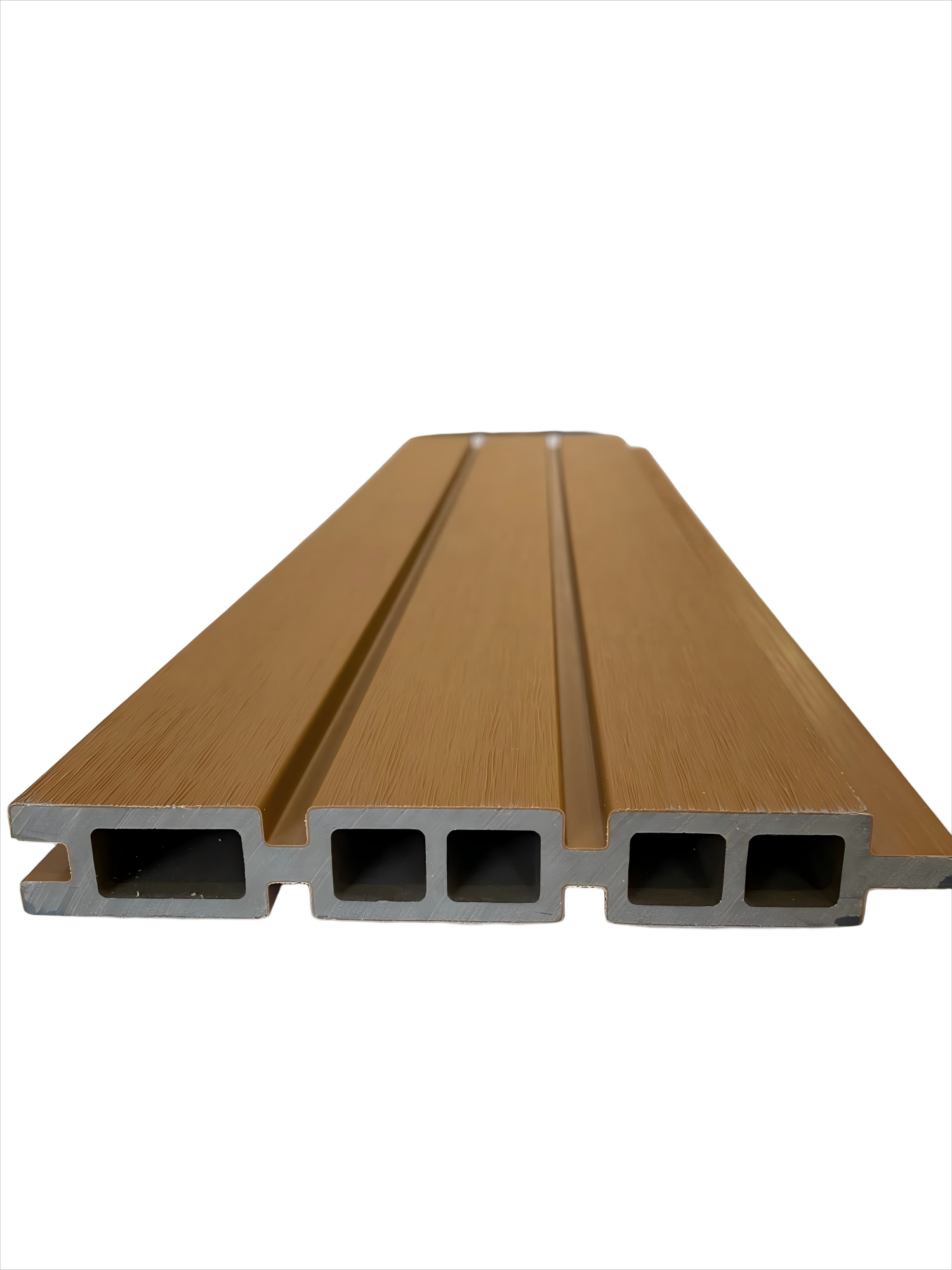
Square hole WPC decking represents our most popular product line, offering an excellent balance of performance and affordability. These boards feature a distinctive square hole pattern through their thickness that provides several functional advantages while maintaining structural integrity.
The primary benefits of square hole design include:
- Reduced weight: The hollow structure makes installation easier and reduces transportation costs
- Enhanced drainage: Water flows freely through the holes, preventing pooling
- Improved ventilation: Air circulation beneath the boards helps maintain temperature stability
- Material efficiency: Uses 30-40% less raw material than solid boards without compromising strength
Durability and Load Capacity
One common question about square hole WPC flooring is its durability compared to solid boards. Our engineering tests demonstrate that properly installed square hole decking can support loads exceeding 450kg per square meter when spaced at standard intervals. This makes it suitable for most residential and light commercial applications including patios, walkways, and pool decks.
The co-extrusion technology we employ creates a protective outer layer that resists scratches, stains, and fading. This surface layer maintains its appearance even under heavy foot traffic, while the internal structure provides sufficient strength for normal use. For applications requiring higher load capacity, we recommend reducing the spacing between joists or selecting our solid WPC flooring option.
Deformation Resistance
Concerns about potential deformation in hollow WPC boards are understandable but largely unfounded when using quality products from reputable manufacturers. Our square hole flooring features carefully engineered wall thickness (typically 3-5mm depending on board dimensions) and hole spacing patterns that distribute stress evenly across the board.
The thermal stability of WPC materials further reduces deformation risks. Unlike natural wood, WPC doesn’t warp or twist with temperature fluctuations. In our 10+ years of production, we’ve maintained deformation rates below 0.5% under normal use conditions, demonstrating the reliability of our manufacturing processes.
Solid WPC Flooring: The Premium Performance Option
For projects demanding maximum durability and load capacity, our solid WPC flooring provides the ultimate solution. These boards contain no internal voids, creating a monolithic structure that distributes loads evenly across the entire surface. This makes them ideal for high-traffic commercial areas, heavy equipment storage, and other demanding applications.
Key advantages of solid WPC flooring include:
- Superior load capacity: Can support over 600kg per square meter
- Minimal thermal expansion: Expands/contracts less than 1mm per meter with temperature changes
- Enhanced impact resistance: Withstands heavy objects being dropped without damage
- Uniform appearance: No visible holes or patterns for a clean, modern look
Cracking Resistance and Longevity
A common concern with any solid material is cracking under stress or temperature fluctuations. Our solid WPC flooring addresses this through several design features:
- The co-extrusion process creates a flexible yet tough outer layer that absorbs impacts
- The plastic component (typically HDPE or PVC) remains pliable at low temperatures
- The wood fiber core provides rigidity while allowing slight movement without cracking
- Our proprietary formulation includes UV stabilizers and impact modifiers
Independent laboratory testing confirms that our solid WPC flooring maintains its structural integrity even after 5,000 hours of accelerated weathering (equivalent to 10+ years of normal outdoor exposure). This exceptional durability makes it an excellent long-term investment for any outdoor space.
Maintenance Requirements
One of the most significant advantages of WPC materials over natural wood is their low maintenance requirements. Both our square hole and solid WPC flooring share these maintenance benefits:
- No sealing or staining: The protective outer layer eliminates the need for periodic treatments
- Easy cleaning: A simple rinse with water or mild detergent removes most dirt and stains
- Mold resistance: The non-porous surface doesn’t support mold or mildew growth
- Fade resistance: Color remains vibrant for years with minimal fading
For solid WPC flooring in particularly demanding environments, we recommend occasional inspection for any accumulated debris in the gaps between boards. While the material itself won’t rot, trapped organic matter could potentially affect the substructure over time if not removed periodically.
| Feature | Square Hole WPC | Solid WPC |
|---|---|---|
| Weight per m² | 12-18kg | 20-25kg |
| Load capacity | 450kg/m² | 600kg/m²+ |
| Thermal expansion | 1.5mm/m | 0.8mm/m |
| Installation cost | Lower | Higher |
| Recommended for | Residential, light commercial | Heavy commercial, industrial |
Application Scenarios and Selection Guide
Choosing between square hole and solid WPC flooring depends primarily on your specific application requirements. Here’s a guide to help you select the most appropriate option:
Square Hole WPC Flooring Applications
- Residential patios and decks: The cost-effective solution for homeowners seeking wood-like aesthetics without maintenance hassles
- Pool surrounds: The drainage holes prevent water pooling while the slip-resistant surface enhances safety
- Garden walkways: Lightweight design makes installation easy while maintaining durability
- Balconies: The reduced weight puts less stress on building structures compared to solid boards
- Marina docks: The drainage holes allow quick water runoff in wet environments
Solid WPC Flooring Applications
- Commercial plazas: Withstands heavy foot traffic from thousands of people daily
- Restaurant patios: Resists damage from dropped dishes, furniture movement, and spills
- Industrial walkways: Maintains integrity under constant use by forklifts and other equipment
- Rooftop terraces: The minimal thermal expansion prevents damage to waterproofing membranes
- Boardwalks: Provides long-lasting performance in coastal environments with salt air exposure
FAQ
What is the expected lifespan of WPC outdoor flooring?
When properly installed and maintained, our WPC flooring typically lasts 25-30 years in residential applications and 15-20 years in heavy commercial use. The co-extrusion technology we use creates a protective layer that resists fading, staining, and weather damage, significantly extending the product’s useful life compared to traditional wood.
Can WPC flooring be installed directly on grass or dirt?
No, WPC flooring requires a stable, level substructure for proper installation. For ground-level applications, we recommend creating a compacted gravel base with geotextile fabric underneath. For elevated installations, use pressure-treated wood or aluminum joists spaced according to the specific product’s requirements. Proper installation is crucial for preventing sagging or uneven settling over time.
How does WPC flooring perform in extreme temperatures?
Our WPC materials are engineered to perform reliably in temperatures ranging from -40°C to +60°C (-40°F to +140°F). The co-extrusion process creates a surface layer that remains flexible in cold while maintaining rigidity in heat. The thermal expansion coefficient is less than 1.5mm per meter for square hole boards and under 0.8mm per meter for solid boards, minimizing movement that could affect installation integrity.
What maintenance is required for WPC flooring in coastal areas?
In coastal environments, we recommend rinsing the flooring with fresh water monthly to remove salt deposits that could potentially affect the surface over time. While the material itself is corrosion-resistant, accumulated salt can create a slightly abrasive surface that might dull the finish if left uncleaned. For other maintenance, follow the standard cleaning procedures recommended for all WPC installations.
Can WPC flooring be painted or stained?
Our WPC flooring comes with a factory-applied color that penetrates through the protective outer layer, ensuring long-lasting appearance without the need for additional treatments. While technically possible to paint WPC materials, we don’t recommend it as the smooth, non-porous surface makes adhesion challenging and the results may not be durable. The existing color options provide excellent UV stability and fade resistance for the product’s lifespan.
Summary
Choosing between square hole and solid WPC flooring depends on your specific project requirements, budget, and performance expectations. Square hole designs offer an excellent balance of affordability, functionality, and aesthetics for most residential and light commercial applications, while solid boards provide the ultimate durability for demanding environments.
Both options from Linyi Xuancheng New Materials Co., Ltd. deliver significant advantages over traditional wood, including superior durability, minimal maintenance, and consistent quality. Our advanced manufacturing processes and rigorous quality control ensure that every board meets international standards for performance and safety.
With over 10 years of experience in WPC material production and a comprehensive product range certified to ISO 9001, CE, and other international standards, we’re committed to providing sustainable, high-performance solutions for outdoor flooring needs worldwide. Whether you’re a homeowner looking to upgrade your patio or a contractor specifying materials for a large commercial project, our WPC flooring offers the perfect combination of beauty, durability, and value.