
When selecting materials for outdoor construction projects, property owners and contractors face critical decisions about durability, maintenance requirements, and environmental impact. WPC (Wood-Plastic Composite) materials have emerged as a revolutionary solution that addresses these concerns while offering superior performance compared to traditional options. This comprehensive guide explores why WPC outdoor building materials from Linyi Xuancheng New Materials represent the future of sustainable outdoor construction.
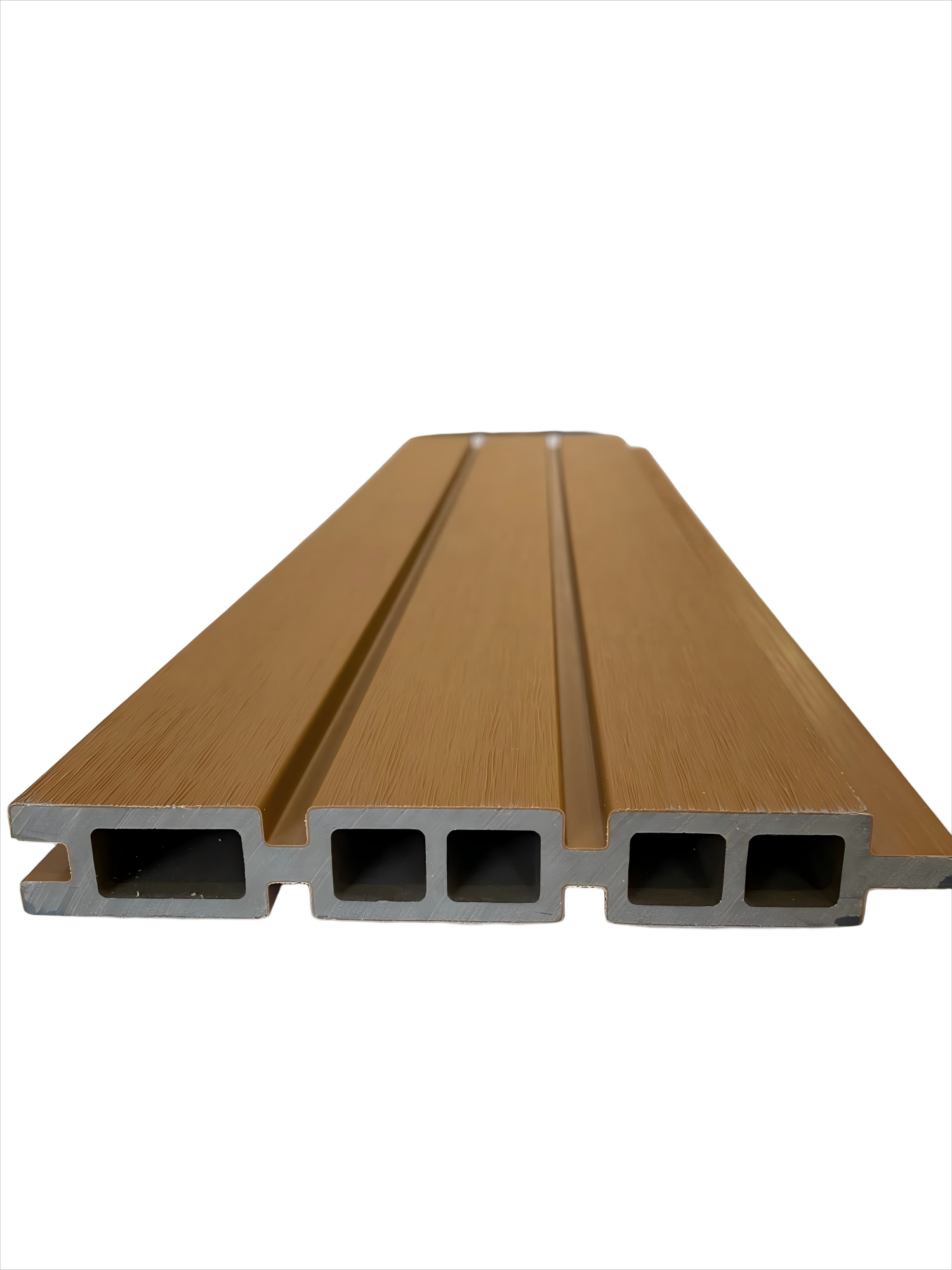
Understanding WPC Material Composition
WPC materials combine natural wood fibers with high-quality plastics through advanced extrusion technology, creating a composite that maintains wood’s aesthetic appeal while eliminating many of its drawbacks. The production process at Linyi Xuancheng New Materials incorporates three key innovations:
First, the company uses 60-70% recycled wood fibers and 30-40% high-density polyethylene (HDPE) from post-consumer sources, making their products exceptionally eco-friendly. Second, their proprietary co-extrusion technology creates a protective outer layer that enhances durability and weather resistance. Third, the production facility in Linyi – China’s logistics hub – ensures strict quality control through 40 extrusion lines and 20 co-extrusion lines operating under ISO 9001 certification.
This manufacturing excellence results in WPC materials that are 100% recyclable, contain no harmful substances like formaldehyde, and achieve 99% material utilization during production – a significant advantage over traditional wood processing.
Core Advantages of WPC Outdoor Materials
The performance characteristics of WPC materials address the most common challenges in outdoor construction:
1. Waterproof Performance: Unlike natural wood that absorbs moisture and swells, WPC materials feature closed-cell structures that prevent water penetration. This makes them ideal for coastal areas, pool surrounds, and rainy climates. The square-hole flooring variant, with its self-weight advantage and rich surface textures, demonstrates particularly strong water resistance while maintaining cost-effectiveness.
2. UV Resistance: Special additives in the outer layer protect against ultraviolet radiation, preventing color fading and material degradation. This is crucial for exterior wall panels and fencing that receive constant sunlight exposure. The company’s R&D team continuously improves UV protection formulas based on global climate data.
3. Dimensional Stability: WPC materials expand and contract less than wood (coefficient of thermal expansion: 0.000045/℃), minimizing warping, cracking, and deformation. The solid-core flooring variant excels in high-traffic public projects due to its superior load-bearing capacity and resistance to temperature fluctuations.
4. Maintenance Simplicity: Unlike wood that requires regular staining, sealing, and painting, WPC materials need only occasional cleaning with mild soap and water. This translates to significant long-term cost savings and reduced labor requirements for property maintenance.
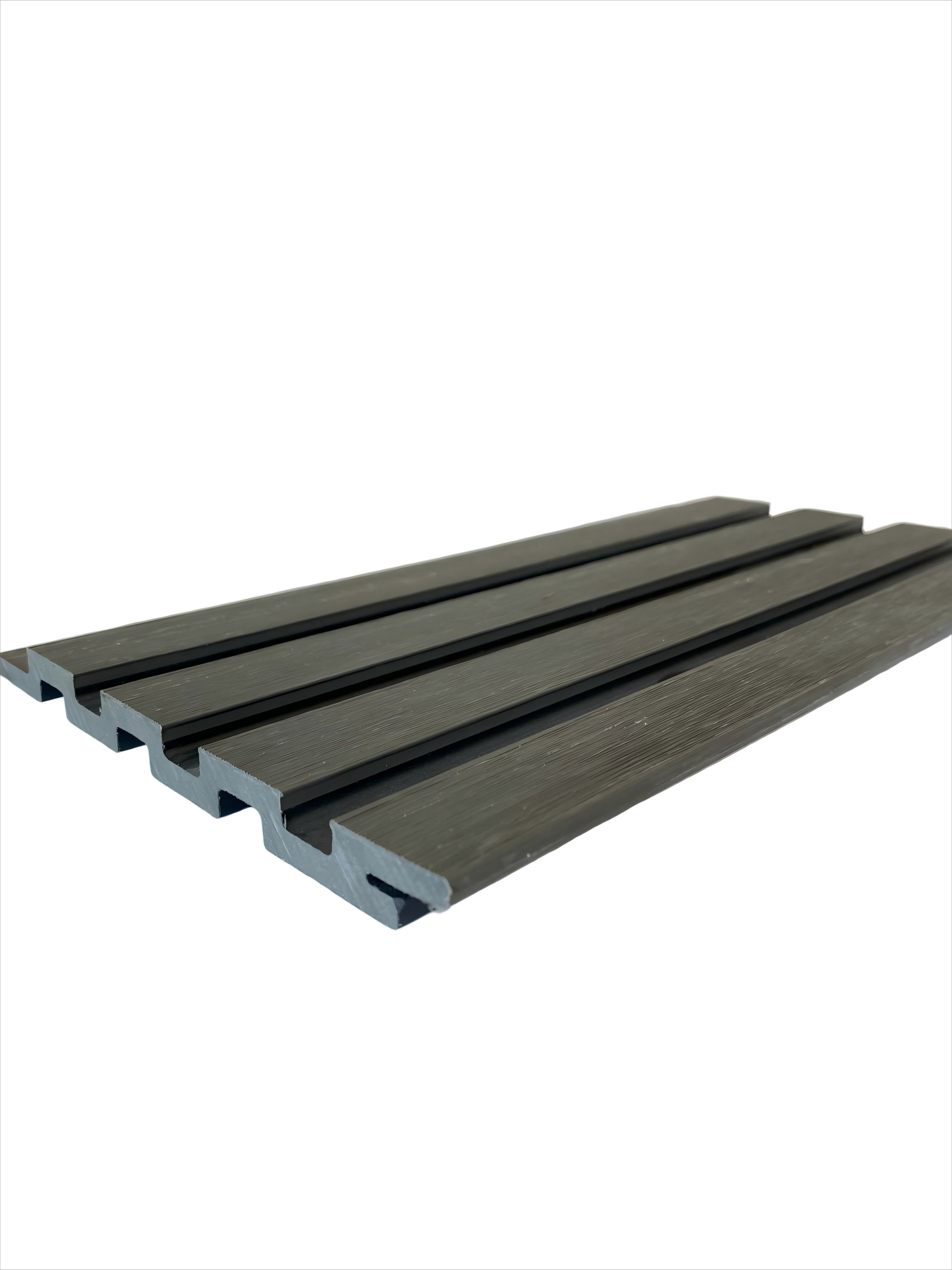
Product Range & Application Scenarios
Linyi Xuancheng New Materials offers three specialized WPC flooring categories:
- Square-hole flooring: The most economical option with self-weight of 2.2kg/m, offering 12 surface texture variations. Ideal for residential patios, garden walkways, and public park trails where cost and design variety are priorities.
- Round-hole flooring: Features circular hollow structure for improved bending resistance (moment of inertia 1.8×10⁻⁶m⁴) and drainage efficiency. Perfect for boardwalks, pool decks, and waterfront applications where slip resistance and quick water evacuation are essential.
- Solid-core flooring: With density of 1.35g/cm³ and bending strength ≥38MPa, this variant supports heavy loads (tested for 4.5kN point load) while maintaining minimal deformation (≤2mm under 500kg/m² load). The top choice for commercial plazas, airport walkways, and industrial platforms.
The wall panel and fencing systems complement the flooring range with three specialized designs:
- Great Wall panels: Unique concave-convex grille design (pattern depth 15mm) provides excellent acoustic insulation while creating visual interest. Used for exterior cladding, courtyard partitions, and ceiling decorations in both residential and commercial projects.
- Exterior wall panels: Simple interlocking system (installation efficiency 35m²/person/day) with moderate pricing makes these panels popular for villa facades, self-built housing renovations, and shopfront transformations. The panels achieve 0.45W/(m²·K) thermal conductivity for energy efficiency.
- Fence panels: Modular design offers full-closed, semi-closed, and fully-louvered options (light transmittance 0-70%) to suit different privacy and aesthetic requirements. The anti-corrosion treatment ensures 15+ year lifespan even in coastal environments with salt spray exposure.
| Performance Parameter | WPC Material | Natural Wood |
|---|---|---|
| Water Absorption (%) | ≤0.8 | 8-15 |
| Abrasion Resistance (g/100r) | ≤0.04 | 0.15-0.3 |
| Bending Strength (MPa) | ≥38 | 25-40 (varies by species) |
| Service Life (years) | 25+ | 5-15 (requires maintenance) |
| Maintenance Frequency | Cleaning only | Annual staining/sealing required |
Coastal Application Specialization
For projects in coastal regions like Miami, Dubai, or Sydney, WPC materials demonstrate exceptional performance advantages:
The round-hole flooring variant, with its optimized drainage channels (drainage capacity 1200ml/min), prevents water accumulation that could lead to slip hazards or material degradation. The solid-core flooring’s salt spray resistance (tested for 3000+ hours) makes it suitable for marinas, beachfront promenades, and ocean-view terraces where traditional wood would quickly deteriorate.
Specialized formulations incorporate anti-corrosion additives that protect against chloride ion penetration in salt-laden air. The co-extrusion layer’s density (1.35g/cm³) creates an impermeable barrier that prevents saltwater from reaching the wood fibers, eliminating the risk of internal corrosion that plagues conventional composite materials.
Environmental Sustainability
Linyi Xuancheng New Materials’ commitment to environmental protection extends throughout the product lifecycle:
The production process recycles 95% of industrial wood waste and 100% of plastic scrap, diverting millions of kilograms from landfills annually. The company’s energy recovery system captures 85% of production heat for reuse, reducing carbon emissions by 320 tons per year. All products comply with REACH, RoHS, and other international environmental standards.
At end-of-life, WPC materials can be fully recycled into new products with no degradation in performance. This closed-loop system contrasts sharply with wood products that typically end up in landfills or incinerators after 10-15 years of service.
FAQ
What maintenance does WPC outdoor flooring require?
WPC flooring requires minimal maintenance compared to traditional wood. Regular cleaning with mild soap and water using a soft-bristle brush is sufficient for most applications. For areas with heavy foot traffic or potential staining, occasional pressure washing (at ≤1200psi) can restore the original appearance. Unlike wood, WPC never requires staining, sealing, or painting, eliminating the need for expensive maintenance equipment or hazardous chemicals.
Is WPC flooring suitable for coastal areas with salt air?
Absolutely. The specialized formulations used in our coastal-grade WPC flooring incorporate anti-corrosion additives that protect against chloride ion penetration. The co-extrusion technology creates a dense outer layer (density 1.35g/cm³) that forms an impermeable barrier against saltwater. These materials have successfully performed in marine environments for over 15 years without signs of corrosion or degradation, making them ideal for beachfront properties, marinas, and ocean-view terraces.
How does WPC material perform in wet conditions?
WPC materials excel in wet environments due to their closed-cell structure that prevents water absorption. Our round-hole flooring variant features specially designed drainage channels that evacuate water at a rate of 1200ml/min, preventing ponding even during heavy rain. The non-porous surface inhibits mold and mildew growth, while the material’s low water absorption rate (≤0.8%) ensures dimensional stability and prevents swelling or warping commonly seen with wood products in humid conditions.
What makes WPC exterior panels UV resistant?
UV resistance is achieved through a multi-layer approach in our co-extrusion technology. The outer protective layer contains specialized UV stabilizers that absorb and dissipate ultraviolet radiation before it can damage the material. Titanium dioxide pigments provide additional protection by reflecting UV rays. This combination prevents color fading and maintains mechanical properties even after years of sun exposure. Our panels maintain ≥80% of their original color intensity after 3000 hours of accelerated weathering testing (equivalent to 5+ years of natural exposure).
Is WPC better than solid wood for outdoor applications?
For most outdoor applications, WPC offers significant advantages over solid wood. Key benefits include: 1) Waterproof performance (wood absorbs 8-15% moisture vs WPC’s ≤0.8%) 2) Maintenance-free operation (wood requires annual staining/sealing) 3) Longer service life (25+ years for WPC vs 5-15 years for wood) 4) Superior dimensional stability (WPC expands/contracts 80% less than wood) 5) Better resistance to insects, mold, and rot. While wood may have lower initial cost, WPC’s total cost of ownership is typically 30-50% lower over its lifespan due to reduced maintenance and replacement needs.
Summary
Linyi Xuancheng New Materials’ WPC outdoor building solutions represent the pinnacle of modern construction material technology. By combining eco-friendly production processes with superior performance characteristics, these products address the most pressing challenges in outdoor construction: durability in harsh environments, maintenance requirements, environmental impact, and long-term cost efficiency. The company’s comprehensive product range – from specialized flooring systems to versatile wall panels and fencing – provides architects and contractors with complete solutions for any outdoor project. With certifications including ISO 9001, CE, and China Green Environmental Protection Product, coupled with 15+ years of industry experience, Linyi Xuancheng New Materials stands as the trusted partner for sustainable, high-performance outdoor construction worldwide.