
When selecting outdoor flooring materials, WPC (Wood-Plastic Composite) has emerged as a leading eco-friendly solution that combines the natural appearance of wood with the durability of plastic. As a professional manufacturer specializing in green building materials, Linyi Xuancheng New Material Co., Ltd. offers comprehensive guidance to help global customers make informed decisions about WPC flooring selection.
Our company’s 120,000㎡ production base in Linyi, China, houses over 60 advanced extrusion lines producing 60,000+ tons annually of premium WPC products. With 3 invention patents and dozens of utility models, our AR 80ARD brand has become synonymous with quality in the international market, serving projects across Europe, North America, and Southeast Asia.
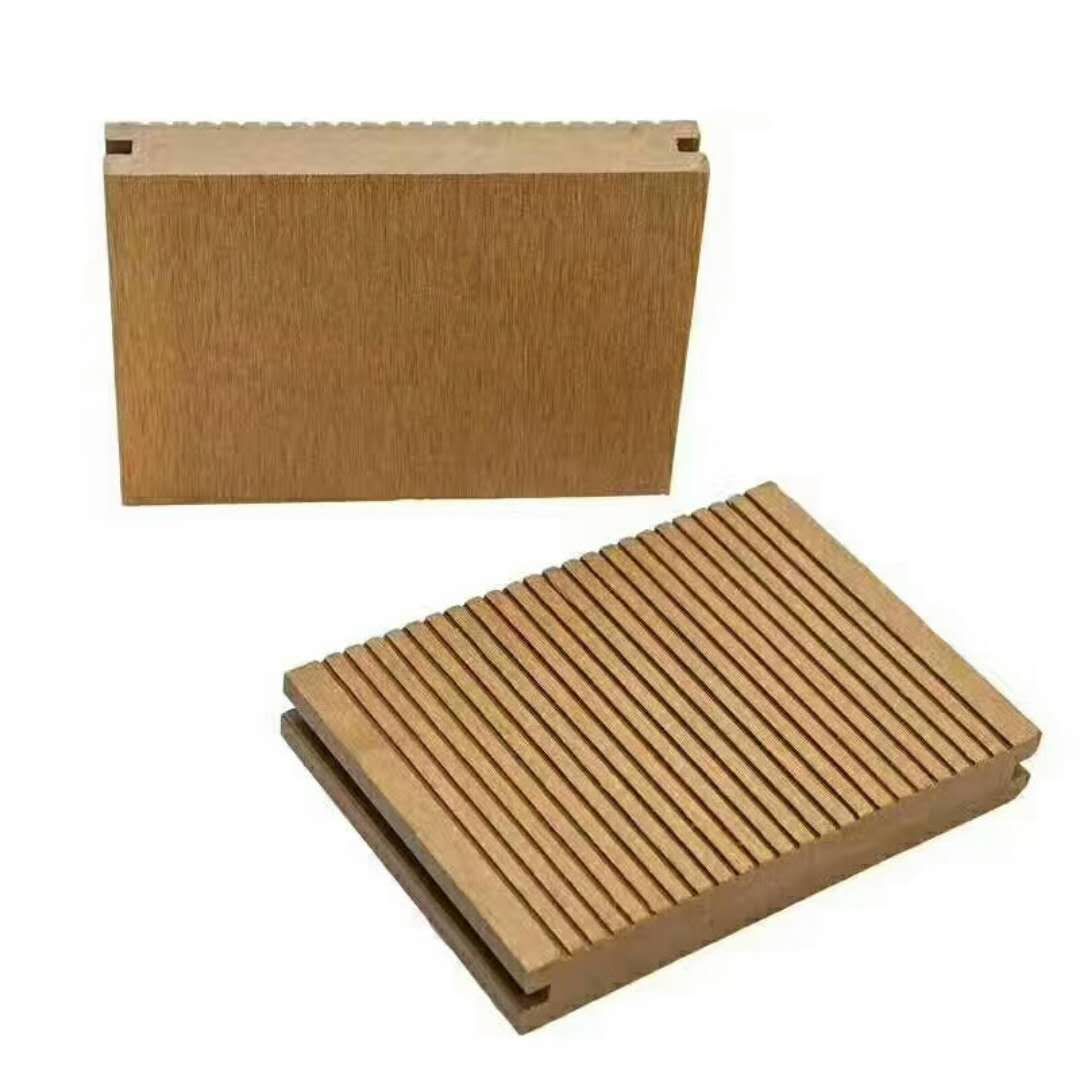
Understanding WPC Flooring Structures
The structural design of WPC flooring significantly impacts its performance characteristics. Our product range includes three primary categories based on internal structure:
1. Solid Core WPC Flooring
Our solid core WPC boards feature uniform density throughout the entire thickness, making them ideal for high-traffic commercial applications. These boards demonstrate exceptional resistance to impact, heavy loads, and temperature fluctuations with minimal expansion/contraction (less than 0.2% dimensional change). The solid structure provides superior sound insulation and can support point loads up to 500kg/m² without deformation.
2. Hollow Core WPC Flooring
Hollow core designs incorporate internal chambers that reduce material usage by 30-40% while maintaining structural integrity. Our square hole and round hole variations serve different functional purposes:
- Square Hole Design: Optimized for cost-effective residential applications, these boards weigh 25% less than solid alternatives while offering 15+ surface texture options. The rectangular channels provide excellent drainage while maintaining sufficient rigidity for standard patio installations.
- Round Hole Design: Engineered with circular cavities that distribute stress more evenly, these boards achieve 20% higher bending strength than square hole equivalents. The rounded channels enhance water drainage efficiency by 35% and prevent debris accumulation.
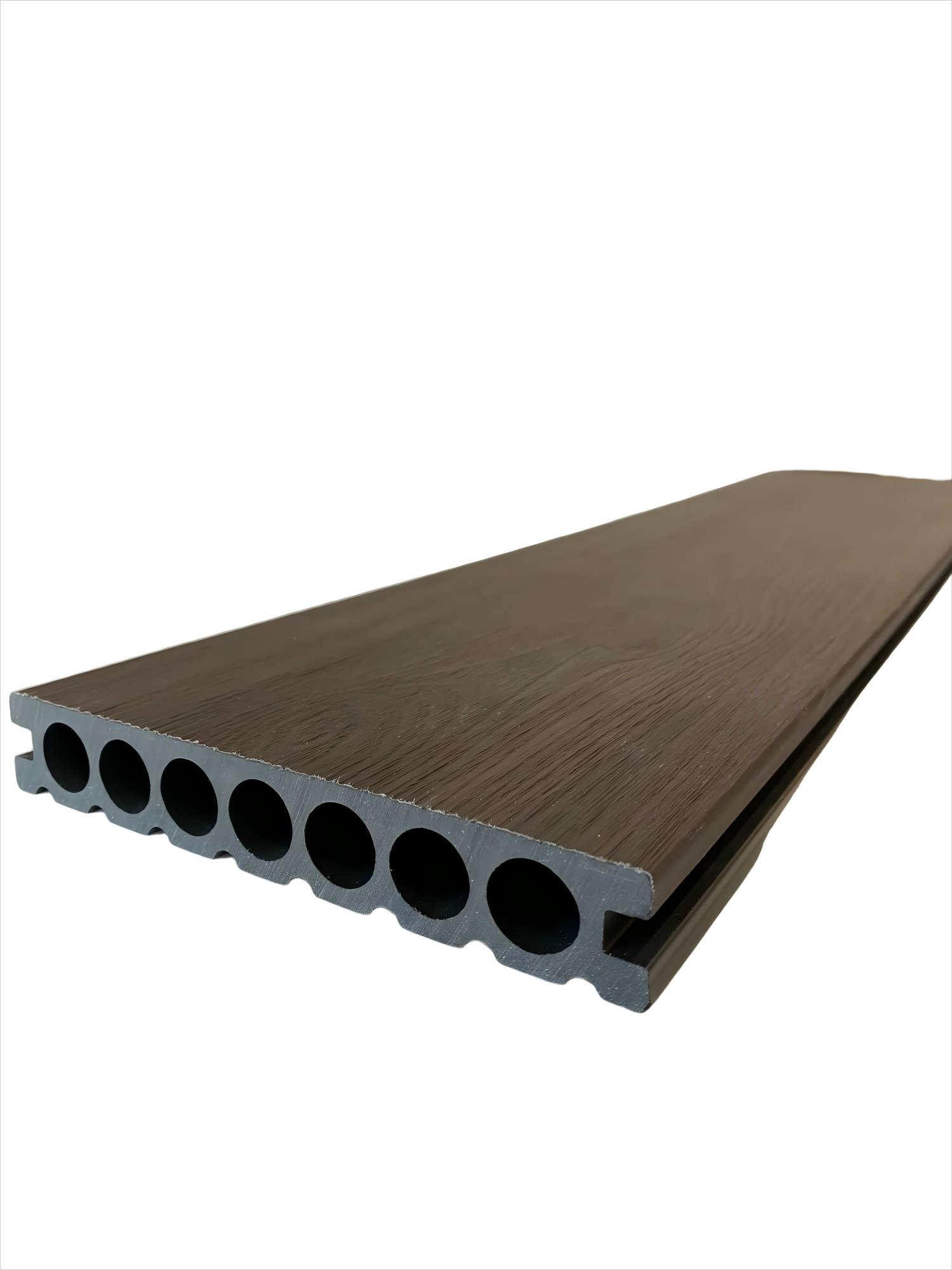
Performance Comparison: Round Hole vs Square Hole WPC
When choosing between round hole and square hole WPC flooring, several key performance factors should be considered based on your specific application requirements:
| Performance Metric | Round Hole WPC | Square Hole WPC |
|---|---|---|
| Slip Resistance (DIN 51130) | R10-R11 (Excellent) | R9-R10 (Good) |
| Water Absorption Rate | ≤0.8% (24h) | ≤1.2% (24h) |
| Bending Strength (MPa) | ≥32 | ≥28 |
| Thermal Expansion Coefficient | 4.2×10⁻⁵/℃ | 4.8×10⁻⁵/℃ |
Waterproof Performance Analysis
Both round hole and square hole WPC flooring demonstrate excellent water resistance due to their closed-cell structure and high-density surface layer. Our proprietary co-extrusion technology applies a 0.5mm protective cap layer that prevents water penetration even when the boards are submerged. Independent laboratory tests confirm that our WPC flooring maintains structural integrity after 1,000 hours of continuous water immersion.
The round hole design offers superior drainage efficiency, with water flow rates 30% faster than square hole alternatives. This makes round hole WPC particularly suitable for:
- Poolside decking where rapid water evacuation is essential
- Marine applications requiring quick drying surfaces
- Rainy climate regions needing efficient moisture management
Application-Specific Recommendations
Selecting the optimal WPC flooring structure depends on your project’s specific requirements:
Residential Applications
For standard home patios, balconies, and garden walkways, square hole WPC provides an excellent balance of cost and performance. The lighter weight simplifies installation while offering sufficient durability for typical residential use. Our Luxury Co-extrusion series with 3D wood grain textures creates natural-looking outdoor living spaces that require minimal maintenance.
Commercial Projects
High-traffic areas like hotel terraces, restaurant patios, and shopping mall walkways benefit from round hole WPC’s enhanced structural properties. The improved drainage prevents water accumulation that could cause slipping hazards, while the higher bending strength accommodates heavy furniture and equipment without board deformation.
Municipal Engineering
For public park boardwalks, promenades, and waterfront installations, our solid core WPC delivers the ultimate durability. The non-porous surface resists graffiti and chemical stains, while the high load capacity withstands constant pedestrian traffic and occasional vehicle passage. The uniform color throughout the board prevents unsightly scratch exposure common with painted surfaces.
FAQ
What makes WPC flooring eco-friendly?
Our WPC products contain 60-80% recycled materials including wood fibers from sustainable forestry and recycled plastics. The manufacturing process generates zero industrial wastewater and consumes 30% less energy compared to traditional wood processing. All our products comply with REACH and RoHS standards, containing no heavy metals or harmful substances.
How long does WPC flooring last outdoors?
With proper installation, our WPC flooring maintains optimal performance for 15-25 years in outdoor environments. The UV-resistant cap layer prevents color fading, while the waterproof core resists rot, insects, and warping. We offer 10-year limited warranties covering structural integrity and color stability under normal use conditions.
Can WPC flooring be installed over existing surfaces?
Yes, our WPC flooring can be installed over concrete, paved areas, or compacted soil with proper drainage preparation. The interlocking clip system allows for floating installations without visible fasteners, creating seamless surfaces. For elevated applications, our dedicated joist system provides optimal air circulation beneath the boards.
What maintenance does WPC flooring require?
Regular cleaning with mild soap and water maintains optimal appearance. For stubborn stains, a soft-bristle brush can be used without damaging the surface. Unlike wood, WPC requires no sealing, staining, or painting. We recommend annual inspection of fasteners and drainage systems to ensure long-term performance.
Summary
Choosing between solid, square hole, and round hole WPC flooring depends on your project’s specific performance requirements and budget considerations. Round hole WPC offers superior drainage and slip resistance for wet environments, while square hole provides cost-effective solutions for standard residential applications. Solid core WPC delivers maximum durability for heavy commercial use.
As a leading manufacturer with 11 years of expertise in WPC technology, Linyi Xuancheng New Material Co., Ltd. provides comprehensive technical support to help global customers select the optimal products for their projects. Our CE-certified products meet international quality standards and have been successfully installed in over 500 projects worldwide.