
When selecting outdoor flooring materials, durability, maintenance requirements, and environmental impact are critical considerations for architects, contractors, and homeowners alike. Wood-Plastic Composite (WPC) decking has emerged as a leading solution, offering the natural appearance of wood combined with the enhanced performance of plastic composites. This comprehensive guide explores the different types of WPC decking available from Linyi Xuancheng New Materials, focusing on square hole, hollow, and solid variants, their respective advantages, and essential maintenance considerations.
Understanding WPC Decking Types
Linyi Xuancheng New Materials specializes in three primary WPC decking categories, each designed to meet specific performance requirements and aesthetic preferences for outdoor applications:
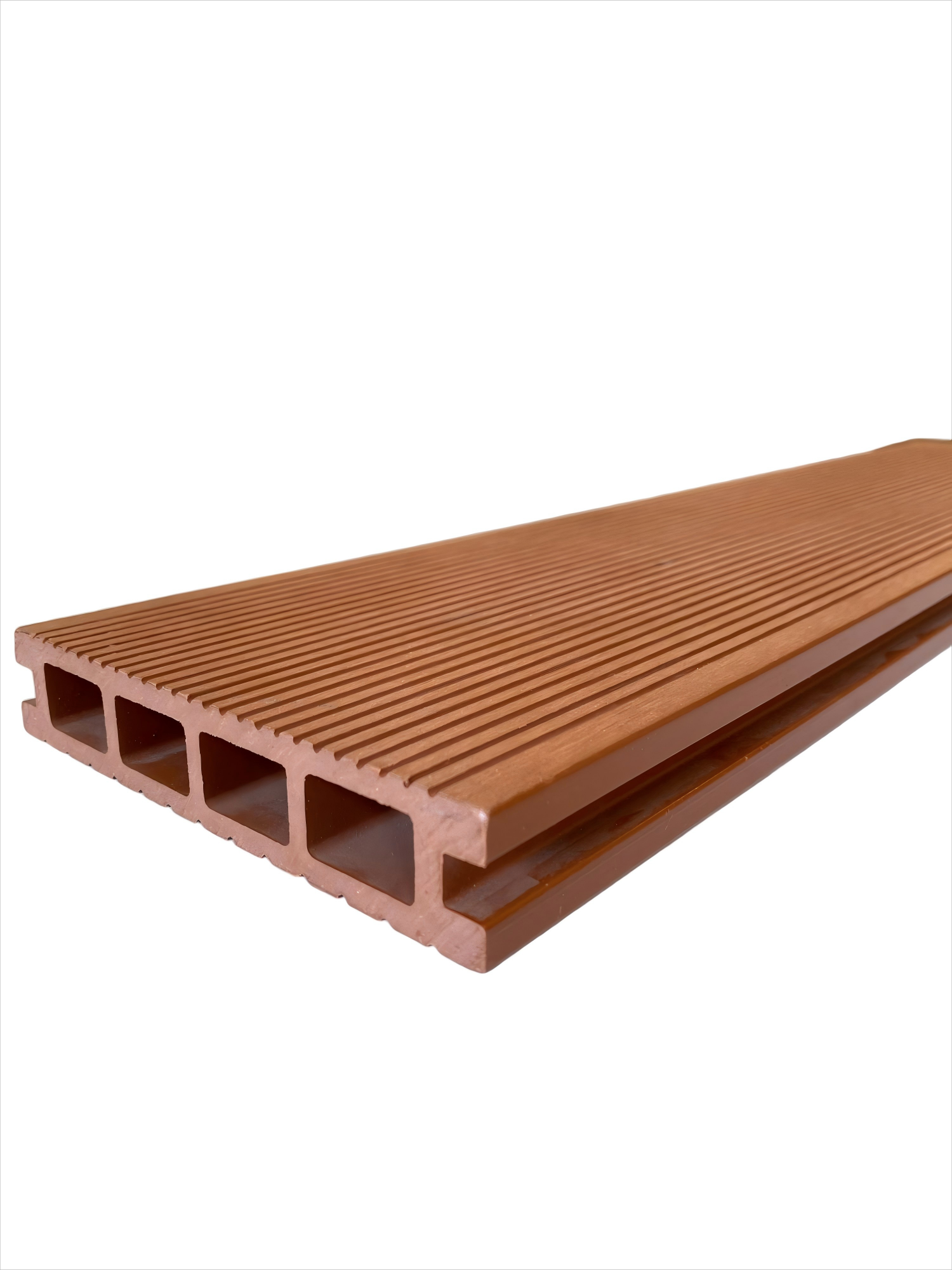
1. Square Hole WPC Decking
The square hole design represents the most popular choice among our product range, offering an excellent balance between cost-effectiveness and performance. These decking boards feature a distinctive square perforation pattern that reduces material usage while maintaining structural integrity. The primary advantages include:
- Lightweight construction: The hollow core design makes installation easier and reduces transportation costs
- Rich surface textures: Available in multiple wood grain patterns and colors to match various design schemes
- Versatile applications: Ideal for residential patios, garden walkways, and light commercial spaces
Our square hole decking maintains excellent dimensional stability, with minimal expansion or contraction in varying weather conditions. The production process incorporates advanced co-extrusion technology that creates a protective surface layer, enhancing resistance to UV fading, stains, and scratches.
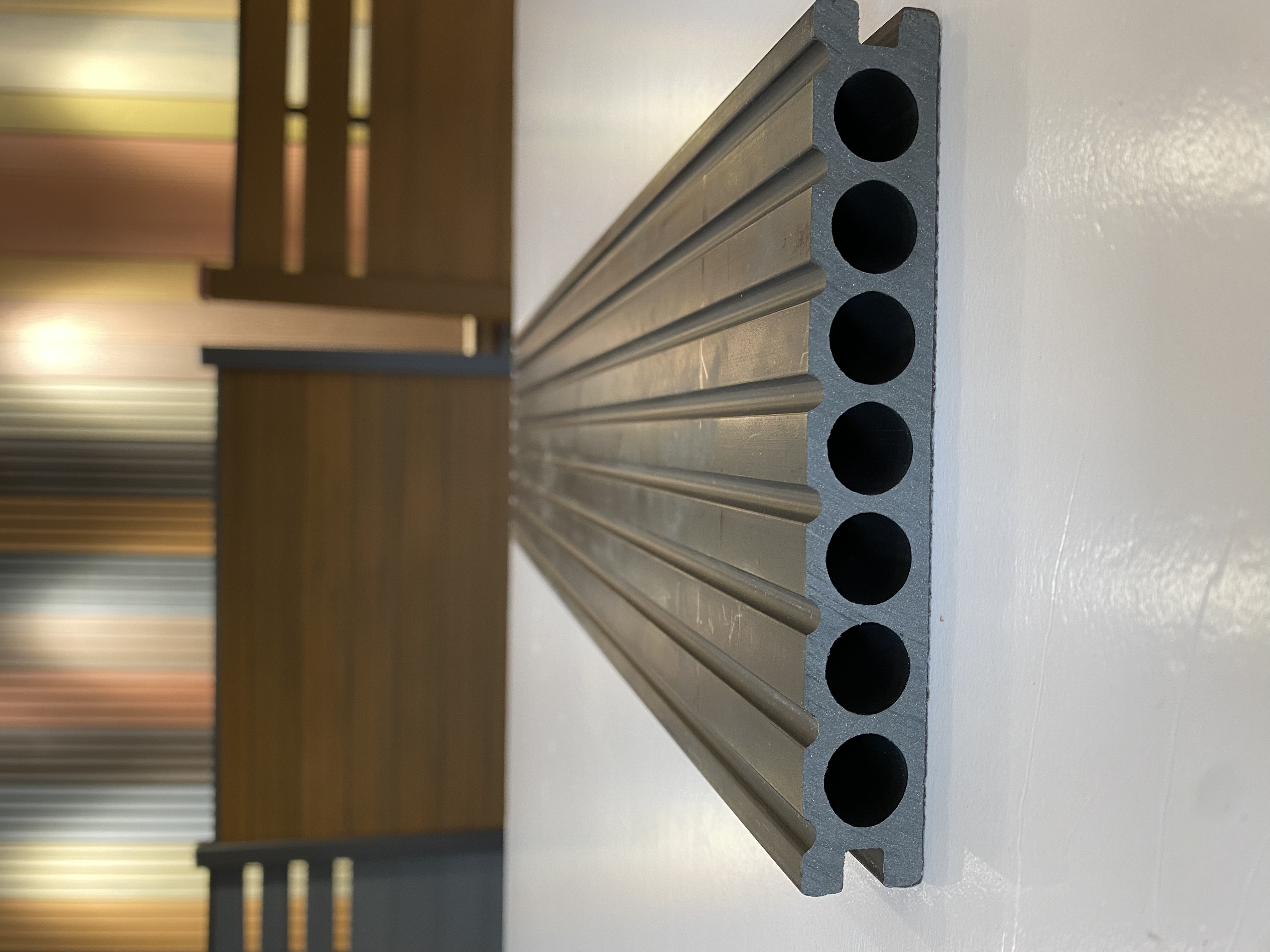
2. Hollow Round Hole WPC Decking
For projects requiring superior load-bearing capacity and enhanced drainage, our round hole hollow decking offers specialized engineering advantages:
- Optimized structural design: The circular hollow core distributes stress more evenly than square alternatives
- Improved drainage: The round perforations allow for efficient water runoff, preventing pooling on deck surfaces
- Enhanced slip resistance:
The textured surface combined with drainage channels reduces slip hazards in wet conditions
This variant proves particularly effective for boardwalks, pool surrounds, and waterfront installations where both durability and safety are paramount. The round hole design also facilitates easier cleaning, as debris can pass through the perforations rather than accumulating on the surface.
3. Solid WPC Decking
When maximum durability and load capacity are essential, our solid WPC decking provides uncompromising performance:
- Exceptional strength: The fully dense construction supports heavy foot traffic and vehicle loads
- Minimal thermal movement: Resists expansion and contraction better than hollow variants in extreme temperatures
- Long-term stability: Ideal for public parks, commercial plazas, and industrial walkways
The solid core design eliminates concerns about internal voids or potential weak points, making it the preferred choice for high-traffic areas requiring minimal maintenance. While slightly heavier than hollow alternatives, the solid construction provides unmatched peace of mind for demanding applications.
Durability Comparison: Hollow vs. Solid WPC Decking
The choice between hollow and solid WPC decking ultimately depends on your specific project requirements. Both options offer significant advantages over traditional wood decking:
| Feature | Hollow Decking (Square/Round Hole) | Solid Decking |
|---|---|---|
| Weight | Lighter, easier handling | Heavier, requires stronger substructure |
| Thermal Expansion | Moderate movement | Minimal movement |
| Load Capacity | Suitable for residential/light commercial | High capacity for public/industrial use |
| Drainage | Excellent (especially round hole) | Requires proper slope design |
| Cost | More economical | Higher material cost |
Load Capacity Considerations
One of the most frequent questions regarding WPC decking relates to its load-bearing capacity. Our products undergo rigorous testing to ensure they meet international standards for outdoor flooring:
- Square hole decking: Typically supports 350-400 kg per square meter for residential applications
- Round hole decking: Enhanced design supports 400-450 kg per square meter for commercial use
- Solid decking: Designed for 500+ kg per square meter, suitable for heavy equipment and vehicles
These capacities assume proper installation with adequate joist spacing (typically 400-500mm centers) and a well-prepared substructure. For projects with specific load requirements, our engineering team can provide customized solutions and installation guidelines.
Deformation Resistance Analysis
Concerns about deformation in hollow WPC decking are understandable but largely unfounded when selecting quality products from reputable manufacturers like Linyi Xuancheng New Materials. Several factors contribute to our decking’s excellent deformation resistance:
- Material composition: Our proprietary formula combines high-density polyethylene (HDPE) with natural wood fibers, creating a composite that resists warping and bending
- Co-extrusion technology: The protective outer layer enhances dimensional stability and prevents moisture penetration
- Ribbed internal structure: Many hollow designs incorporate internal support ribs that reinforce the core without adding excessive weight
Independent laboratory testing confirms that our hollow WPC decking maintains less than 2mm deflection under standard load conditions, meeting or exceeding industry benchmarks for outdoor flooring materials.
Crack Resistance in Solid WPC Decking
The solid construction of our premium WPC decking virtually eliminates cracking concerns associated with traditional wood materials. Several design elements contribute to this exceptional performance:
- Uniform material distribution: The absence of internal voids prevents stress concentration points that could lead to cracking
- Plastic matrix flexibility: The HDPE component provides controlled flexibility that absorbs impacts without fracturing
- UV stabilization: Special additives prevent material degradation from sunlight exposure, which can weaken materials over time
Even in extreme temperature fluctuations, our solid WPC decking maintains its structural integrity, making it ideal for regions with harsh winters or hot summers. The material’s elastic modulus ensures it returns to its original shape after temporary deformation, rather than developing permanent cracks.
Maintenance Requirements Compared
One of the most compelling advantages of WPC decking over traditional wood is its reduced maintenance needs. However, some differences exist between hollow and solid variants:
Hollow Decking Maintenance
- Cleaning: Regular sweeping and occasional rinsing with water prevents debris accumulation in the holes
- Inspection: Annual checks for any blockages in drainage holes (particularly important for round hole designs)
- Stain removal: Prompt cleaning of spills prevents potential staining of the protective surface layer
Solid Decking Maintenance
- Cleaning: Simple sweeping and mopping suffices for most applications
- Snow removal:
- Joint inspection: Check for proper spacing between boards to ensure adequate drainage
Use plastic shovels rather than metal to avoid surface scratches in cold climates
Neither variant requires staining, sealing, or painting, saving significant time and material costs over the product lifespan. The co-extruded surface layer on all our WPC decking provides inherent resistance to mold, mildew, and insect damage.
FAQ
What is the expected lifespan of square hole WPC decking?
When properly installed and maintained, our square hole WPC decking typically lasts 15-25 years in residential applications and 10-15 years in commercial settings. The co-extruded surface layer provides exceptional protection against UV degradation, moisture penetration, and physical damage.
Can hollow WPC decking support hot tubs or heavy furniture?
Yes, but with proper installation considerations. For heavy concentrated loads like hot tubs, we recommend using our solid WPC decking or reinforcing the substructure with additional joists. Our engineering team can provide specific load distribution guidelines for your project.
Does solid WPC decking get hotter than hollow types in summer?
All WPC materials conduct heat similarly, but the color and finish affect surface temperature more than the hollow/solid construction. Lighter colors and matte finishes stay cooler than dark, glossy surfaces. Our products incorporate heat-reflective pigments to minimize temperature buildup.
How do I prevent mold growth on WPC decking?
The plastic content in WPC decking naturally resists mold, but organic debris accumulation can create growth conditions. Regular cleaning with water and mild soap, ensuring proper drainage, and maintaining at least 150mm clearance between decking and soil prevents most mold issues.
Is professional installation required for WPC decking?
While experienced DIYers can install our products, professional installation ensures optimal performance and warranty coverage. Our installation teams understand the specific requirements for different WPC types, including proper joist spacing, fastener selection, and edge treatments.
Summary
Choosing the right WPC decking requires evaluating your project’s specific needs regarding load capacity, drainage requirements, budget constraints, and aesthetic preferences. Linyi Xuancheng New Materials offers comprehensive solutions across all WPC decking categories:
- For cost-effective residential projects, our square hole decking provides excellent value without compromising performance
- Commercial installations benefit from the enhanced drainage and slip resistance of our round hole hollow decking
- High-traffic public areas demand the unmatched durability of our solid WPC decking
All our products share common advantages: eco-friendly composition, low maintenance requirements, and resistance to common wood decking problems like rot, insects, and splitting. With over a decade of manufacturing expertise and multiple international certifications, we stand behind the quality and performance of every board we produce.