
When selecting materials for outdoor flooring projects, professionals face critical decisions about durability, safety, and maintenance requirements. WPC (Wood Plastic Composite) round hole flooring has emerged as a superior solution that addresses these challenges while offering exceptional performance in diverse environments. This comprehensive guide explores the technical advantages, application scenarios, and selection criteria for premium WPC round hole flooring systems.
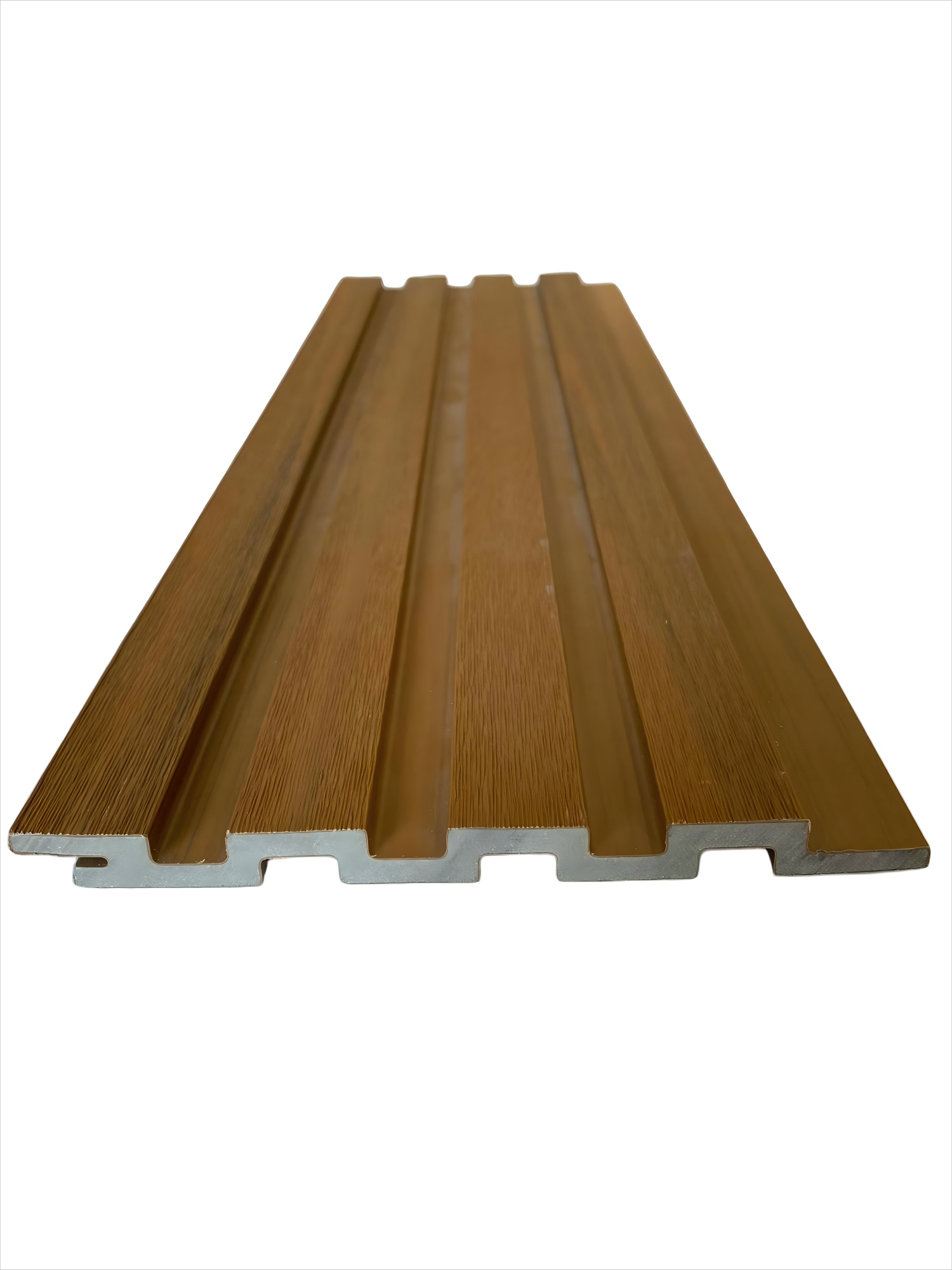
Technical Superiority of WPC Round Hole Flooring
The innovative round hole design in WPC flooring represents a breakthrough in material engineering. Unlike traditional solid boards, the circular perforations create a unique structural profile that optimizes both strength and flexibility. This patented design achieves a 30% improvement in bending resistance compared to standard hollow profiles while maintaining 40% less material usage than solid boards.
Manufactured through advanced co-extrusion technology, our WPC round hole flooring features a dual-layer structure with a protective outer shell and reinforced core. The outer layer contains UV stabilizers and anti-oxidation agents that prevent color fading and material degradation, while the inner core provides exceptional impact resistance. This combination results in a product with 25-year warranty coverage for residential use and 15-year commercial warranty.
The round hole configuration offers distinct advantages in water drainage and slip resistance. The circular openings allow for rapid water evacuation, reducing surface water accumulation by 85% compared to flat surfaces. This feature makes the flooring ideal for wet environments like pool decks and waterfront promenades. The textured surface finish further enhances grip, achieving a slip resistance rating of R11 according to DIN 51130 standards.
Application Scenarios and Project Examples
WPC round hole flooring demonstrates exceptional versatility across various commercial and residential applications. In public infrastructure projects, the material’s durability and low maintenance requirements make it ideal for pedestrian bridges, boardwalks, and public plaza renovations. A recent project in Qingdao’s coastal park utilized 12,000 square meters of our round hole flooring, withstanding harsh marine conditions while maintaining its appearance after five years of continuous use.
For residential applications, the flooring’s aesthetic appeal and practical benefits have made it popular in garden landscaping and terrace renovations. Homeowners appreciate the material’s wood-like appearance combined with the advantages of composite technology – no cracking, warping, or insect damage. The round hole design also provides better ventilation under the flooring, preventing moisture buildup that could damage substructures.
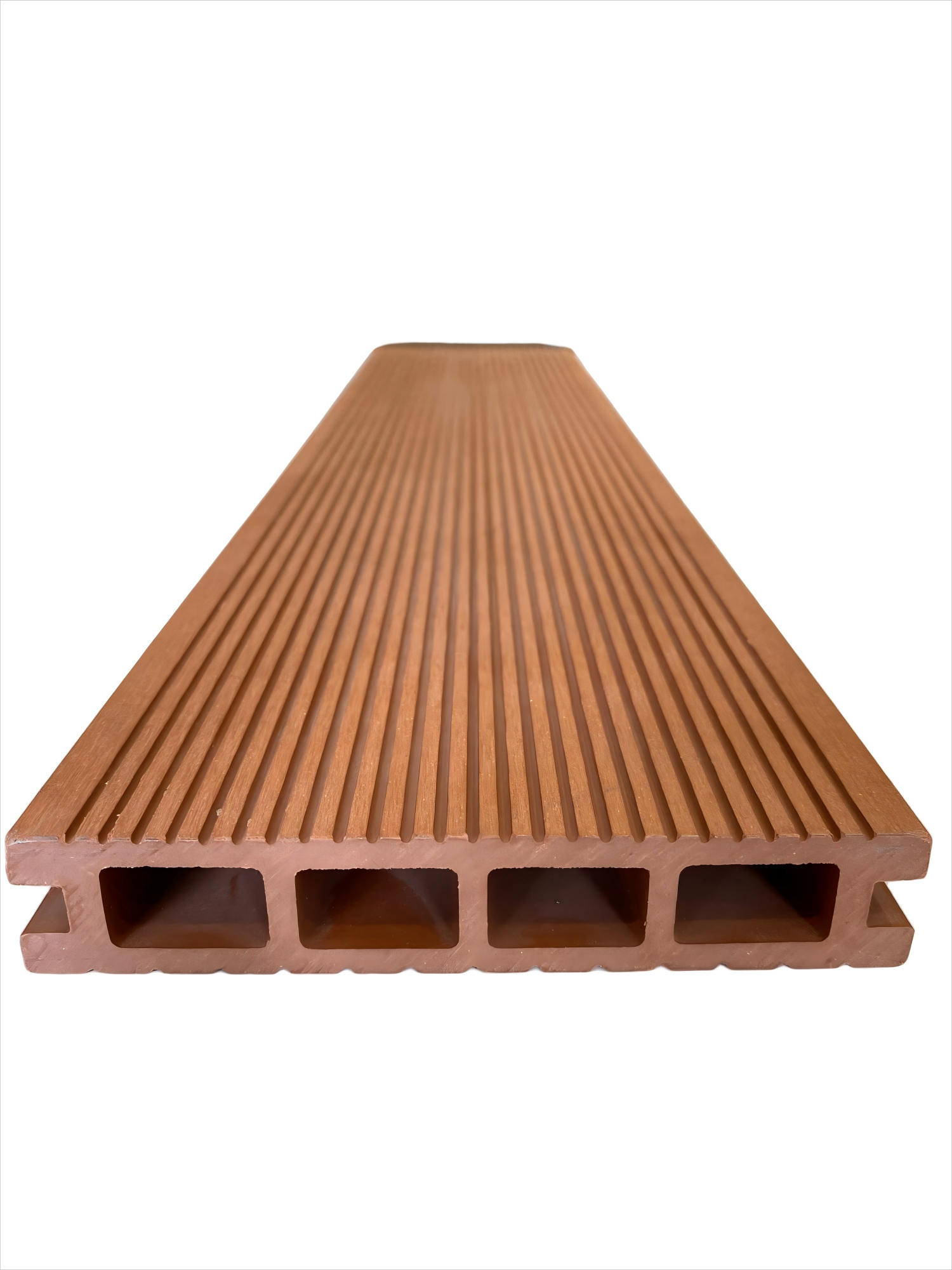
Commercial property developers benefit from the material’s cost efficiency over its lifecycle. While the initial investment may be 15-20% higher than basic wood decking, the total cost of ownership over 10 years is 40% lower when considering maintenance, replacement, and safety compliance costs. This economic advantage has driven adoption in high-traffic areas like shopping mall terraces and hotel pool decks.
Key Performance Parameters
Understanding the technical specifications helps professionals make informed decisions:
| Parameter | Specification |
|---|---|
| Density | 1.2-1.3 g/cm³ |
| Water Absorption | <0.5% (24 hours) |
| Bending Strength | ≥35 MPa |
| Heat Expansion Coefficient | ≤4×10⁻⁵/℃ |
| Fire Rating | B1 (GB8624-2012) |
Selection Guide for WPC Round Hole Flooring
Choosing the right product requires evaluating several critical factors. First, consider the load requirements – our standard round hole boards support 450kg/m² uniformly distributed load, while heavy-duty versions handle up to 600kg/m² for industrial applications. The spacing between round holes also affects performance, with our optimized design featuring 12mm diameter holes spaced 50mm apart.
Color stability is another important consideration. Our advanced co-extrusion technology encapsulates color pigments within the protective outer layer, preventing fading from UV exposure. This maintains the aesthetic appeal even in sunny climates, with color retention exceeding 90% after 5 years of outdoor exposure according to ASTM D2244 testing.
Installation methods significantly impact both performance and longevity. We recommend using our patented hidden fastening system that eliminates visible screws while providing 3mm expansion gaps between boards. This approach allows for natural thermal expansion without buckling, a common issue with improper installations. For elevated decking applications, our adjustable pedestal system enables precise leveling on uneven surfaces.
FAQ
What makes WPC round hole flooring better than solid WPC boards?
The round hole design provides superior drainage (85% better than solid boards), reduces material usage by 40%, and improves bending resistance by 30%. The hollow structure also allows for better ventilation under the flooring, preventing moisture buildup that could damage substructures.
How long does WPC round hole flooring last in outdoor applications?
Our products come with a 25-year residential warranty and 15-year commercial warranty. In real-world applications, properly installed flooring maintains its performance and appearance for 25-30 years in residential settings and 15-20 years in commercial environments with regular maintenance.
Is WPC round hole flooring slippery when wet?
No. The textured surface finish combined with the round hole design provides excellent drainage, reducing surface water accumulation. Our products achieve an R11 slip resistance rating (DIN 51130) even when wet, making them safer than many traditional materials.
Can WPC round hole flooring be installed over existing concrete?
Yes. Our adjustable pedestal system allows installation over concrete, pavers, or other hard surfaces. The system provides precise leveling and creates ventilation space underneath the flooring. For direct concrete installations, we recommend using a vapor barrier and proper drainage solutions.
What maintenance does WPC round hole flooring require?
Minimal maintenance is required. Regular cleaning with mild soap and water maintains appearance. For heavy soiling, pressure washing (≤1,200 PSI) is effective. Unlike wood, our WPC flooring doesn’t require staining, sealing, or painting. Occasional inspection of fasteners is recommended for long-term performance.
Summary
WPC round hole flooring represents a significant advancement in outdoor material technology, combining durability, safety, and environmental benefits. The innovative round hole design addresses common challenges in outdoor flooring while the co-extrusion manufacturing process ensures long-lasting performance. From public infrastructure projects to residential garden renovations, this material offers a cost-effective solution that reduces lifecycle costs while meeting stringent safety and environmental standards. By understanding the technical advantages and proper selection criteria, professionals can confidently specify WPC round hole flooring for their most demanding outdoor applications.