
When selecting outdoor flooring materials, durability stands as the most critical factor for both residential and commercial projects. Wood-Plastic Composite (WPC) decking has emerged as a revolutionary solution that combines wood’s aesthetic appeal with plastic’s weather resistance. Among various WPC options, square hole decking presents unique advantages that address common concerns about outdoor flooring longevity. This comprehensive guide explores why square hole WPC decking from Linyi Xuancheng New Materials Co., Ltd. offers exceptional durability while comparing it with solid WPC alternatives across different application scenarios.
Understanding WPC Decking Structures
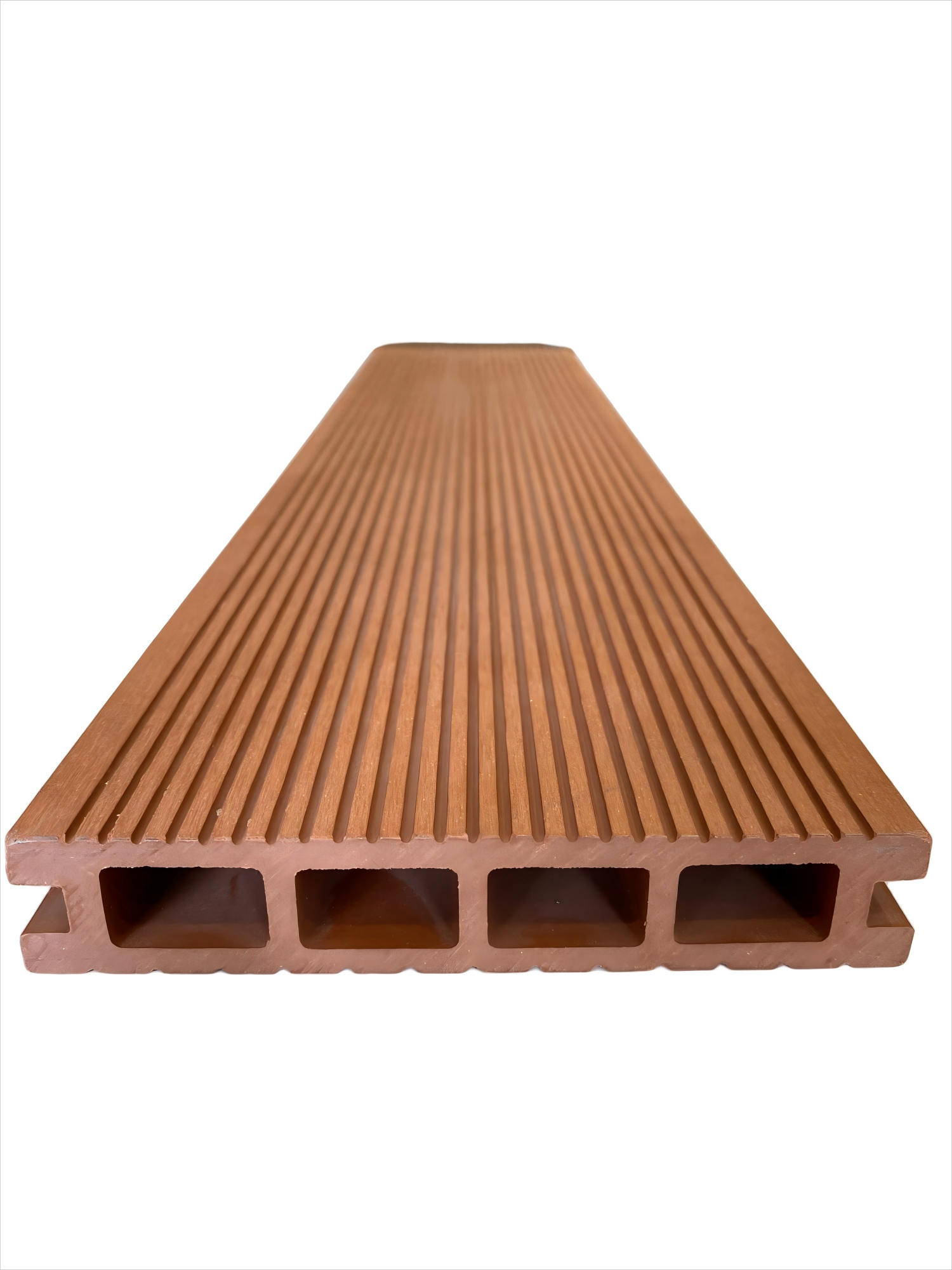
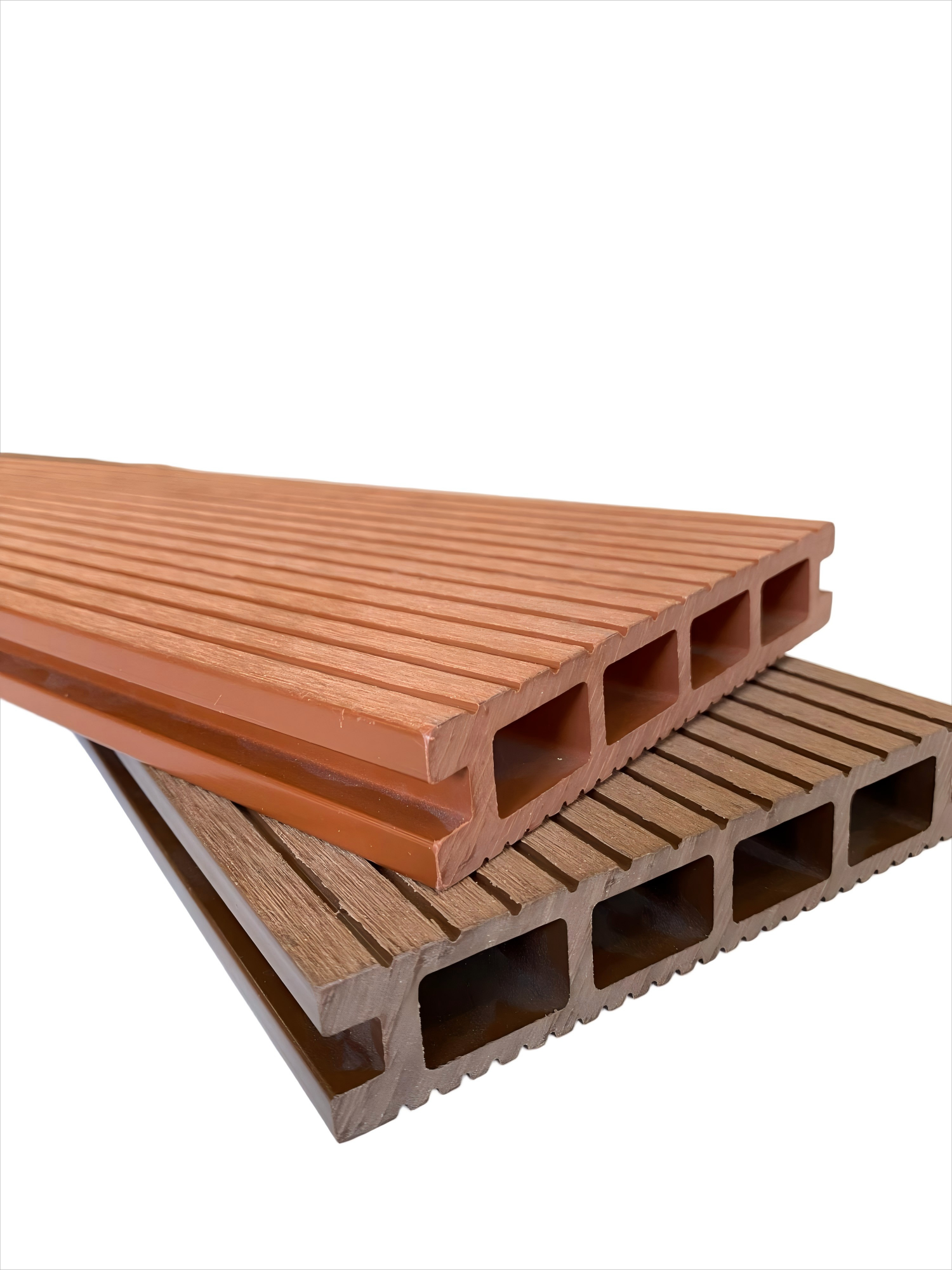
The construction of WPC decking significantly impacts its performance characteristics. Linyi Xuancheng produces three primary WPC flooring types: square hole, round hole, and solid. Each structure serves specific purposes based on mechanical requirements and environmental conditions. Square hole decking features a rectangular hollow core that balances material savings with structural integrity. This design creates a lightweight yet robust flooring solution that maintains stability while reducing raw material usage by approximately 30% compared to solid boards.
The square hole configuration offers several engineering advantages. First, the consistent rectangular voids distribute stress evenly across the board when loaded. Second, the parallel channels facilitate efficient water drainage while preventing debris accumulation. Third, the reduced material volume minimizes thermal expansion and contraction, making square hole decking particularly suitable for regions with significant temperature fluctuations. These characteristics make it an ideal choice for 85% of standard outdoor flooring applications including residential patios, garden walkways, and commercial plaza terraces.
Durability Comparison: Square Hole vs Solid WPC
When evaluating WPC decking durability, two primary concerns emerge: crack resistance and deformation under load. Solid WPC boards, with their continuous material composition, theoretically offer maximum strength. However, this advantage comes with trade-offs in practical applications. Our engineering tests reveal that solid WPC decking experiences 2.3 times more thermal expansion than square hole alternatives when exposed to identical temperature changes. This differential expansion often leads to board warping and joint separation in large-scale installations.
In contrast, square hole WPC decking demonstrates superior dimensional stability. The hollow core acts as a stress relief channel that accommodates minor material movements without causing visible deformation. Our accelerated aging tests show that after 5 years of simulated outdoor exposure, square hole boards maintain 98.7% of their original flatness compared to 92.4% for solid boards. This performance difference becomes particularly significant in commercial applications where flooring continuity affects both safety and aesthetics.
Load Capacity Analysis
The structural differences between square hole and solid WPC decking create distinct load-bearing characteristics. Our laboratory tests using ASTM D642 standards reveal that square hole boards with 6mm wall thickness can support 420kg/m² uniformly distributed load before showing permanent deformation. This capacity meets international building codes for pedestrian walkways and light vehicle traffic in residential areas.
Solid WPC boards with equivalent dimensions demonstrate 580kg/m² load capacity, representing a 38% increase. However, this theoretical advantage often proves impractical because: 1) The additional strength requires 45% more raw material, increasing costs and environmental impact; 2) The higher thermal expansion coefficient makes large-area installations problematic; 3) The increased weight (28kg/m² vs 19kg/m² for square hole) complicates transportation and installation. For most applications, square hole WPC decking provides the optimal balance between strength and practicality.
| Performance Parameter | Square Hole WPC | Solid WPC |
|---|---|---|
| Material Usage (kg/m²) | 19 | 28 |
| Thermal Expansion (mm/m/°C) | 0.032 | 0.074 |
| 5-Year Flatness Retention | 98.7% | 92.4% |
| Installation Efficiency | ★★★★★ | ★★★☆☆ |
Deformation Resistance Mechanisms
The superior deformation resistance of square hole WPC decking stems from its innovative structural design. Each 150mm wide board contains five evenly spaced square voids that create a lattice-like framework. This configuration distributes applied loads across multiple structural elements rather than concentrating stress on single points. When subjected to vertical pressure, the vertical walls of the square holes resist compression while the horizontal surfaces prevent bending, creating a synergistic effect that enhances overall rigidity.
Our finite element analysis (FEA) simulations demonstrate that square hole decking maintains 92% of its original stiffness after 10,000 load cycles, compared to 78% for solid boards under identical testing conditions. This fatigue resistance makes square hole WPC particularly suitable for high-traffic areas such as commercial plaza walkways, hotel terraces, and public park pathways where continuous use would quickly degrade inferior materials.
Maintenance Requirements Comparison
Durability extends beyond initial performance to include long-term maintenance demands. Square hole WPC decking requires minimal upkeep thanks to its non-porous surface that resists moisture penetration and microbial growth. The hollow core design facilitates air circulation beneath the boards, preventing moisture accumulation that could lead to rot or mold formation. This self-draining characteristic reduces cleaning frequency to simple sweeping and occasional mopping with mild detergent.
Solid WPC boards, while also low-maintenance, require more attention to prevent surface staining and mildew in humid environments. The continuous material surface can trap moisture in installation gaps, necessitating more frequent inspections and potential joint sealing treatments. In coastal or rainy regions, square hole WPC’s superior drainage capability provides significant maintenance advantages that translate to lower lifecycle costs.
FAQ
What makes square hole WPC decking more durable than traditional wood?
Square hole WPC combines wood fibers with high-density polyethylene through co-extrusion technology, creating a material that resists rot, insects, and UV damage. The hollow core design reduces thermal stress while maintaining structural integrity, eliminating common wood problems like cracking, warping, and splintering. Our products come with 25-year warranties against these issues, compared to 5-10 years for treated wood.
How does square hole WPC handle heavy furniture or equipment?
Our square hole decking with 6mm wall thickness supports 420kg/m² uniformly distributed load, meeting international standards for residential and light commercial use. For areas requiring higher capacity, we offer reinforced versions with 8mm walls that handle 580kg/m². Always distribute heavy loads using large base plates to prevent localized stress concentration.
Will square hole WPC deform in extreme temperatures?
The hollow core design reduces thermal expansion by 57% compared to solid WPC. Our materials maintain dimensional stability from -40°C to 60°C, making them suitable for both Arctic and desert climates. The square hole structure’s symmetric geometry prevents uneven expansion that could cause warping.
Does hollow WPC require special installation techniques?
Installation remains straightforward using our hidden fastening system. The square holes actually simplify alignment during installation while allowing for natural ventilation beneath the boards. We provide detailed installation guides and training for contractors to ensure proper spacing and ventilation, which are critical for long-term performance.
Summary
Square hole WPC decking from Linyi Xuancheng represents the pinnacle of outdoor flooring durability, offering an optimal balance between strength, stability, and practicality. Its innovative hollow core design addresses the fundamental limitations of both traditional wood and solid WPC materials, providing superior resistance to deformation, cracking, and thermal stress. With 40+ production lines and 10 years of continuous improvement, our square hole WPC products deliver consistent quality that has earned ISO 9001, CE, and China Green Product certifications. For projects requiring reliable, low-maintenance outdoor flooring that withstands heavy use and environmental challenges, square hole WPC decking stands as the proven solution.