
When selecting materials for outdoor construction projects, durability and environmental sustainability are paramount considerations. Wood-Plastic Composite (WPC) materials have emerged as the preferred choice for architects and contractors worldwide due to their exceptional performance characteristics. This comprehensive guide explores the technical specifications, application scenarios, and installation best practices for premium WPC materials from Linyi Xuancheng New Materials Co., Ltd., a leading manufacturer specializing in outdoor WPC solutions.
Technical Specifications of WPC Materials
The company’s advanced production facilities in Linyi, China, utilize state-of-the-art co-extrusion technology to manufacture WPC materials with superior physical properties. The production process combines 60% wood fiber, 30% high-density polyethylene (HDPE), and 10% additives through a patented compounding system, resulting in materials with enhanced weather resistance and dimensional stability.
Three primary product categories address different project requirements:
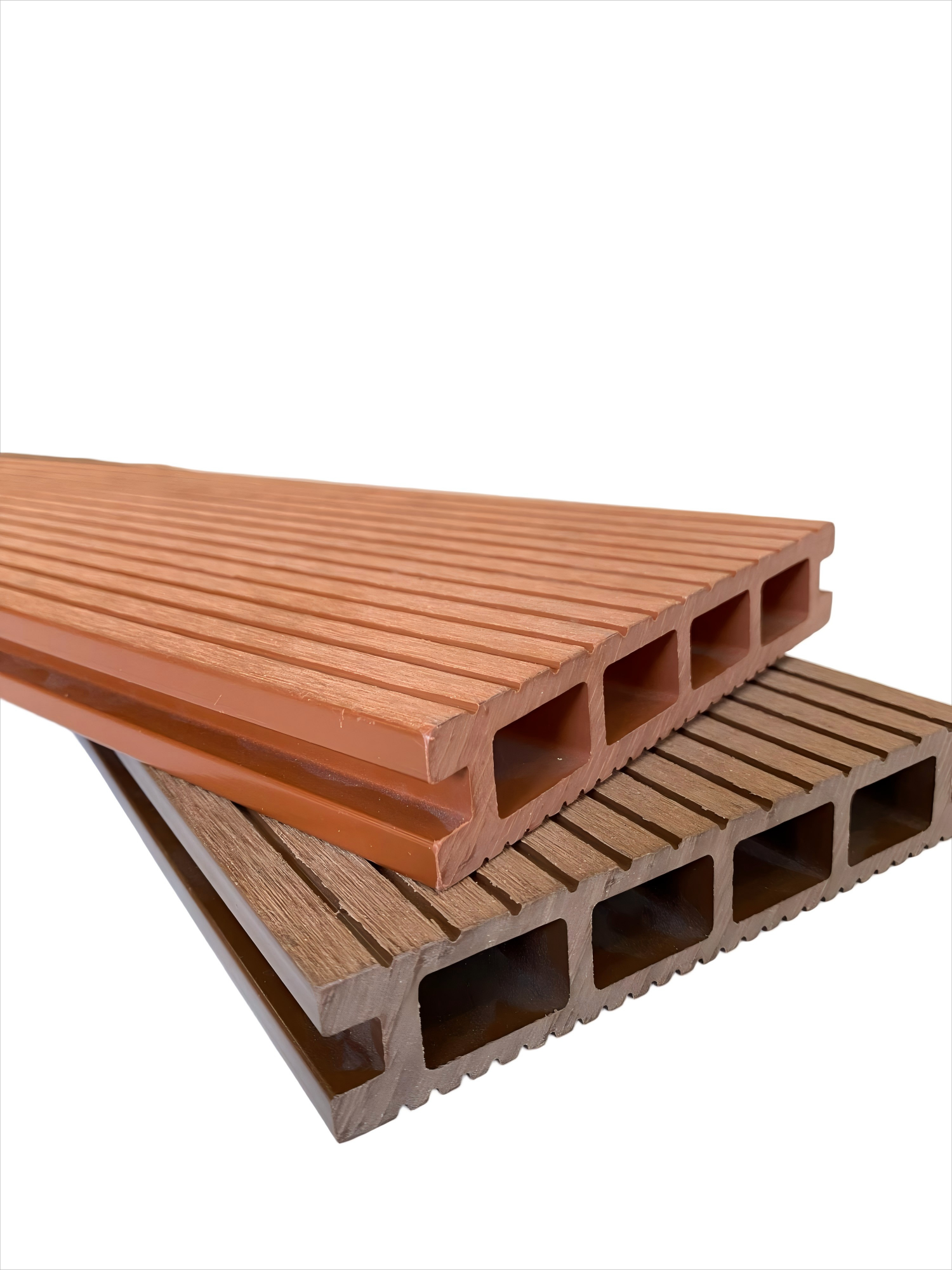
- Square Hole Decking: Featuring a lightweight design with 28% open area, this cost-effective solution offers 12 surface texture options including wood grain, sanding, and brushing finishes. The 140mm width and 25mm thickness provide optimal strength-to-weight ratio for standard terrace applications.
- Round Hole Decking: Engineered with circular hollow sections (Ø28mm), this design achieves 35% higher bending strength compared to solid boards while maintaining excellent drainage performance. The anti-slip surface treatment ensures safety in wet environments like pool decks.
- Solid Decking: With 100% material density, this heavy-duty option withstands 5.2kN/m² load capacity and exhibits minimal thermal expansion (≤0.3% at 80°C). The 146mm width and 23mm thickness make it ideal for high-traffic public spaces.
Application Scenarios Analysis
The versatility of WPC materials enables their application across diverse construction scenarios:
Swimming Pool Environments: The round hole decking’s superior drainage capability (≥5L/min·m²) prevents water accumulation, while the closed-cell structure resists chlorine damage. The UV-resistant coating maintains color stability even after 3,000 hours of accelerated weathering tests.
Coastal Construction Projects: The solid decking’s salt spray resistance (≥1,000 hours) and anti-corrosion additives make it suitable for marine environments. The material’s low water absorption rate (≤1.5%) prevents swelling caused by saltwater exposure.
Villa Courtyards: The square hole decking’s lightweight nature (6.8kg/m) simplifies installation on elevated structures while providing ample design options through its 12 texture variations. The hidden fastening system creates seamless surfaces for premium residential projects.
Municipal Landscaping: The wall panel systems’ modular design enables rapid installation of noise barriers, retaining walls, and decorative facades. The co-extruded cap layer provides additional protection against vandalism and impact damage.
Material Performance Comparison
| Performance Parameter | Square Hole Decking | Round Hole Decking | Solid Decking |
|---|---|---|---|
| Bending Strength (MPa) | ≥32 | ≥38 | ≥45 |
| Water Absorption (%) | ≤2.1 | ≤1.8 | ≤1.5 |
| Thermal Expansion (%) | ≤0.4 | ≤0.35 | ≤0.3 |
| Wear Resistance (g/100r) | ≤0.08 | ≤0.07 | ≤0.05 |
Installation Best Practices
Proper installation techniques significantly impact the longevity and performance of WPC materials. The company provides comprehensive installation guidelines covering:
Substructure Requirements: Joist spacing should not exceed 400mm for square hole decking and 350mm for round hole decking. For solid decking in heavy-duty applications, reduce spacing to 300mm with 45×90mm treated lumber.
Fastening Systems: Use stainless steel screws with anti-corrosion coating for all installations. The hidden fastening system for square hole decking requires pre-drilling with 3.5mm pilot holes, while the clip system for round hole decking enables faster assembly.
Thermal Movement Compensation: Leave 10mm expansion gaps at all perimeter connections and 5mm between boards. For installations exceeding 6 meters in length, include additional expansion joints every 4 meters.
Edge Treatment: Install fascia boards or aluminum trim profiles to conceal board ends and prevent moisture ingress. For elevated decks, use waterproofing membranes between the substructure and WPC boards.
FAQ
What makes WPC materials suitable for coastal projects?
The materials’ salt spray resistance (≥1,000 hours), low water absorption (≤1.5%), and UV stabilization make them ideal for marine environments. The closed-cell structure prevents corrosion from saltwater exposure while maintaining dimensional stability.
How do I choose between square hole and round hole decking for pool areas?
Round hole decking offers superior drainage (≥5L/min·m²) and anti-slip performance for wet environments. Square hole decking provides more design options and cost savings for dry terrace applications.
What maintenance is required for WPC materials?
Regular cleaning with mild detergent and water suffices for most applications. Avoid abrasive cleaners or pressure washing above 800 PSI. For heavy soiling, use specialized WPC cleaning products following manufacturer instructions.
How long do WPC materials last in outdoor applications?
With proper installation and maintenance, the materials maintain performance for 15-25 years. The 10-year limited warranty covers material defects, color fading exceeding ΔE 5, and structural integrity issues.
Can WPC materials be curved for circular designs?
Yes, the materials can be heat-formed for gentle curves (radius ≥3 meters). Use professional heating equipment and follow the bending temperature guidelines (140-160°C) to avoid material damage.
What certifications ensure product quality?
The materials comply with ISO 9001, CE, and SGS standards. Additional certifications include ROHS for environmental safety, ASTM D7032 for WPC performance, and EN 15534 for European market compliance.
How to handle thermal expansion in large installations?
Include 10mm expansion gaps at all fixed points and 5mm between boards. For installations exceeding 6 meters, add additional expansion joints every 4 meters with 20mm clearance.
What fasteners should be used for installation?
Use 304 or 316 grade stainless steel screws with anti-corrosion coating. For hidden fastening systems, ensure clips match the board profile dimensions and material compatibility.
Can WPC materials be painted or stained?
The materials maintain color stability through co-extrusion technology. While painting is possible, it voids the warranty and may affect performance. For color customization, select from the 18 standard options or request special orders.
How to repair minor surface damage?
Light scratches can be removed with 120-grit sandpaper following the wood grain direction. For deeper gouges, use WPC repair kits containing color-matched filler and touch-up paint.
Summary
Linyi Xuancheng New Materials Co., Ltd. offers comprehensive WPC solutions for demanding outdoor construction projects. The company’s advanced production capabilities, strict quality control system, and 10+ years of industry experience ensure reliable performance across diverse applications. From swimming pool decking to coastal infrastructure and villa landscaping, their WPC materials provide eco-friendly, durable, and low-maintenance alternatives to traditional building materials. The technical support team assists clients with material selection, installation guidance, and maintenance planning to maximize project success and longevity.