
When it comes to outdoor construction and landscaping projects, selecting the right flooring material is crucial for both performance and aesthetics. Wood-Plastic Composite (WPC) flooring has emerged as a leading solution, offering the natural appearance of wood with enhanced durability and low maintenance requirements. However, with various options available – including solid core, hollow core, square hole, and round hole designs – choosing the ideal WPC flooring for your specific needs can be challenging. This comprehensive guide will walk you through the key considerations for WPC flooring selection, helping you make informed decisions for your next outdoor project.

Understanding WPC Flooring Types: Solid vs Hollow Core
The fundamental distinction in WPC flooring comes down to its core structure: solid or hollow. Each type offers specific advantages tailored to different applications and performance requirements. Solid core WPC flooring features a continuous, dense composition throughout the entire plank. This construction provides exceptional strength and stability, making it ideal for high-traffic areas and heavy-load applications. The solid structure effectively resists impacts, prevents warping, and maintains dimensional stability even under significant weight or temperature fluctuations.
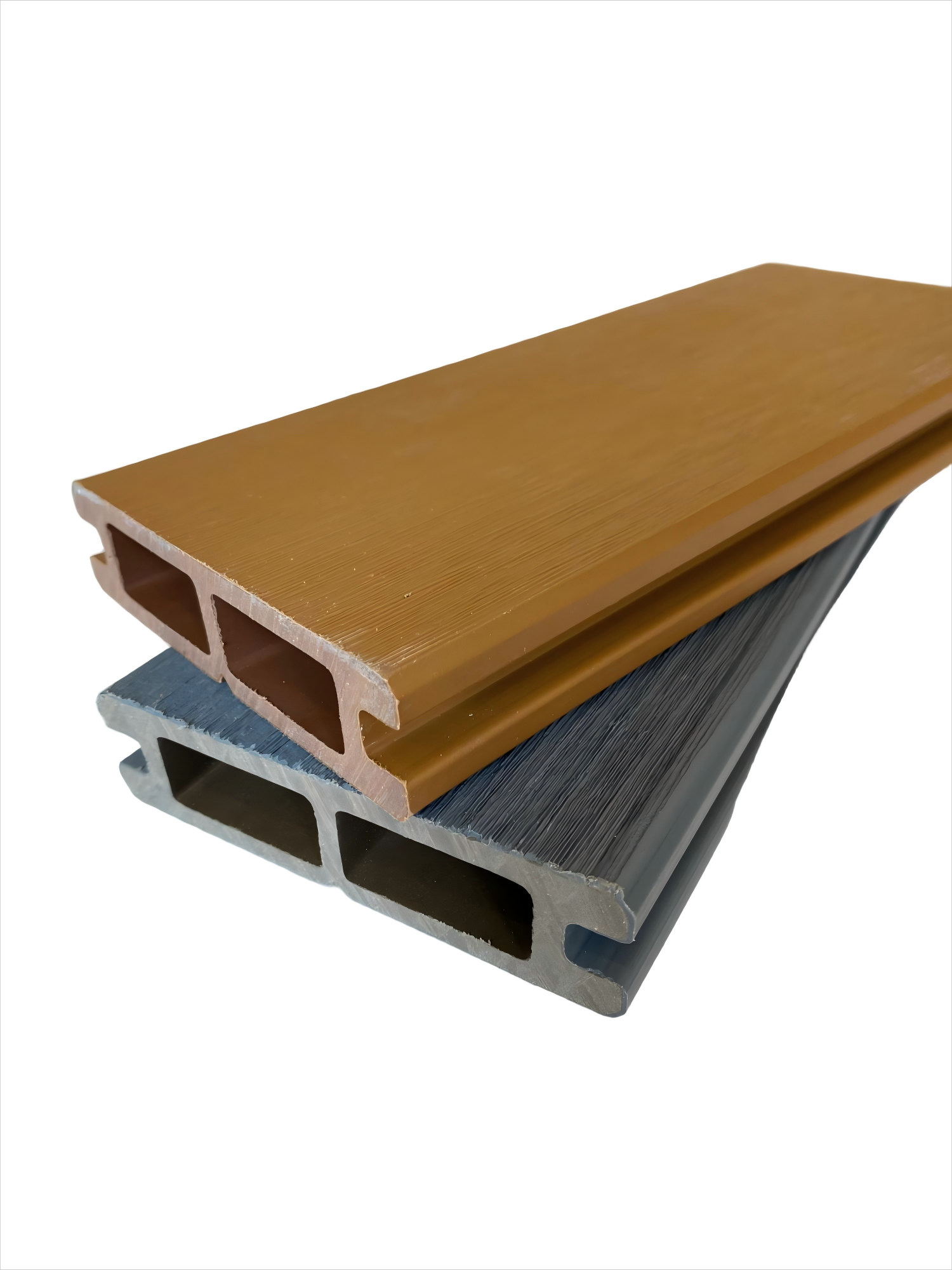
In contrast, hollow core WPC flooring incorporates internal voids or channels within the plank structure. These hollow sections reduce the overall weight of the flooring while maintaining sufficient strength for most residential and light commercial applications. The reduced material content often makes hollow core options more cost-effective while still delivering excellent performance in appropriate scenarios. The hollow design also provides improved thermal insulation properties compared to solid core alternatives.
Square Hole vs Round Hole WPC Flooring: Key Differences
Beyond the solid vs hollow core distinction, WPC flooring also comes in square hole and round hole variations, each offering unique benefits for specific installation scenarios. Square hole WPC flooring features rectangular voids running through the plank’s length. This design provides a balanced approach between weight reduction and structural integrity. The square holes create a consistent pattern that can contribute to the flooring’s overall aesthetic while maintaining sufficient strength for most standard applications.
Round hole WPC flooring, on the other hand, incorporates circular voids in its design. This configuration offers several advantages in specific scenarios. The circular shape distributes stress more evenly than square holes, potentially enhancing the flooring’s resistance to cracking under point loads. Additionally, the round holes can improve drainage capabilities, making this type particularly suitable for areas prone to moisture accumulation or where quick water runoff is desired.
Performance Characteristics Comparison
When evaluating WPC flooring options, several key performance characteristics should be considered to ensure the selected product meets your project requirements:
- Load-bearing capacity: Solid core flooring typically offers the highest load-bearing capacity, followed by square hole and then round hole designs. Consider the expected foot traffic and any potential heavy loads when making your selection.
- Thermal expansion: All WPC materials will expand and contract with temperature changes, but solid core options generally exhibit less movement than hollow core alternatives. Proper installation with adequate expansion gaps is crucial for all types.
- Drainage efficiency: Round hole designs often provide superior drainage capabilities compared to square hole or solid core options, making them ideal for wet environments or areas without proper slope for water runoff.
- Installation complexity: Hollow core flooring may be slightly easier to handle and install due to its reduced weight, while solid core options offer more uniform support during installation.
Slip Resistance and Waterproofing: Critical Factors for Outdoor Flooring
For any outdoor flooring application, slip resistance and waterproofing capabilities are paramount considerations for safety and longevity. WPC flooring excels in both areas, but different designs offer varying levels of performance. The slip resistance of WPC flooring is primarily determined by its surface texture and finish. Most manufacturers offer options with textured surfaces specifically designed to enhance traction, even when wet. These textures can range from subtle embossing to more pronounced patterns that provide excellent grip underfoot.
When it comes to waterproofing, all WPC flooring offers inherent resistance to moisture penetration due to its composite nature. The wood fibers are completely encapsulated in plastic, preventing water absorption that could lead to swelling, warping, or rot. However, the design of the flooring can influence its performance in wet conditions. Round hole WPC flooring, with its superior drainage capabilities, is particularly well-suited for areas that experience frequent or heavy rainfall, as well as pool decks and other water-adjacent installations.
The joints between planks also play a crucial role in waterproofing. High-quality WPC flooring systems incorporate interlocking designs or specialized clips that create tight, secure connections between planks. These features prevent water from seeping through the gaps while allowing for natural expansion and contraction. Some advanced systems even include hidden drainage channels that direct water away from the surface while maintaining a completely waterproof installation.
| Feature | Solid Core WPC | Hollow Core WPC |
|---|---|---|
| Load Capacity | High (suitable for heavy loads) | Moderate (for standard applications) |
| Thermal Movement | Less expansion/contraction | More expansion/contraction |
| Weight | Heavier | Lighter |
| Cost | Typically higher | Generally more cost-effective |
| Best For | High-traffic areas, heavy loads | Residential, light commercial use |
Application Scenarios: Where Each WPC Flooring Type Excels
The versatility of WPC flooring makes it suitable for a wide range of outdoor applications, but certain types perform better in specific scenarios. Solid core WPC flooring is the top choice for demanding environments that require maximum durability and load-bearing capacity. This includes commercial plazas, public walkways, high-traffic garden paths, and areas where heavy equipment or vehicles may need to traverse the surface occasionally. The superior strength and stability of solid core WPC ensure it maintains its appearance and performance even under challenging conditions.
Hollow core WPC flooring, particularly square hole designs, finds its niche in residential and light commercial applications where cost-effectiveness and adequate performance are priorities. These include patio areas, balconies, pool surrounds, and garden walkways in private homes or small businesses. The reduced weight of hollow core options makes them easier to handle during installation while still providing sufficient strength for typical residential use.
Round hole WPC flooring shines in applications where efficient drainage is essential. This includes pool decks, spa areas, waterfront installations, and any outdoor space that experiences frequent rainfall or where water accumulation could be problematic. The circular voids in the design allow for rapid water runoff, preventing puddles and reducing the risk of slip hazards. Additionally, the improved drainage helps maintain the flooring’s appearance by preventing water stains and mineral deposits that can occur with poor drainage.
FAQ
What factors should I consider when choosing between solid and hollow core WPC flooring?
When selecting between solid and hollow core WPC flooring, consider your project’s specific requirements including expected foot traffic, load-bearing needs, budget constraints, and installation complexity. Solid core offers superior strength and stability for high-traffic areas and heavy loads, while hollow core provides cost savings and easier handling for standard residential applications.
How does round hole WPC flooring compare to square hole in terms of slip resistance?
Both round and square hole WPC flooring can offer excellent slip resistance when properly manufactured with textured surfaces. The key difference lies in drainage capabilities – round hole designs typically provide superior water runoff, which can help maintain slip resistance in wet conditions by preventing water pooling on the surface.
Is WPC flooring completely waterproof for outdoor use?
Yes, high-quality WPC flooring is completely waterproof due to its composite construction that encapsulates wood fibers in plastic. This prevents water absorption, swelling, and rot. Proper installation with waterproof joints and adequate slope for drainage ensures long-lasting performance in wet outdoor environments.
What maintenance is required for WPC outdoor flooring?
WPC outdoor flooring requires minimal maintenance compared to traditional wood. Regular sweeping to remove debris and occasional cleaning with mild soap and water is typically sufficient. Avoid using abrasive cleaners or pressure washers on high settings, as these can damage the surface. Periodic inspection of joints and fasteners is recommended to ensure continued waterproof performance.
Summary
Selecting the right WPC flooring for your outdoor project requires careful consideration of several key factors, including core type, hole design, performance characteristics, and specific application requirements. Solid core WPC offers unmatched strength and stability for demanding commercial and high-traffic areas, while hollow core options provide cost-effective solutions for residential and light commercial use. The choice between square hole and round hole designs depends on your drainage needs, with round hole offering superior water runoff capabilities.
Regardless of the specific type you choose, WPC flooring provides an excellent combination of wood-like aesthetics, durability, and low maintenance requirements. By understanding the differences between solid and hollow core options, as well as the benefits of various hole designs, you can make an informed decision that ensures your outdoor space looks beautiful and performs reliably for years to come. Remember to consider factors such as expected foot traffic, load requirements, environmental conditions, and budget when making your final selection.